HUID Number in Gold: What It Is and How to Verify It
Every hallmarked gold article sold in India now carries a six-digit code that belongs to that piece and no other. Here is what the HUID actually tells you, how to check it in about thirty seconds, and the three things it does not promise.
The short answer
A HUID is a Hallmark Unique Identification number: a six-digit alphanumeric code, unique to one individual gold article, laser-marked onto the piece at a BIS-recognised Assaying and Hallmarking Centre. Since 1 July 2021 it is one of the three marks that together make up a BIS hallmark, alongside the BIS logo and the purity of the article in caratage and fineness. You can verify any HUID free of charge using the “Verify HUID” feature in the BIS CARE mobile app, which returns the article type, its purity, the jeweller who had it hallmarked and the hallmarking centre that tested it.
On this page
So what is a HUID number, exactly?
HUID stands for Hallmark Unique Identification. The Bureau of Indian Standards defines it as a six-digit alphanumeric number that is unique for each hallmarked item and is traceable. Six characters, mixing letters and digits — something in the shape of AZ4K19.
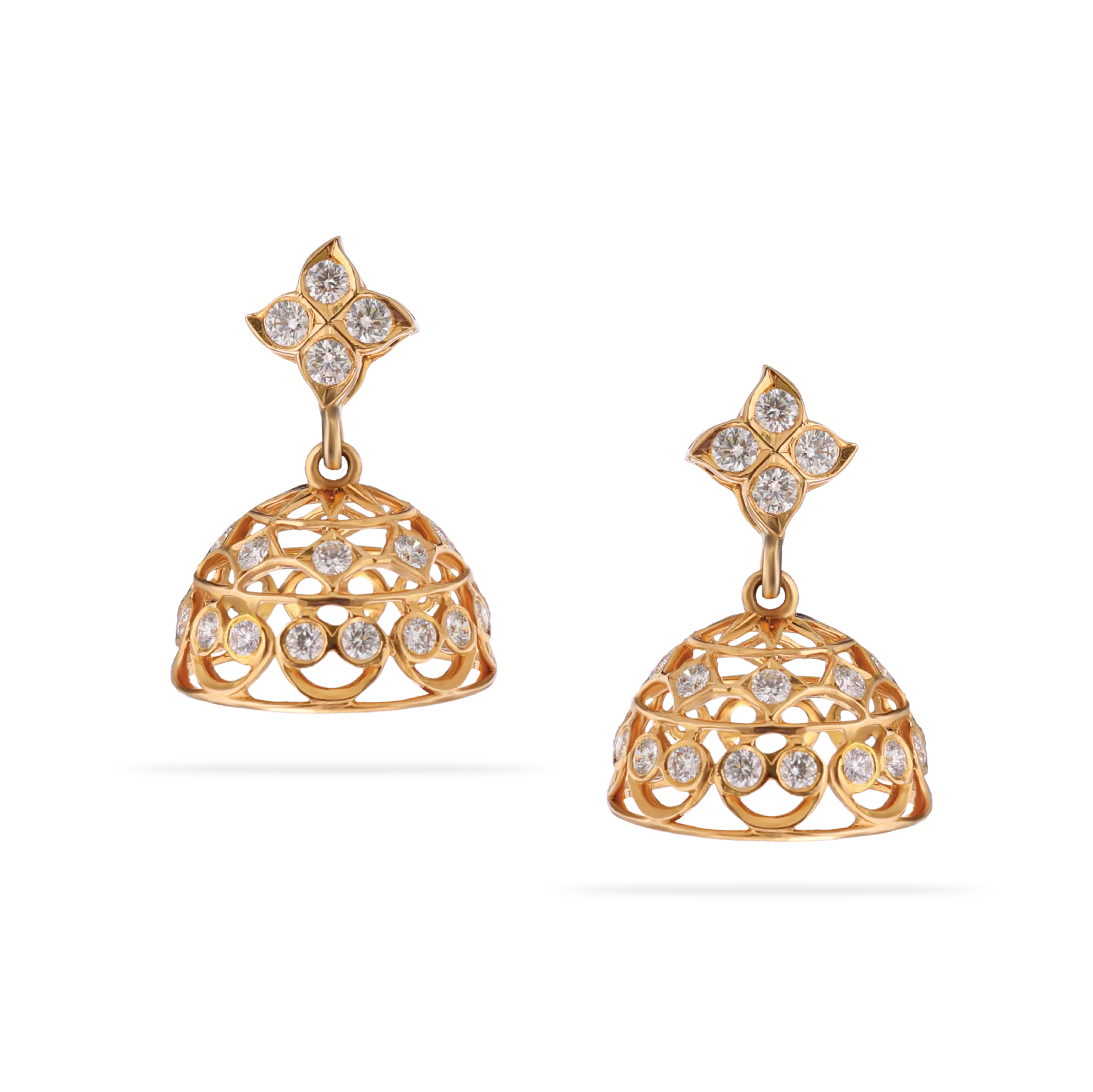
The word that matters in that definition is unique. Not unique to the design, or the batch, or the shop. Unique to the one physical object in your hand. If you buy a pair of jhumkas, each earring carries its own separate HUID, because each is a separate article. Where a piece has detachable parts — a pendant that comes off its chain, a set of screw-backs — each detachable part is hallmarked with its own different HUID too.
That is a genuine shift in how gold is sold in this country. Before HUID, a hallmark told you about a standard. Now it also points at a specific record held by BIS about a specific object, and anyone can look it up.
The mark is applied with a laser at an Assaying and Hallmarking Centre recognised by BIS — not by the jeweller, and not at the shop counter. As of December 2025 there were 1,610 such centres operating in India and more than 2.08 lakh registered gold jewellers. Between 1 July 2021 and 5 March 2026, over 60 crore gold items were hallmarked with a HUID.
A note on where the code sits
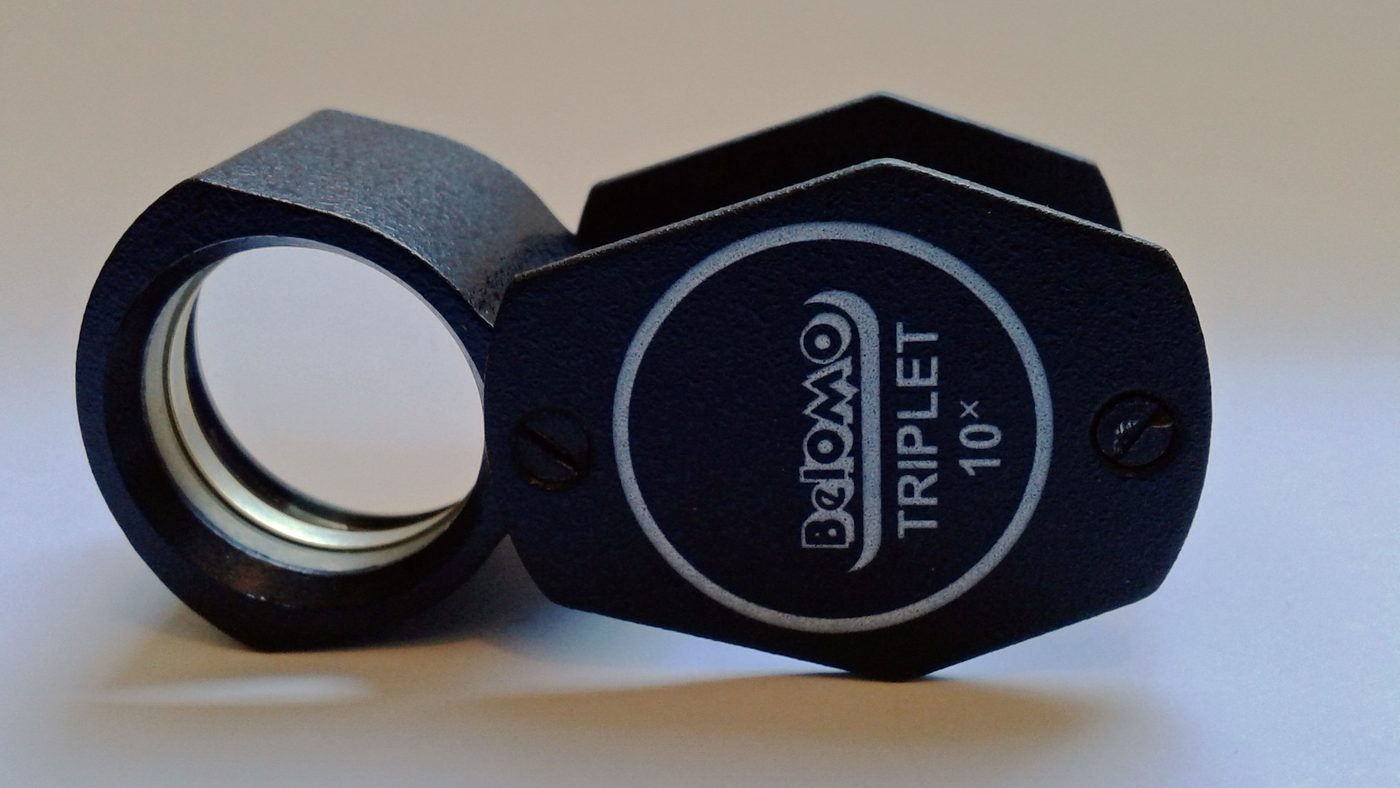
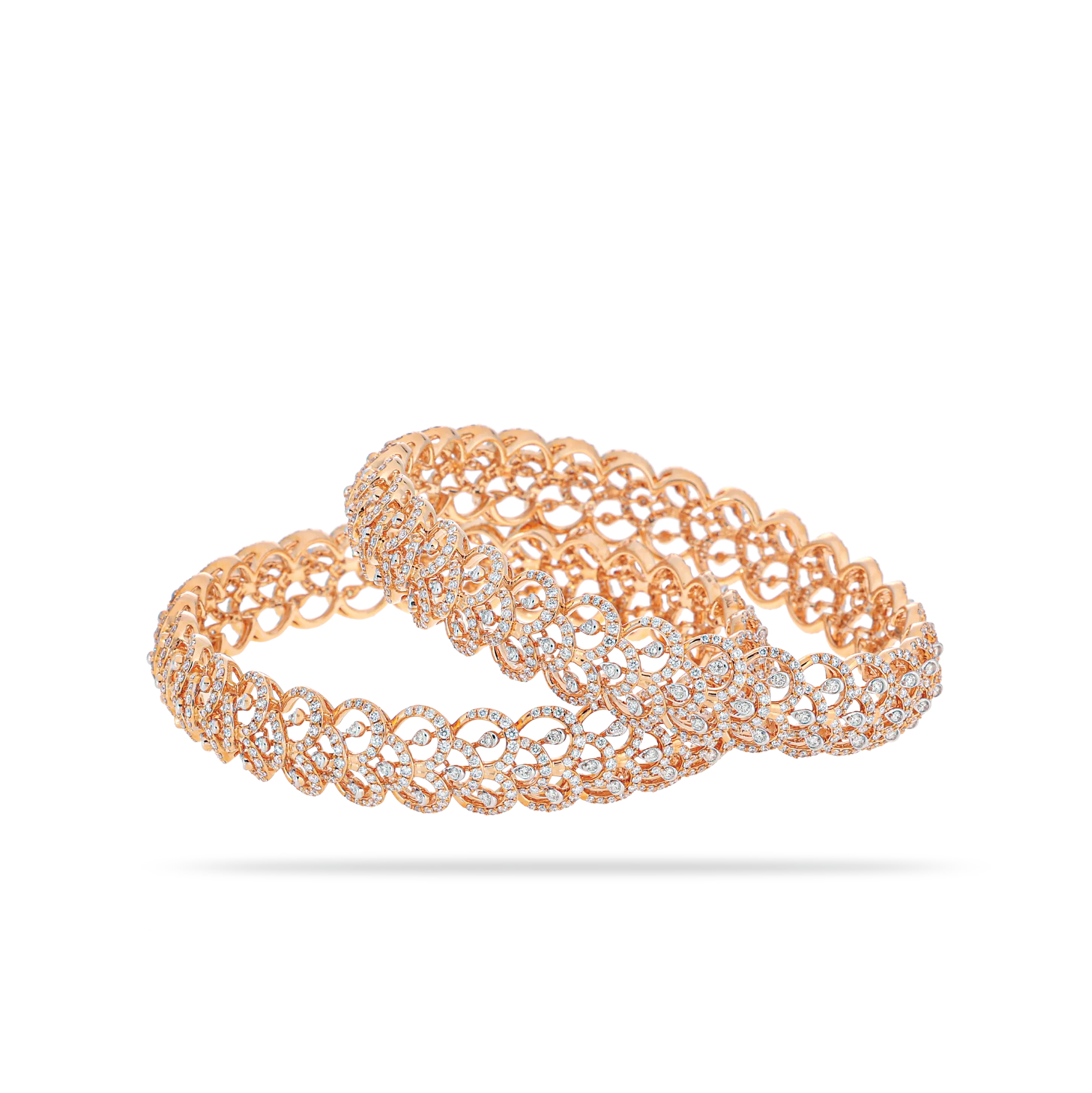
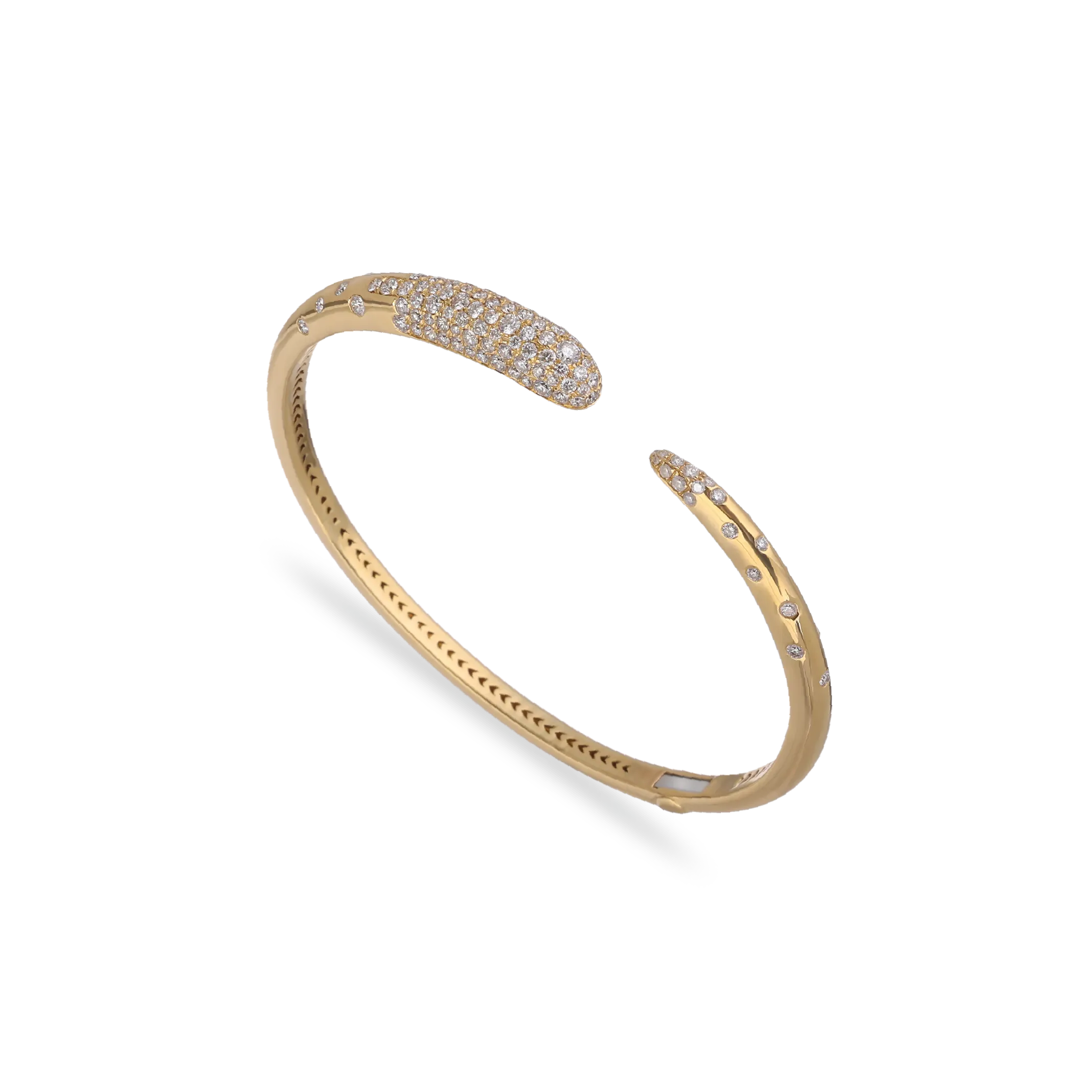
The hallmark is small, and on a ring it is usually inside the shank; on a chain, on the clasp or a small tag; on a bangle, on the inner surface. It is often genuinely hard to read with the naked eye. This is not a defect — laser marks are kept deliberately shallow so they remove as little gold as possible. Ask for a magnifier, which every registered jeweller is required to keep on the counter.
The hallmark has three marks, not four
People who bought gold before 2021 often look for the jeweller's own little logo stamped beside the BIS mark, and are unsettled when they cannot find it. Nothing is wrong. It was deliberately removed.
Since the introduction of HUID on 1 July 2021, a BIS hallmark on gold consists of three marks:
| Mark | What it shows |
|---|---|
| BIS logo | The Bureau of Indian Standards standard mark — a triangular device. Confirms the article passed assay at a recognised centre. |
| Purity | The purity of the article in caratage and fineness, for example 22K916. |
| HUID | The six-digit alphanumeric code unique to that article. |
Before HUID, hallmarking used four marks: the BIS logo, the purity, the jeweller's identification mark and the mark of the Assaying and Hallmarking Centre. The last two were dropped when HUID came in, because the HUID record now carries that information in a form you can actually query rather than a stamp you would have to recognise. The jeweller and the centre did not vanish from the picture — they moved into the database.
How to verify a HUID number
Verification is free, takes about half a minute, and you can do it standing at the counter before you pay. It works through the BIS CARE app, which is the Bureau's official mobile application, available on Android and iOS at no cost and supporting twelve languages.
- Install BIS CARE. Search the Play Store or App Store for “BIS CARE”. Check the publisher is the Bureau of Indian Standards; there are lookalikes.
- Open the “Verify HUID” feature. It sits on the app's main screen alongside the options for verifying licences and registering complaints.
- Read the six characters off the article. Use a magnifier. The characters that trip people up are 0 against O, 1 against I, and 5 against S — if the lookup fails, try the alternative reading before assuming anything is wrong.
- Enter the HUID and submit. The app returns the record BIS holds for that article.
- Match the record against the object. This is the step that does the actual work, and the step most people skip. See below.
There is no website for this
Verification is available through the BIS CARE app only. There is no public web page where a consumer can type in a HUID, and any site that offers to “check your HUID online” is not operating an official BIS service. Some sites of that kind exist mainly to collect the details you type in. Use the app.
Reading what comes back — and actually matching it
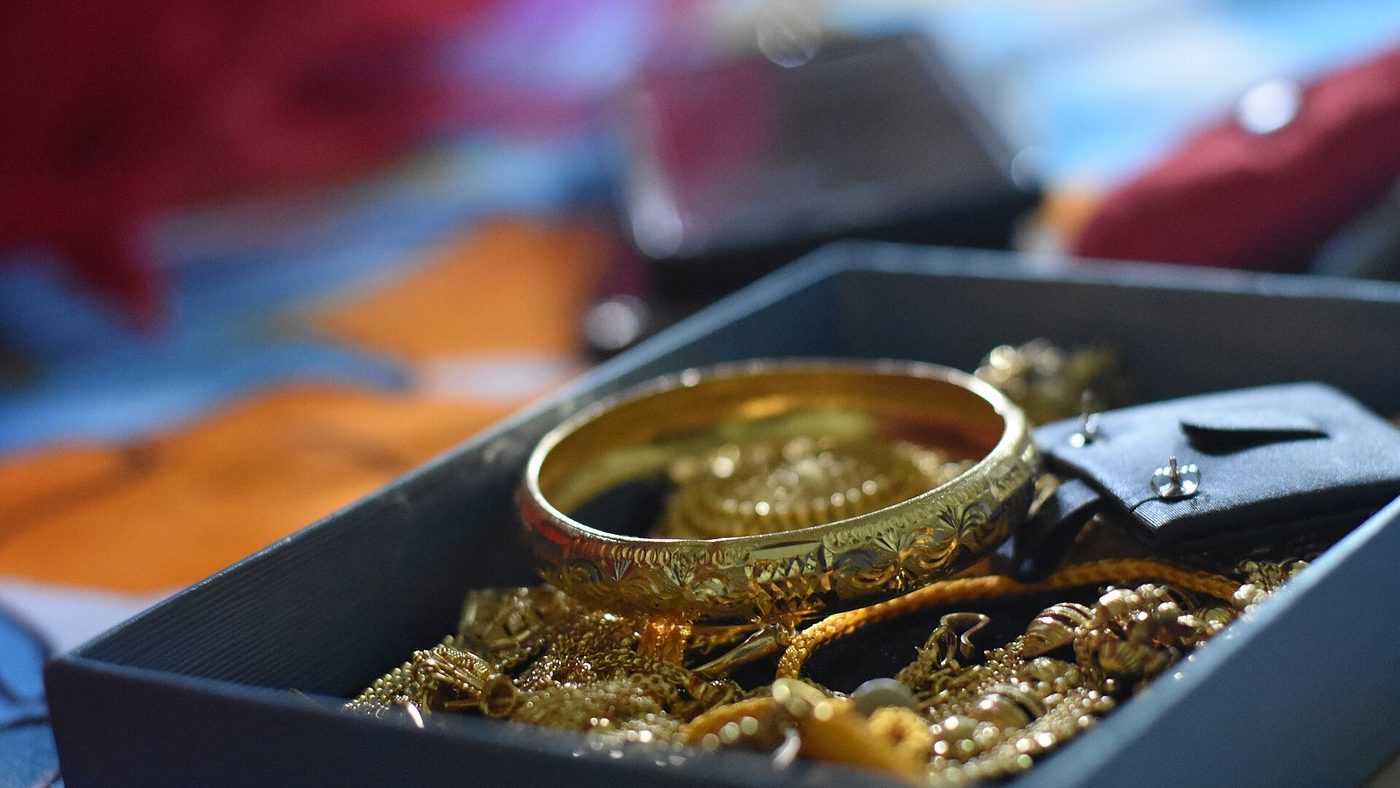
For a gold article, the app returns details of the jeweller who had the piece hallmarked and their registration number, the purity of the article, the type of article, and details of the hallmarking centre that tested and hallmarked it.
The point of the exercise is comparison. A HUID that returns a valid record is not the same as a HUID that returns the right record. Two checks matter:
- Does the article type match? If you are holding a bangle and the record says the HUID belongs to a ring, that code does not belong to this piece. This is the single most useful thing the app does and it costs you five seconds.
- Does the purity match? Compare the purity in the record against the purity marked on the article and against what the invoice says you are buying. All three should agree.
If they disagree, you do not need to argue metallurgy with anyone. Say plainly that the record does not match the article and that you would like a piece whose record does. A jeweller acting in good faith will simply bring you another article.
Which purities can carry a hallmark
IS 1417:2016 permits hallmarking of six caratages of gold jewellery and artefacts. A seventh, 9K, exists in the standard as a voluntary grade.
| Caratage | Fineness | Status | In practice |
|---|---|---|---|
| 14K | 585 | Mandatory scheme | Hard-wearing, common in daily-wear and Western-style settings |
| 18K | 750 | Mandatory scheme | The standard for diamond and gemstone settings |
| 20K | 833 | Mandatory scheme | Uncommon in retail |
| 22K | 916 | Mandatory scheme | The default for Indian gold jewellery, and for Bengaluru in particular |
| 23K | 958 | Mandatory scheme | Rare in jewellery |
| 24KS | 995 | Mandatory scheme | The only 24K jewellery grade — note 995, not 999 |
| 9K | — | Voluntary grade | Available in the standard but not part of the mandatory scheme |
Two details in that table catch people out.
First, the 24K jewellery grade is 24KS at 995 fineness, not 999. If you are shown “999 gold jewellery” described as hallmarked, the description is loose. 999 is a bullion fineness.
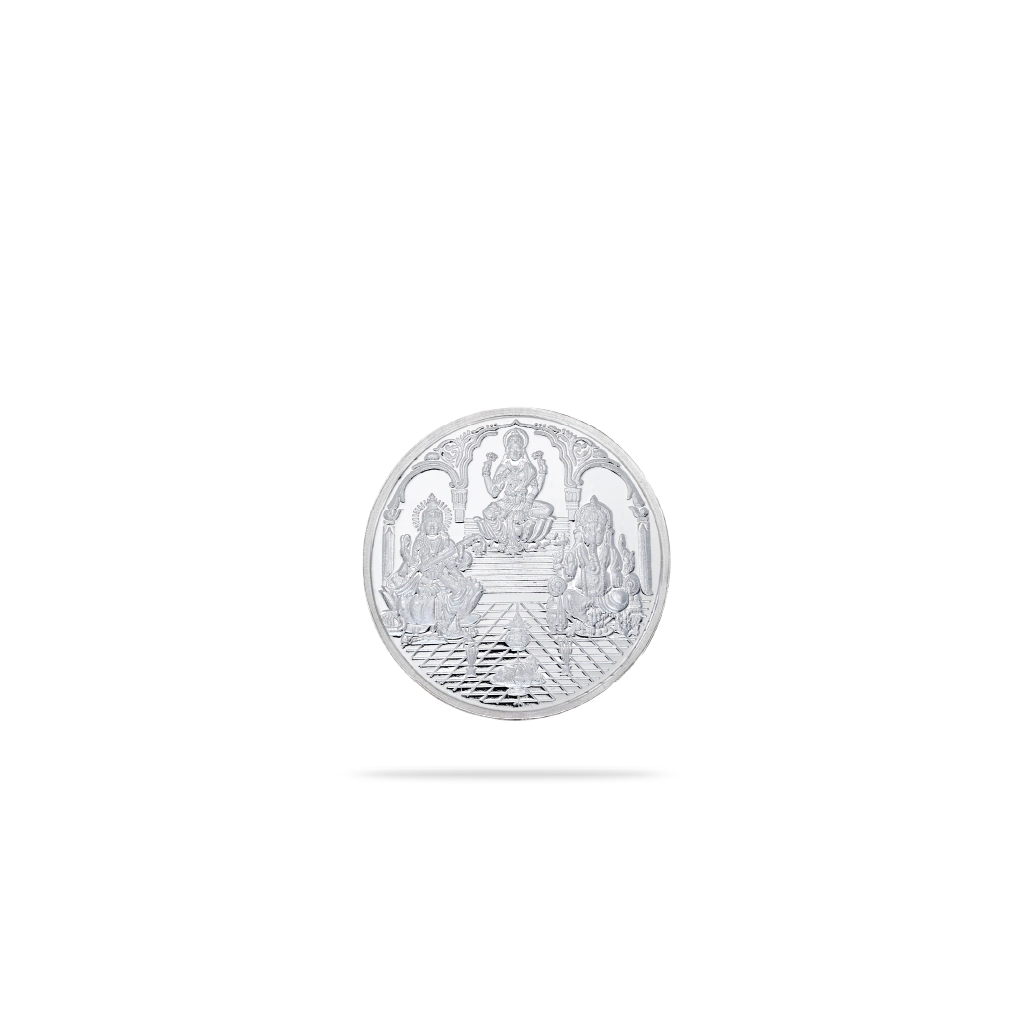
Second, and following from it: gold bullion is outside this scheme altogether. The hallmarking order expressly excludes gold bullion in any shape of bar, plate, sheet, foil, rod, wire, strip, tube or coin. So a gold coin or a ten-gram bar does not carry a HUID, and its absence tells you nothing about the coin. Judge bullion on the refiner's assay certificate and packaging instead.
Hallmarking is compulsory — but not everywhere
Mandatory hallmarking applies in notified districts only, and the list has been extended in phases since 2021.
| Phase | From | Districts added | Running total |
|---|---|---|---|
| I | 23 June 2021 | 256 | 256 |
| II | 4 April 2022 | 32 | 288 |
| III | 8 September 2023 | 55 | 343 |
| IV | 5 November 2024 | 18 | 361 |
| V | 31 July 2025 | 12 | 373 |
| VI | 2 March 2026 | 7 | 380 |
| VII | 28 April 2026 | 5 | 385 |
Bengaluru Urban has been inside the mandatory net since the first phase in June 2021. If you are buying gold jewellery in this city from a registered jeweller, it must be hallmarked with a HUID.
Outside those 385 districts the requirement does not bite, which is worth knowing if you are buying while travelling. Plenty of jewellers in non-notified districts hallmark voluntarily. Plenty do not.
What is exempt from mandatory hallmarking
The exemptions are set out in the Hallmarking of Gold Jewellery and Gold Artefacts Order, 2020 as amended, and some of them matter a great deal to anyone shopping for traditional Indian work:
- Articles weighing less than two grams. Small studs, tiny pendants and thin nose pins frequently fall below this line.
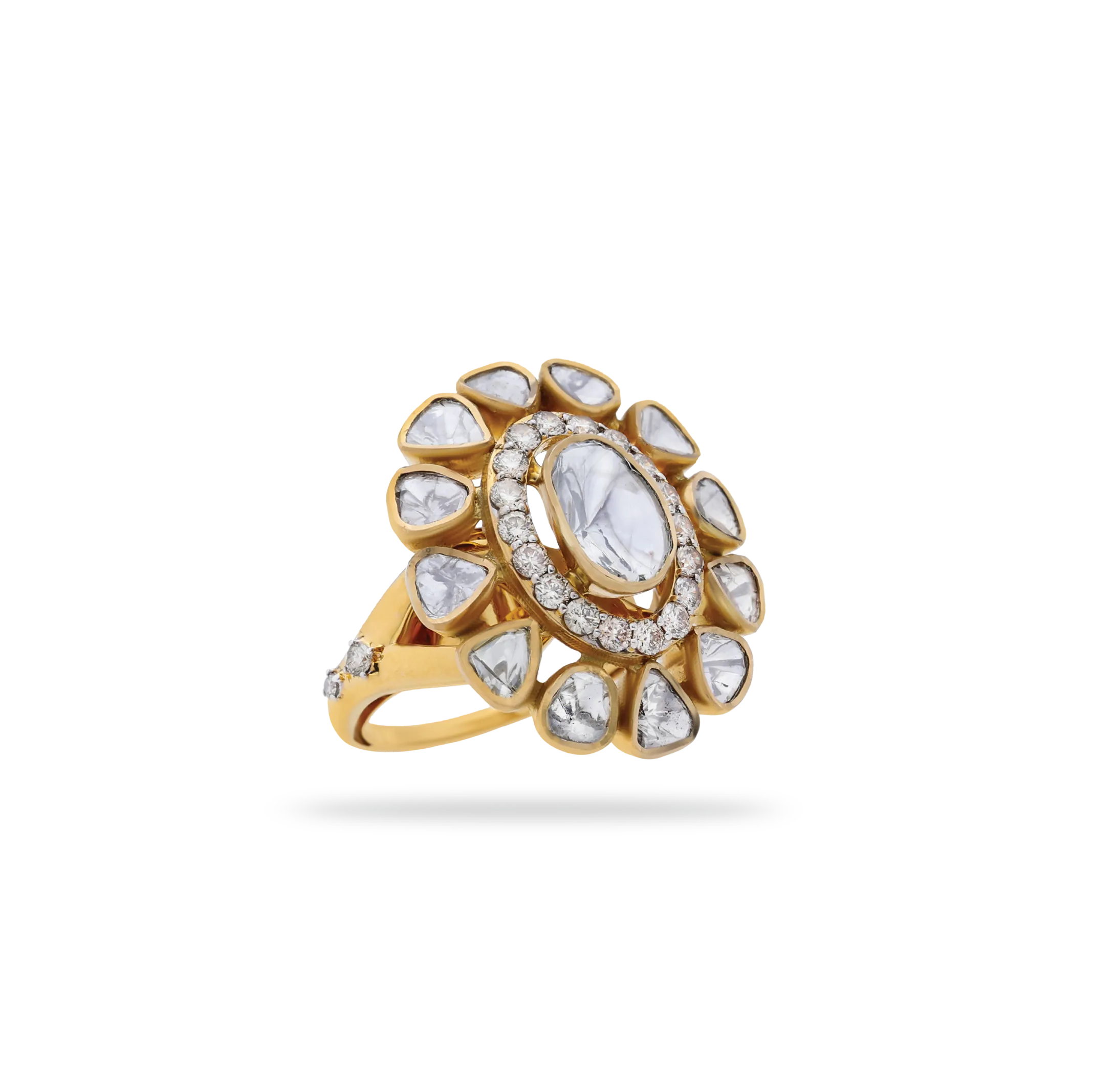
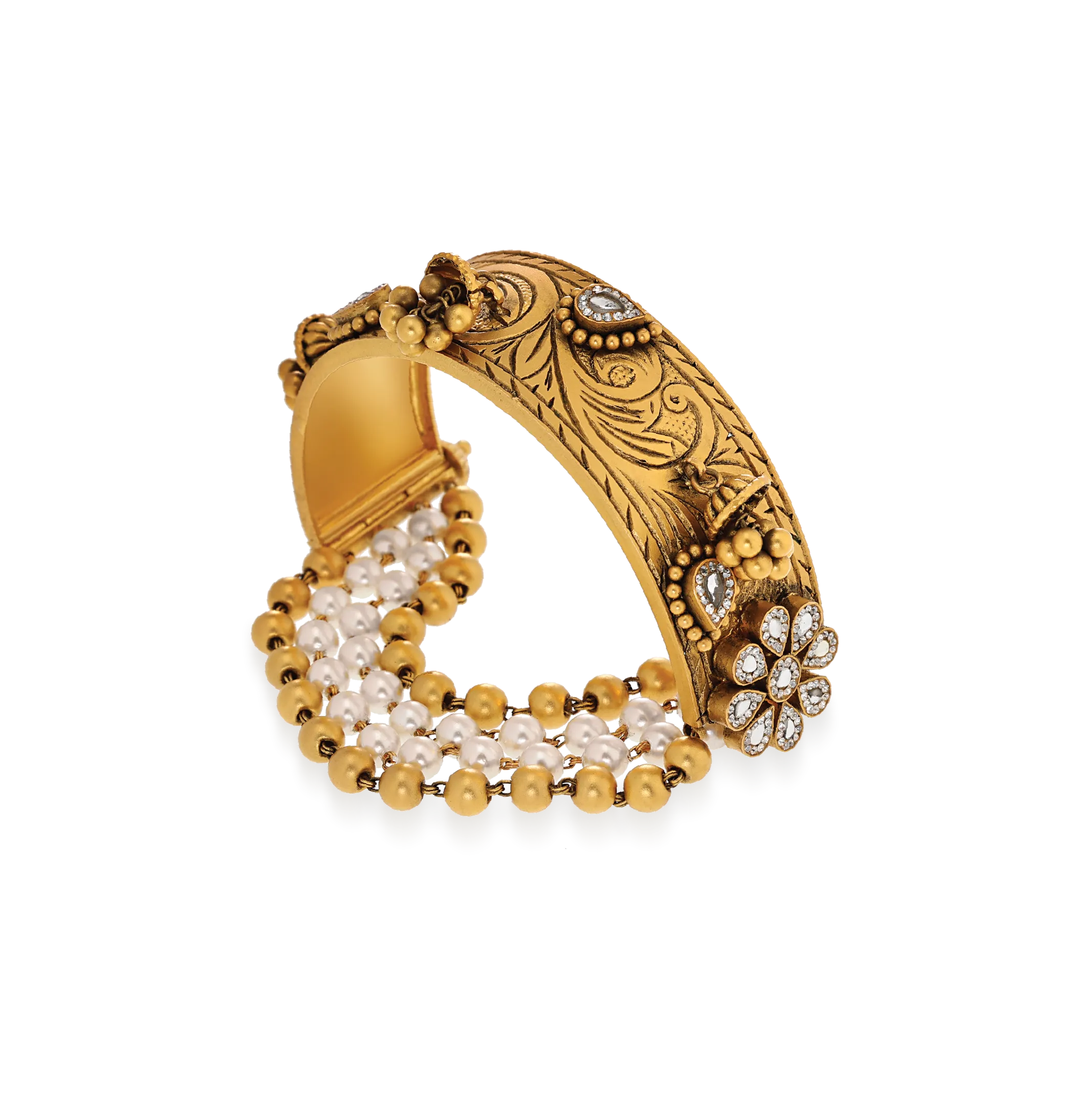
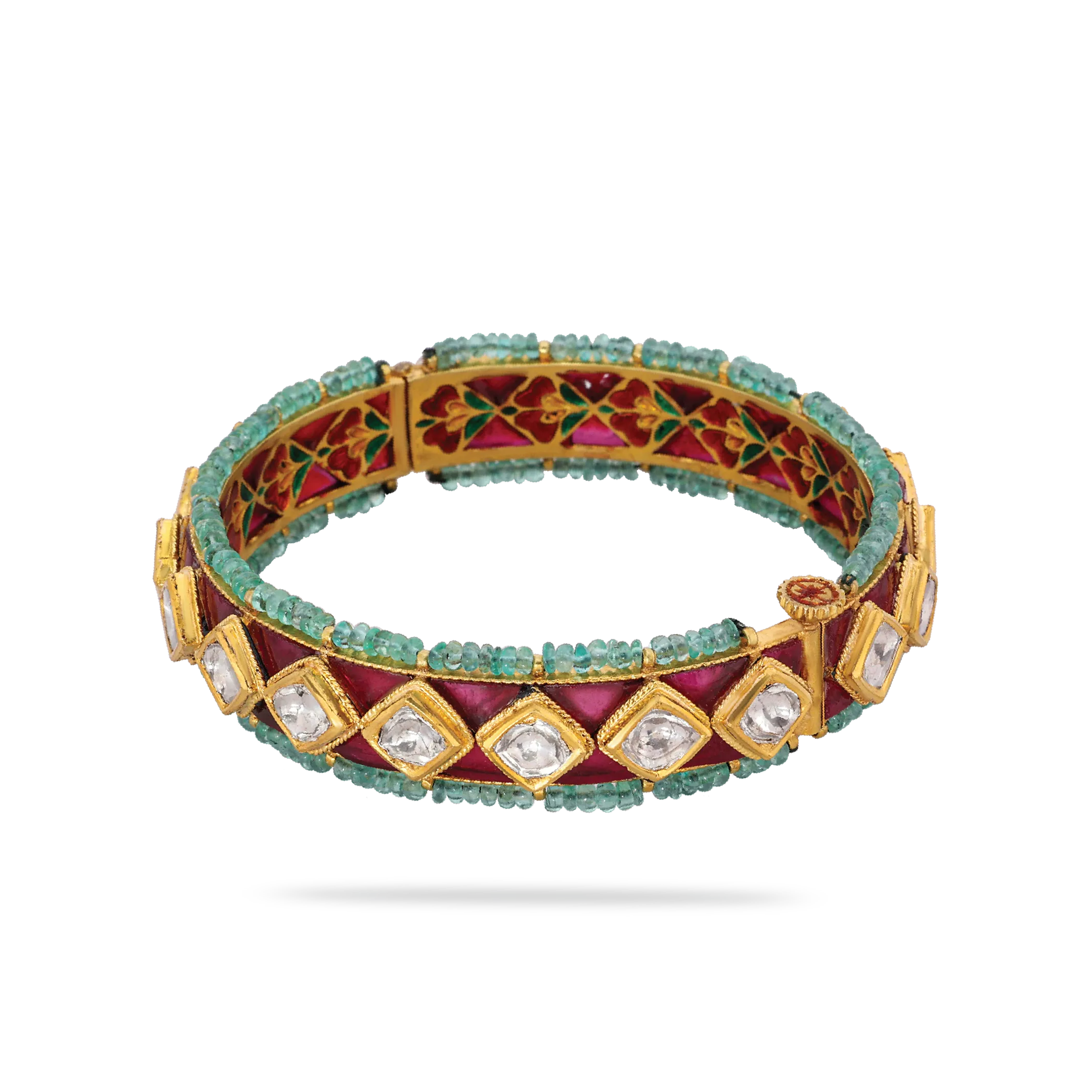
- Kundan, Polki and Jadau. These three special categories are exempt, because the construction of the piece — gold foil worked around uncut stones, lac filling behind the setting — makes conventional assay of the finished article impractical.
- Gold bullion in bar, plate, sheet, foil, rod, wire, strip, tube or coin form.
- Articles for export conforming to a foreign buyer's specification, articles for export and re-import, and articles for international or approved domestic business-to-business exhibitions.
- Jewellers with annual turnover up to ₹40 lakh. Note the figure. It is often misreported as ₹2 crore.
- Watches and fountain pens, gold thread, incomplete articles intended for further manufacture, and articles for medical, dental, veterinary, scientific or industrial use.
A correction worth carrying with you
Several widely-shared articles add Meenakari and Thewa to the exempt special categories. They are not in the statutory list — only Kundan, Polki and Jadau are. If a seller tells you a Meenakari piece cannot be hallmarked because it is exempt, that is not what the order says. Ask again.
None of this means an exempt piece is unverifiable. It means you verify it differently: on the seller's own written statement of purity, on an invoice that specifies caratage, and on the standing of the house you are buying from. For Kundan and Polki in particular, the gold content, the quality of the uncut stones and the honesty of the weight breakdown are all matters of the jeweller's word. Choose accordingly.
Three things a HUID does not do
This is where a lot of buyers over-read the mark, and where an honest jeweller ought to be straight with you.
It does not certify the diamonds or gemstones
A hallmark speaks to the precious metal. Nothing about the HUID says anything about the colour, clarity or origin of a stone set into the piece, or whether a ruby has been glass-filled, or whether a diamond is natural or laboratory-grown. Those questions are answered by a separate gemmological report. If you are buying a studded piece, the hallmark and the stone certificate are two different documents and you want both.
It does not tell you whether the price is fair
Purity and price are unrelated. Two 22K916 bangles of identical weight, both properly hallmarked, can differ substantially in price because of making charges, wastage, and how each house prices its craftsmanship. The hallmark tells you what the metal is. What you are paying for it is a separate conversation, and one we have set out in full in our guide to gold making charges per gram.
It does not certify the net weight
The hallmark is applied per article regardless of weight, and the code says nothing about how much of what you are holding is gold as against stones, lac, enamel or thread. On a studded or Jadau piece the gross weight and the net gold weight can be very different numbers. Insist that your invoice separates them.
What about the jewellery already in your locker?
Two reassurances, both official.
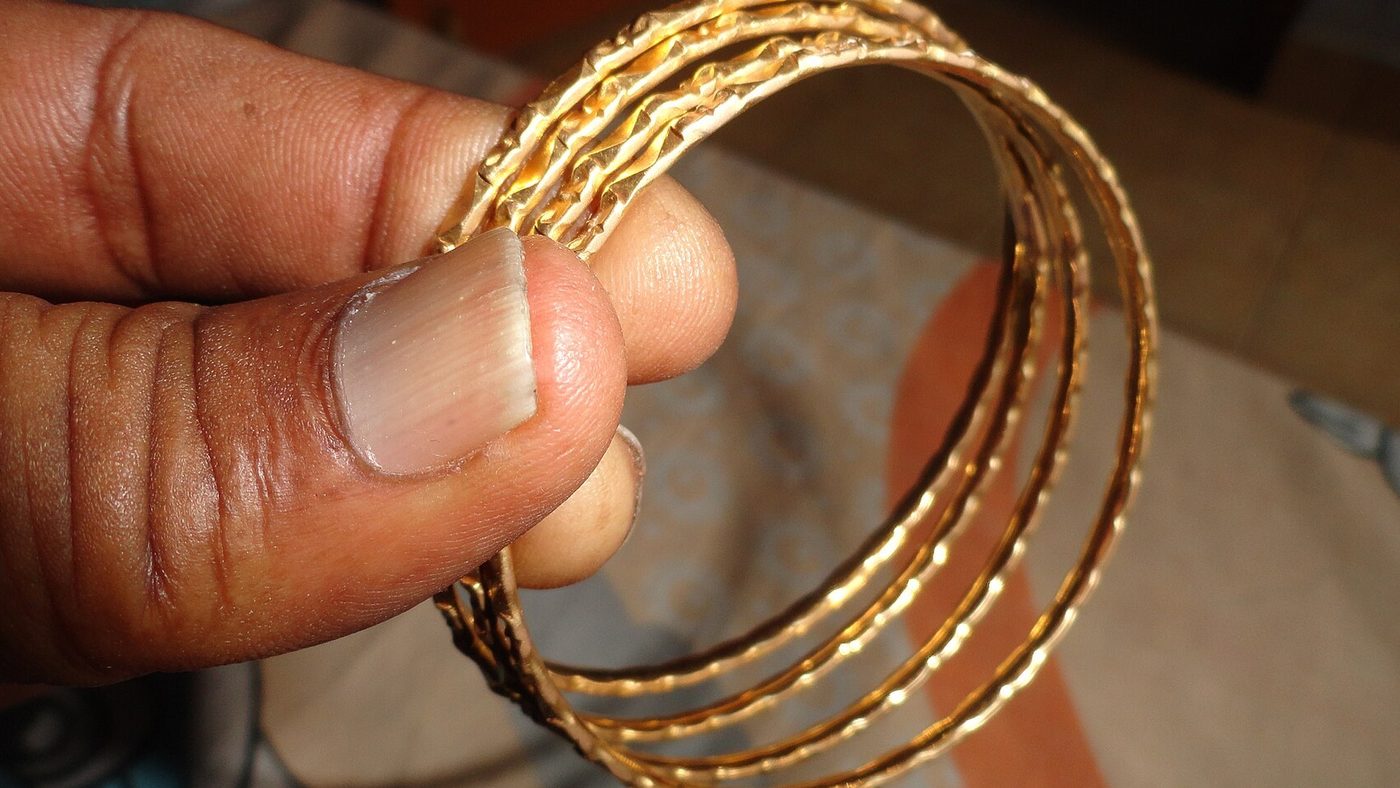
Hallmarked jewellery held by consumers under the older schemes remains valid, and a hallmark is valid for the entire lifetime of the hallmarked article. Your mother's 1990s hallmarked bangles did not expire in 2021. Nobody needs to re-hallmark anything they already own.
And you may freely sell or exchange old jewellery, hallmarked or not, HUID or not. Consumers are expressly permitted to sell old un-hallmarked or hallmarked jewellery to a jeweller. Any suggestion that non-HUID gold cannot be exchanged is simply wrong — though what it is worth depends on assay, which is the subject of our guide to valuing old gold jewellery.
What did change was on the seller's side, not the owner's. From 1 April 2023 jewellers could only sell HUID-hallmarked gold; stock hallmarked under the old scheme could be sold until 30 June 2023, and only where it had been formally declared to BIS. Those deadlines governed shop inventory. They never applied to anything in a customer's possession.
What you are entitled to ask for in the shop
BIS requires a registered jeweller to make several things available to you. Knowing the list changes the tone of the conversation.
- A magnifying glass of at least 10×, so you can see the hallmark yourself.
- A calibrated balance, so you can verify the weight.
- The jeweller's BIS registration certificate, on display.
- The BIS logo with “Hallmarked jewellery available for sale” displayed outside the premises, a chart correlating fineness to caratage, and a BIS CARE app poster.
- Hallmarking charges as fixed by BIS — ₹45 per article for gold, with a minimum of ₹200 per consignment, taxes extra. It is charged per article regardless of weight, and it is separate from making and wastage charges.
You can also have any piece tested independently. A consumer may get jewellery tested at any BIS-recognised Assaying and Hallmarking Centre for ₹200, by fire assay as per IS 1418.
If a piece turns out to be under-purity
Under the BIS Rules, where a precious metal article does not conform, compensation is twice the amount of the difference calculated on the basis of the shortage in purity for the weight of the article sold, plus the testing charges. Complaints go to BIS through the BIS CARE app, the BIS website, or complaints@bis.gov.in. Selling non-hallmarked gold in a notified district is an offence under the Bureau of Indian Standards Act, 2016, carrying imprisonment of up to two years, or a fine of not less than ₹2 lakh for a first contravention rising to not less than ₹5 lakh for subsequent ones and extending up to ten times the value of the goods, or both.
Does silver have a HUID?
It can, and this is routinely reported wrongly, so it is worth stating precisely.
Silver hallmarking in India remains voluntary. It has been voluntary since October 2005 and it has not been made mandatory. What changed is that HUID marking became compulsory for any silver article that is hallmarked, with effect from 1 September 2025, under the revised standard IS 2112:2025.
So a silver article without a hallmark is not in breach of anything. A silver article with a hallmark applied on or after 1 September 2025 should carry a HUID. Hallmarked silver now shows three components — the BIS standard mark with the word SILVER, the purity grade, and the HUID — across seven purity grades: 800, 835, 925, 958, 970, 990 and 999.
The honest summary is that HUID has made one specific question — is this metal what the ticket says it is — answerable in thirty seconds by anyone with a phone. That is a real improvement, and it is worth using every time you buy. It has not made the other questions go away. Weight, wastage, making charges, stone quality and what happens when you bring the piece back in ten years are still matters of who you are dealing with.
Frequently asked questions
What is a HUID number in gold?
A HUID (Hallmark Unique Identification) number is a six-digit alphanumeric code that is unique to each individual hallmarked gold article and is traceable. It is laser-marked onto the piece at a BIS-recognised Assaying and Hallmarking Centre and, since 1 July 2021, forms one of the three marks that make up a BIS hallmark alongside the BIS logo and the article's purity in caratage and fineness.
How many digits is a HUID number?
Six. A HUID is a six-digit alphanumeric code, meaning it contains a mix of letters and numbers rather than digits alone.
How do I check a HUID number?
Download the free BIS CARE app, the official mobile application of the Bureau of Indian Standards, available on Android and iOS. Open the 'Verify HUID' feature, enter the six-character code marked on the article, and the app returns the article type, its purity, the jeweller who had it hallmarked with their registration number, and the hallmarking centre that tested it. Then match the returned article type and purity against the piece in front of you.
Can I verify a HUID number on a website?
No. HUID verification for consumers is available through the BIS CARE mobile app only. BIS does not operate a public web page where consumers can enter a HUID, so any website offering to check a HUID online is not an official BIS service.
What are the three marks on hallmarked gold?
Since HUID was introduced on 1 July 2021, a BIS hallmark on gold consists of three marks: the BIS logo, the purity of the article expressed in both caratage and fineness such as 22K916, and the six-digit alphanumeric HUID number. The jeweller's identification mark and the Assaying and Hallmarking Centre's mark, which appeared in the earlier four-mark hallmark, were removed.
Is my old hallmarked gold without a HUID still valid?
Yes. Hallmarked jewellery held by consumers under the earlier schemes remains valid, and a hallmark is valid for the entire lifetime of the article. You do not need to re-hallmark jewellery you already own, and you may freely sell or exchange old jewellery whether it is hallmarked or not. The deadlines of 31 March 2023 and 30 June 2023 applied to jewellers selling old stock, not to jewellery already owned by customers.
Which gold purities can be hallmarked in India?
IS 1417:2016 permits hallmarking of six caratages: 14K at 585 fineness, 18K at 750, 20K at 833, 22K at 916, 23K at 958 and 24KS at 995. A 9K grade also exists in the standard as a voluntary grade. Note that the 24K jewellery grade is 24KS at 995 fineness, not 999.
Why does my gold jewellery not have a HUID?
Several categories are exempt from mandatory hallmarking: articles weighing less than two grams; Kundan, Polki and Jadau; gold bullion in bar, sheet, wire or coin form; articles for export or for approved exhibitions; watches and fountain pens; gold thread; and jewellers with annual turnover up to 40 lakh rupees. Mandatory hallmarking also applies only in the 385 notified districts, so gold bought elsewhere may not be hallmarked.
Do gold coins have a HUID number?
No. Gold bullion in any shape of bar, plate, sheet, foil, rod, wire, strip, tube or coin is expressly excluded from the mandatory hallmarking order, so gold coins and bars do not carry a HUID. Their absence of a HUID says nothing about their purity. Assess bullion on the refiner's assay certificate and sealed packaging instead.
Does a HUID guarantee the diamonds in my jewellery?
No. A hallmark and its HUID relate only to the precious metal. They say nothing about the colour, clarity, origin or treatment of any diamond or gemstone set in the piece, and nothing about whether a diamond is natural or laboratory-grown. Studded jewellery needs a separate gemmological report in addition to the hallmark.
Does each earring in a pair have its own HUID?
Yes. Each article in a pair carries its own hallmark with a different HUID, and every detachable part of a piece is separately hallmarked with its own HUID as well.
What is the penalty for selling non-hallmarked gold jewellery in India?
Selling non-hallmarked gold jewellery in a notified district is an offence under the Bureau of Indian Standards Act, 2016. It carries imprisonment of up to two years, or a fine of not less than 2 lakh rupees for a first contravention and not less than 5 lakh rupees for second and subsequent contraventions, extending up to ten times the value of the goods, or both. Separately, where an article is found under-purity, consumer compensation is twice the difference calculated on the shortage in purity for the weight sold, plus testing charges.
Bring the piece in. We will show you the hallmark.
Our flagship on Main Guard Cross Road keeps a 10× loupe and a calibrated balance on the counter for exactly this. No appointment needed, no obligation to buy.
Visit our Bengaluru storeSpeak to a jewellerSources & standards referenced
- Bureau of Indian Standards — Hallmarking FAQs (definition of HUID, three marks, permitted caratages, hallmarking charges, consumer testing).
- Bureau of Indian Standards — Consumer Protection, ‘Verify HUID’ on the BIS CARE app.
- Bureau of Indian Standards — Guidelines for Jewellers, July 2026 (10× magnifier, calibrated balance, display requirements).
- Hallmarking of Gold Jewellery and Gold Artefacts Order, 2020 (S.O. 205(E)) as amended, including S.O. 2481(E) of 23 June 2021 — exemptions.
- Hallmarking of Gold Jewellery and Gold Artefacts (Second Amendment) Order, 2026 (S.O. 2117(E)), 28 April 2026 — 385 notified districts.
- S.O. 1047(E) of 3 March 2023 and S.O. 1555(E) of 31 March 2023 — HUID-only sale and the declared old-stock deadline.
- Press Information Bureau releases of 4 March 2023, 28 October 2024, 4 December 2025 and 13 March 2026 — phase table, four-mark to three-mark change, silver HUID, volumes.
- Bureau of Indian Standards Act, 2016, sections 17 and 29; BIS Rules 2018, rule 49 — penalties and consumer compensation.
- IS 1417:2016 (gold), IS 1418 (assay), IS 2112:2025 (silver).









.webp)


.webp)