The Ultimate Guide to Choosing and Wearing Your Navaratna Ring
December 4, 2025 | 10 minutes read
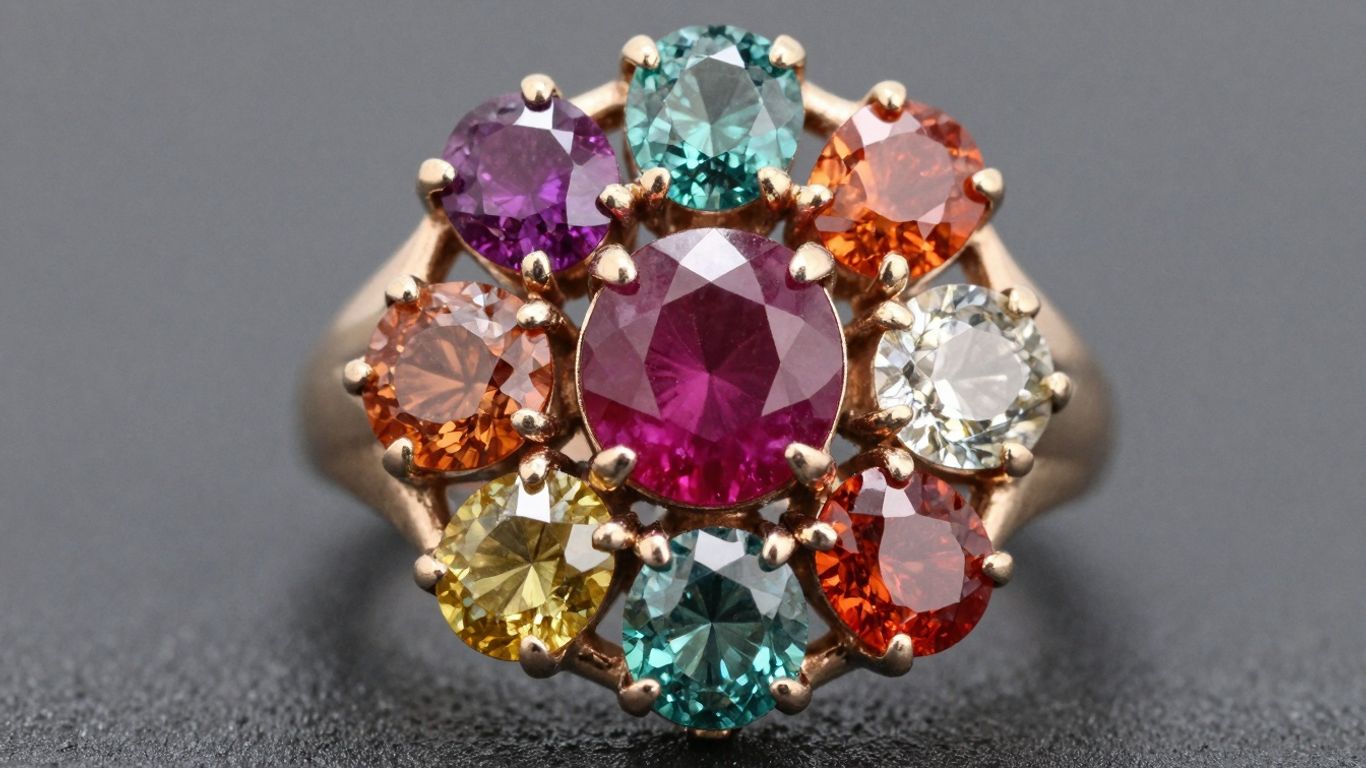
Thinking about getting a navaratna ring? It's a pretty cool piece of jewelry, steeped in history and meaning. These rings aren't just about looking good; they're said to connect you with cosmic energies through nine specific gemstones. We'll walk through what each gem represents and how to pick and wear your own navaratna ring to get the most out of it. It’s a journey into ancient beliefs and personal style, all wrapped up in one beautiful ring.
Key Takeaways
- The navaratna ring features nine gemstones, each linked to a celestial body in Vedic astrology.
- Each of the nine gems – Ruby, Pearl, Red Coral, Emerald, Yellow Sapphire , Diamond, Blue Sapphire , Hessonite, and Cat's Eye – is believed to influence specific aspects of life.
- The arrangement of these gems on the navaratna ring is important, often with Ruby at the center, symbolizing the Sun.
- When choosing a navaratna ring, consider the quality of each individual gemstone and the metal setting.
- For maximum benefit, it's advised that the gemstones in your navaratna ring touch your skin and are properly energized through rituals.
Understanding the Navaratna Ring
The Nine Celestial Gems
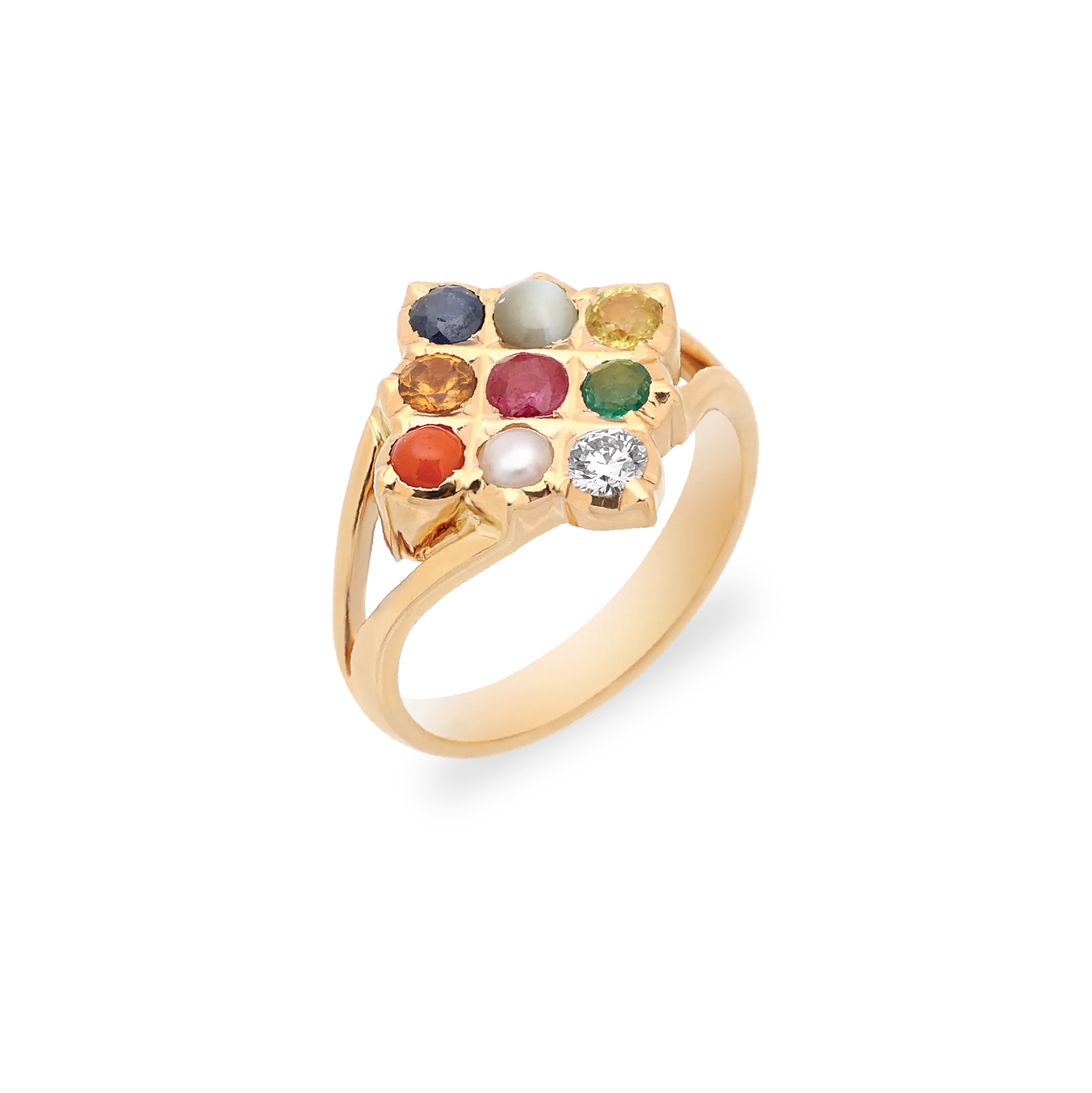
The Navaratna, a Sanskrit term meaning "nine gems," isn't just a pretty collection of stones. It's a concept deeply rooted in ancient traditions, particularly in South Asian cultures. Think of it as a cosmic blueprint translated into jewelry. Each of the nine gems is linked to one of the nine celestial bodies, or Navagraha, in Vedic astrology. The idea is that wearing these specific gems in a particular arrangement can help balance the energies of these planets in your life. It's believed to bring harmony, good fortune, and protection.
Astrological Significance of the Navaratna
In Vedic astrology, the Navagraha (Sun, Moon, Mars, Mercury, Jupiter, Venus, Saturn, Rahu, and Ketu) are thought to influence our lives. The Navaratna ring acts as a sort of astrological shield or amplifier. Each gem is chosen to represent and harmonize the energy of its corresponding planet. For instance, the Ruby is linked to the Sun, aiming to boost vitality and confidence, while the Blue Sapphire connects with Saturn, intended to bring discipline and clarity. The precise arrangement of these gems is just as important as the gems themselves, as it's believed to create a synergistic effect. It's not just about wearing nine pretty stones; it's about wearing a system designed to align cosmic influences.
Historical Roots of the Navaratna Concept
The exact origin of the Navaratna concept is a bit fuzzy, with a couple of popular theories. One story points to the court of Emperor Vikramaditya, where nine brilliant scholars were honored with the title "Navratnas" for their immense wisdom. Another, perhaps more widely known, links the term to the Mughal emperor Akbar's court, which also featured nine distinguished individuals – artists, musicians, and scholars – celebrated for their talents. Over time, however, the association shifted from esteemed people to esteemed gemstones, solidifying the Navaratna as a powerful astrological and cultural symbol that has endured for centuries.
The Navaratna is more than just jewelry; it's a piece of ancient wisdom worn close to the skin, a tangible connection to the cosmos and the energies that shape our lives. It represents a belief in balance and cosmic harmony, a desire to bring the celestial influences into alignment with our earthly existence.
The Nine Gems of the Navaratna Ring
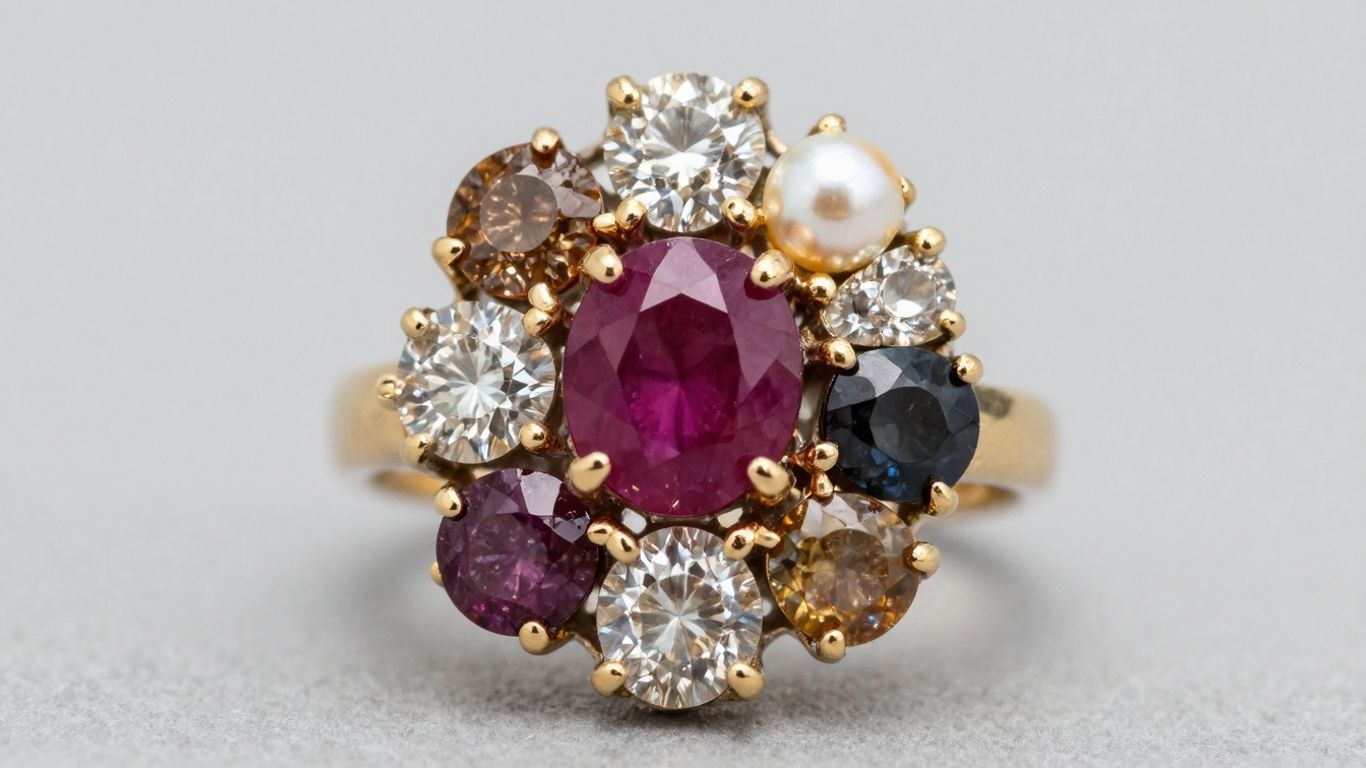
So, the Navaratna ring isn't just a pretty piece of jewelry; it's packed with meaning, especially when it comes to the nine specific gemstones it features. Each one is linked to a planet in Vedic astrology, and together, they're supposed to bring balance and good vibes into your life. It's pretty wild when you think about it, like wearing a little piece of the cosmos on your finger.
Ruby: The Sun's Vitality
First up, we have the Ruby, often called the 'King of Gems.' It's tied to the Sun, which makes sense since the Sun is the center of everything, right? Wearing a ruby is thought to give you a boost in energy and confidence. People believe it can help with career success and just generally make you feel healthier and happier. There are old stories about warriors putting rubies in their skin before battles for protection, and back in the day, people thought they brought wisdom and good luck in love.
Pearl: The Moon's Serenity
Next is the Pearl, which represents the Moon. Pearls are all about purity, peace, and keeping things calm. If you're feeling a bit all over the place emotionally, a pearl is supposed to help you feel more stable and creative. It's like a little reminder to take a deep breath and find your inner peace, especially when things get hectic.
Red Coral: Mars' Courage
Then there's Red Coral, linked to Mars. This one is all about giving you courage, energy, and a sense of protection. Its bright red color really matches its vibe – it's supposed to make you more assertive and give you a physical boost. Think of it as a gemstone that encourages action and strength. Historically, people have used red coral as a protective charm, even in times of war.
Emerald: Mercury's Intellect
Finally, for this section, we have Emerald, which is connected to Mercury, the planet of communication and smarts. If you want to sharpen your mind, improve how you talk to people, or boost your memory, an emerald might be your go-to. It's believed to help with success in school and business, and even make relationships smoother. Ancient Egyptians even thought emeralds symbolized eternal life.
The idea behind these nine gems is that they work together, each influencing a different aspect of your life through its planetary connection. It's a whole system designed to harmonize cosmic energies.
Exploring the Remaining Navaratna Gems
We've covered the first four celestial gems, but the Navaratna ring isn't complete without its remaining five. Each brings its own unique planetary influence and energy to the ensemble.
Yellow Sapphire : Jupiter's Wisdom
Often called 'Pukhraj' in Vedic traditions, the yellow sapphire is linked to Jupiter, the planet of expansion, wisdom, and good fortune. Wearing a yellow sapphire is thought to bring prosperity, enhance knowledge, and foster spiritual growth. It's believed to attract luck and success, making it a popular choice for those seeking to improve their financial standing or academic pursuits. Its bright, sunny hue is also associated with joy and optimism.
Diamond: Venus's Grace
The diamond, or 'Heera', represents Venus, the planet of love, beauty, and harmony. This gem is renowned for its ability to bring balance, charm, and artistic talent to its wearer. It's said to promote strong, happy relationships and attract abundance. Historically, diamonds have been seen as symbols of enduring love, making them a fitting addition to a ring meant to harmonize cosmic energies.
Blue Sapphire : Saturn's Discipline
Associated with Saturn, the blue sapphire ('Neelam') is known for bringing mental clarity, discipline, and spiritual insight. The deep blue color itself evokes a sense of wisdom and calm. In astrological circles, blue sapphire is considered a powerful gem for overcoming obstacles and challenges. It's believed to instill a sense of order and structure, helping to navigate life's complexities with greater focus.
Hessonite: Rahu's Protection
The hessonite garnet, or 'Gomed', is linked to Rahu, the north lunar node. While Rahu is often considered a shadow planet, the hessonite is believed to offer protection against negative influences and enhance concentration. Its warm, cinnamon-like color is thought to aid in meditation, promote mental healing, and amplify intuition. It's seen as a protective stone, helping to bring clarity amidst confusion.
Cat's Eye: Ketu's Intuition
Finally, the chrysoberyl cat's eye, or 'Lahsuniya', represents Ketu, the south lunar node. Despite Ketu's sometimes challenging astrological reputation, the cat's eye is believed to bestow spiritual insights, intuition, and protection from unseen forces. It's thought to foster enlightenment and inner wisdom, making it a gem for those on a spiritual path. The unique 'eye' effect within the stone is said to enhance psychic abilities and bring peace.
The arrangement of these nine gems on a ring is not arbitrary. Each stone has a specific place, often radiating outwards from a central gem, designed to create a harmonious balance of planetary energies. This precise placement is believed to amplify their collective power and ensure that their influences work together beneficially for the wearer.
The Final Gemstone and Its Role
Cat's Eye: Ketu's Intuition
We've covered a lot of ground with the Navaratna, but there's one more gem to discuss: the Cat's Eye, also known as Lahsuniya. This stone is linked to Ketu, which is the descending lunar node in Vedic astrology. Now, Ketu can sometimes get a bad rap because it's considered a 'shadow planet,' but the Cat's Eye is thought to help balance out any tricky influences. It's believed to boost intuition, offer protection from unseen troubles, and even help with spiritual growth. Think of it as a way to tune into your inner wisdom and find a bit more peace.
The Importance of Gemstone Arrangement
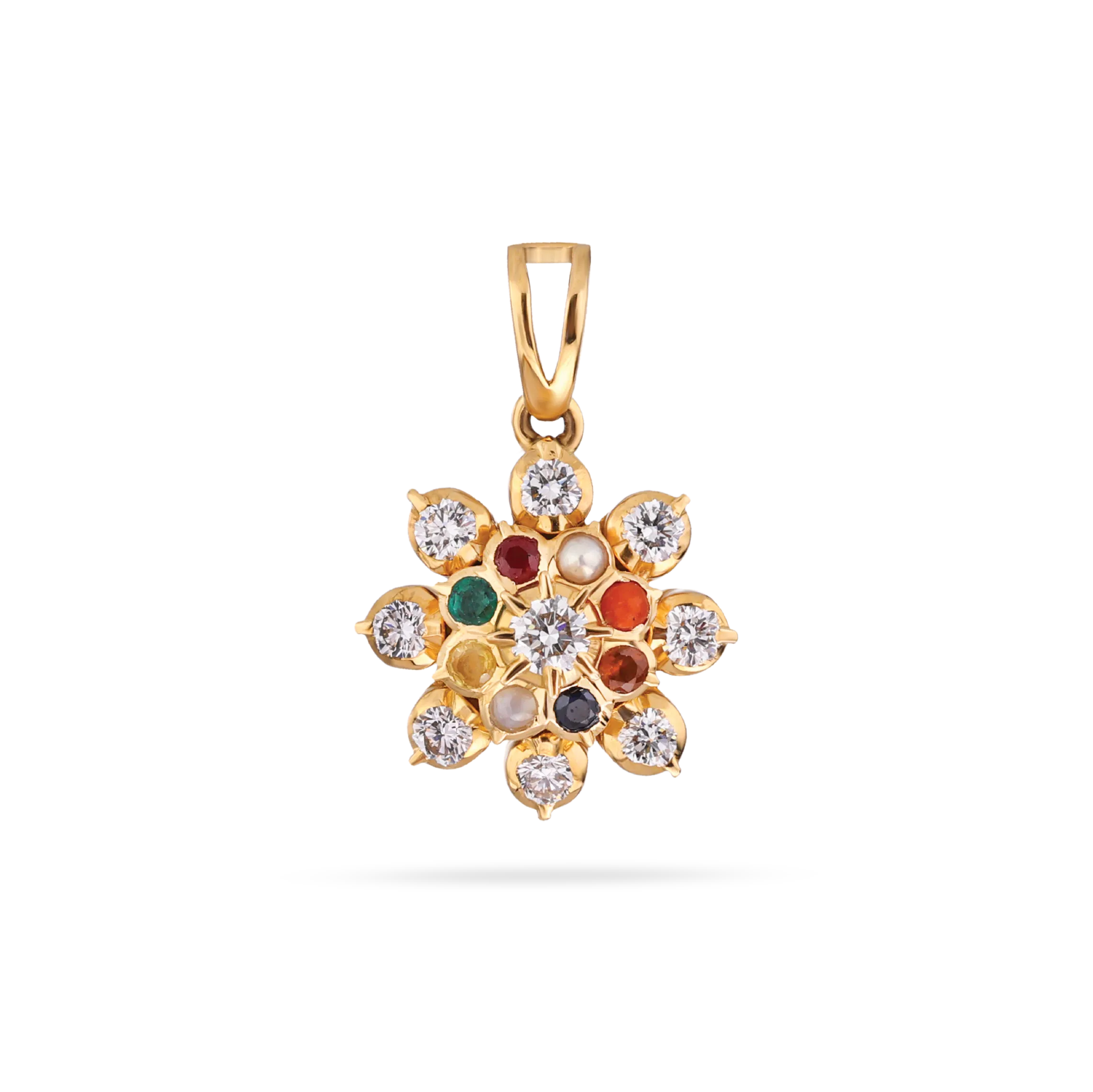
So, you've got all nine gems, but how do they all fit together? The way the Navaratna stones are arranged in a ring isn't just for looks; it's pretty important astrologically. The traditional setup places the Ruby, representing the Sun, right in the center. Then, the other eight gems are arranged around it in a specific clockwise order. This precise placement is thought to create a harmonious balance of planetary energies.
Here's a common way the gems are arranged, starting from the top and going clockwise:
- Top: Diamond (Venus)
- Right: Pearl (Moon)
- Bottom Right: Red Coral (Mars)
- Bottom: Hessonite (Rahu)
- Bottom Left: Blue Sapphire (Saturn)
- Left: Cat's Eye (Ketu)
- Top Left: Yellow Sapphire (Jupiter)
- Center: Ruby (Sun)
- Top Right (next to Diamond): Emerald (Mercury)
This specific order is believed to channel the cosmic energies of the planets in a way that benefits the wearer, creating a sort of protective and balancing shield.
It's a fascinating idea, isn't it? The whole concept of the Navaratna really ties us back to the idea that we're all connected to something bigger, like a cosmic dance. It's a beautiful reminder of how ancient cultures saw the universe and our place within it.
Choosing Your Navaratna Ring
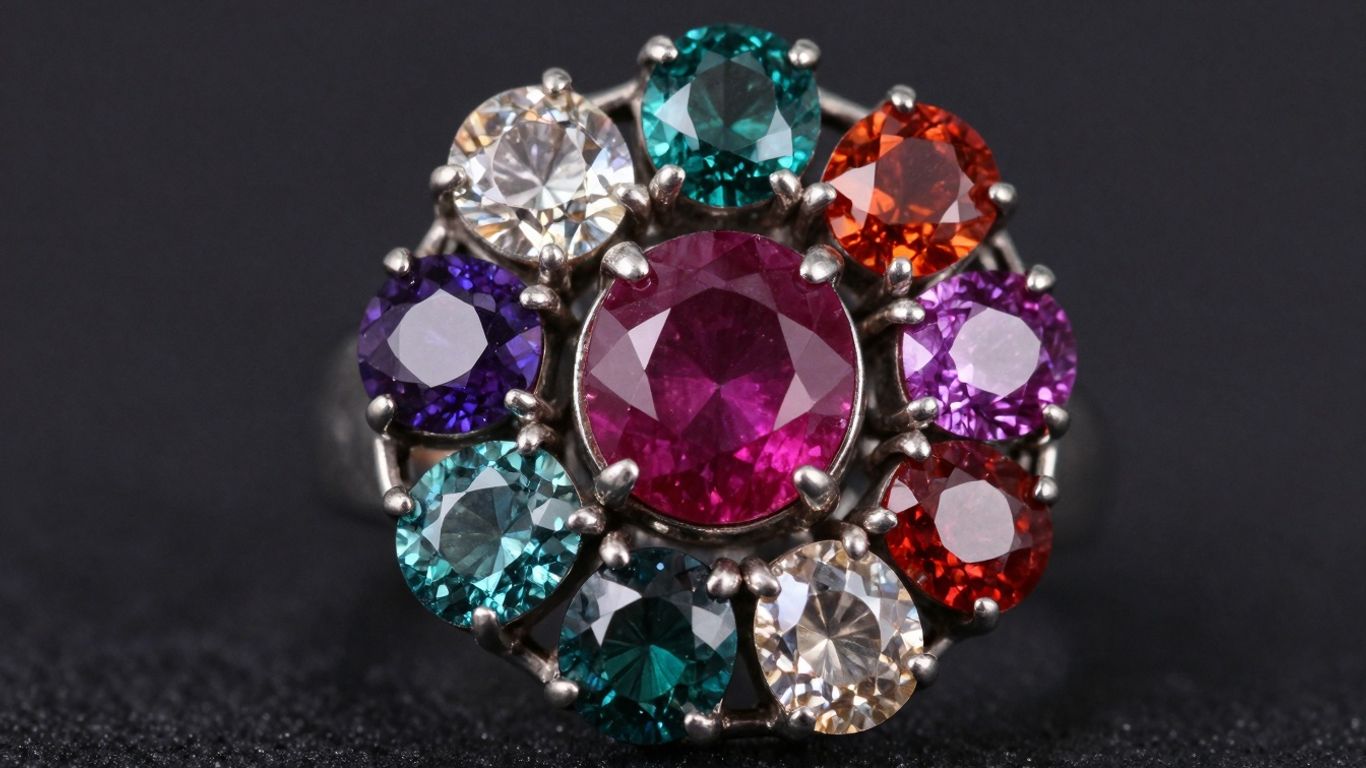
So, you've decided to get a Navaratna ring – that's awesome! But before you pick one out, there are a few things to think about to make sure you get a good one that really works for you. It's not just about grabbing the prettiest ring; there's a bit more to it.
Quality Considerations for Each Gemstone
When you're looking at Navaratna rings, the quality of each individual stone really matters. Think of it like a team – if one player isn't up to par, the whole team suffers. You want each of the nine gems to be as good as it can be.
Here's a quick rundown of what to look for:
- Ruby: Look for a vibrant red color, good clarity (meaning not too many visible inclusions), and a nice sparkle. The deeper and more uniform the red, the better.
- Pearl: Natural pearls are best, with a smooth surface, round shape, and a lovely luster (that soft glow). Avoid ones with too many blemishes or a dull appearance.
- Red Coral: A rich, uniform red color is ideal. It should be free from pits or white spots. Sometimes, coral can be treated, so it's good to know what you're looking at.
- Emerald: You want a bright, clear green. Some inclusions are normal for emeralds, but they shouldn't be so many that they make the stone look cloudy or weak.
- Yellow Sapphire : A bright, sunny yellow is what you're after. It should be clear and have a good sparkle. Avoid stones that look too pale or have a brownish tint.
- Diamond: For diamonds, think about the classic 'four Cs' – cut, color, clarity, and carat weight. Even in a Navaratna, a well-cut diamond will shine much brighter.
- Blue Sapphire : A deep, velvety blue is usually preferred. Like rubies, clarity and sparkle are important. Avoid stones that look too dark or have a grayish tone.
- Hessonite Garnet (Gomed): This one is a bit trickier. It should have a warm, honey-like color, sometimes with a slight reddish or brownish tint. It shouldn't be too dark or muddy-looking.
- Cat's Eye (Chrysoberyl): The key here is the 'chatoyancy' – that sharp band of light that moves across the stone. The clearer and more defined this band is, the better. A greenish-yellow or honey color is common.
Understanding Gemstone Treatments
This is a big one. Many gemstones, especially the more valuable ones like sapphires and emeralds, are often treated to improve their color or clarity. While treatments aren't necessarily bad, it's important to know if a stone has been treated and what kind of treatment it received. Some treatments are permanent, while others might not be.
Always ask the jeweler about treatments. If a stone has been treated, it might affect its value and how it interacts with its planetary energy. For the most potent astrological benefits, unheated and untreated stones are often preferred, though they can be harder to find and more expensive.
Selecting the Right Metal Setting
The metal your Navaratna ring is set in also plays a role. Traditionally, gold is often used, especially for the ruby and yellow sapphire , as it's associated with the Sun and Jupiter. Silver is sometimes used for the pearl and moonstone. However, many modern rings use a mix or opt for metals like white gold , platinum, or even sterling silver.
- Gold: Often seen as auspicious and good for solar energies.
- Silver: Associated with lunar energies and calmness.
- Platinum/White Gold : Modern choices that are durable and look great.
Ultimately, the metal should be comfortable for you to wear and complement the beauty of the gemstones. Remember, the ring is traditionally worn on the ring finger, so make sure the setting is comfortable for everyday wear.
Wearing Your Navaratna Ring for Maximum Benefit
So, you've got your Navaratna ring, all shiny and full of those nine special gems. That's awesome! But just having it isn't quite the whole story, you know? To really get the most out of it, there are a few things to keep in mind. It’s not just about looking good, though it definitely does that.
The Importance of Skin Contact
This is a big one, seriously. For the energies of the gemstones to actually do their thing and connect with you, they need to be able to touch your skin. Think of it like needing a direct connection for the electricity to flow. If your ring is lined with metal or sits too high on your finger without touching your skin, the connection is weaker. The most effective way to wear it is so that each gem can make contact with your skin. This allows the unique vibrations of each stone to interact with your body's own energy field.
Energizing Your Navaratna Ring
Okay, so the gems themselves have natural energies, but they can also pick up all sorts of stuff from their journey from the earth to your finger. To make sure your ring is working for you and not against you, it's a good idea to get it 'cleansed' and 'energized'. This usually involves some kind of ritual. It's like giving your ring a fresh start, making sure it's pure and ready to bring you good vibes.
The Role of Vedic Rituals and Pooja
This is where things get a bit more traditional. In Vedic practices, there are specific ceremonies, called 'poojas', that are done to activate and bless gemstones. These rituals often involve chanting specific mantras and prayers, sometimes even with your name included. The idea is to purify the gems and imbue them with positive cosmic energy. It's believed that a properly energized Navaratna ring can help balance planetary influences in your life, bringing about harmony and good fortune. Some people even get their rings energized before they start wearing them, or periodically afterward, to keep the energy strong.
Here's a quick rundown of what's generally involved:
- Cleansing: Removing any residual energies from the stone's journey.
- Purification: Using sacred elements like water, incense, or chanting.
- Activation: Invoking planetary energies through specific mantras.
- Blessing: Offering prayers for the wearer's well-being and prosperity.
While the specific details of these rituals can vary, the core purpose remains the same: to ensure your Navaratna ring is a source of positive influence and cosmic alignment in your life. It's about making that connection between the celestial bodies, the gems, and you as strong and clear as possible.
Wrapping It Up
So, there you have it. Choosing a Navaratna ring is more than just picking out a pretty piece of jewelry. It's about understanding the history, the stones, and what they might mean for you. Whether you're into the astrological side of things or just love the look, these rings have a special kind of charm. Remember to pick stones that feel right, get them set well, and wear them with a bit of pride. It’s a piece of history and a bit of cosmic connection all on your finger. Pretty cool, huh?
Frequently Asked Questions
What exactly is a Navaratna ring?
A Navaratna ring is a special piece of jewelry that features nine different gemstones. Each of these gems is linked to a planet in astrology. The idea is that wearing these nine gems together helps balance the energies of these planets in your life, bringing good luck and harmony.
Why are there nine specific gems in a Navaratna ring?
These nine gems represent the nine celestial bodies, or 'Navagraha,' in Vedic astrology. Each planet has its own influence, and by including all nine gems, the ring aims to create a balance and potentially ward off any negative planetary effects while enhancing the positive ones.
Do I need to be an expert in astrology to wear a Navaratna ring?
Not at all! While the ring has deep astrological roots, many people wear it simply because they find it beautiful or are drawn to its symbolism of balance and cosmic connection. You don't need to understand all the planetary details to appreciate or benefit from wearing it.
How should I wear my Navaratna ring to get the most out of it?
It's generally recommended that the gemstones in your ring touch your skin. This direct contact is believed to help the energies of the gems connect with your body. Some traditions also suggest special rituals or prayers to 'activate' or 'energize' the ring for better results.
What if one of the gems in my ring is treated or not perfectly natural?
While natural, untreated gemstones are considered the most potent, treated gems can still offer beauty and some energetic benefits. When choosing a ring, it's good to ask about the quality and any treatments the stones may have undergone. The overall beauty and intention behind wearing the ring are also very important.
Can I wear a Navaratna ring every day?
Yes, you can! Navaratna rings are often designed to be durable enough for daily wear . The metal setting plays a role in this, so choosing a sturdy metal like gold or platinum is a good idea. Wearing it consistently is thought to help maintain the balance of planetary energies.
Related blogs:
November 20, 2025
The Timeless Elegance of the Tennis Bracelet: A Comprehensive Guide
Read More
November 20, 2025
The Ultimate Guide to Styling and Wearing a Choker Necklace
Read More
November 20, 2025
Find Your Perfect Engagement Ring: A Comprehensive Guide to Styles and Diamonds
Read More
November 20, 2025
The Timeless Elegance of a Diamond Tennis Bracelet: A Buyer's Guide
Read More









.webp)


.webp)