Ruby bridal jewellery: How to choose the perfect pieces for your wedding
August 2, 2026 | 10 minutes read
Key Takeaways
Ruby bridal jewellery can feel traditional, personal, and surprisingly versatile when its colour, scale, and metal are chosen with the whole outfit in mind.
- Choose the ruby tone and jewellery scale alongside your wedding outfit.
- Ask about treatments, origin, certification, and return terms before buying.
- Balance one statement piece with quieter supporting jewellery.
- Consider comfort, photography, and future wear—not just the ceremony.
- Build in time for sizing, alterations, cleaning, and secure storage.
Understand the appeal of ruby bridal jewellery
Ruby bridal jewellery brings a rich note of red to a look that may otherwise be built around ivory, gold, or soft neutrals. The stone can read as regal and ceremonial, yet it also suits clean contemporary styling. Choosing well means thinking about meaning, colour, and how often you would genuinely wear the pieces afterward.
What rubies symbolise in bridal traditions
Rubies have long been associated with love, vitality, courage, and protection in different cultural traditions. For a bride, that symbolism can add emotional depth without dictating a particular design. A ruby pendant inherited from family, a pair of earrings chosen for the ceremony, or a ring selected as a private keepsake can each carry a different kind of significance.
How ruby tones complement a wedding look
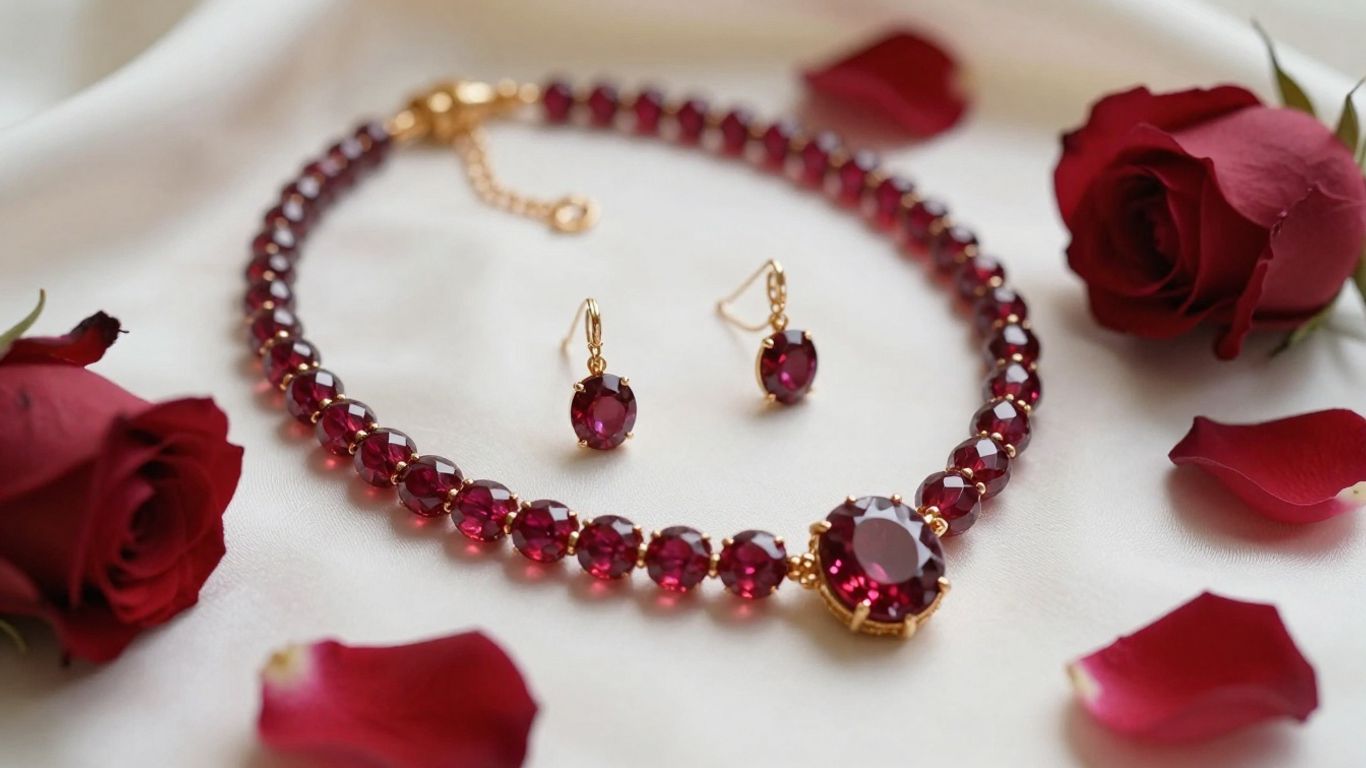
Ruby colour ranges from bright, lively red to deep wine and burgundy tones. A vivid red can bring energy to an ivory gown, while a darker stone often feels more formal against champagne, jewel-toned, or richly embroidered clothing. View the jewellery in daylight and in your venue lighting, since surrounding colours can change how warm or cool the stones appear.
Natural rubies, lab-grown stones, and ruby-coloured alternatives
Natural rubies may contain inclusions and can vary considerably in price. Lab-grown stones offer another genuine ruby option, while ruby-coloured glass, cubic zirconia, and other alternatives can recreate the look at a lower cost. The key is being clear about what you are purchasing and whether the seller has described the material, treatment, and setting accurately.
Why ruby jewellery works beyond the wedding day
A large bridal set may be perfect for the ceremony but less useful afterward. Smaller ruby studs, a slim bracelet, or a ring with a practical setting can move easily into evening wear and celebrations. If long-term versatility matters, choose pieces that can be worn separately rather than a set that only looks complete when every item is used.
Choose a ruby bridal jewellery style
Start with the mood you want rather than with a fixed checklist of pieces. Ruby jewellery can look heirloom-like, architectural, delicate, or exuberant depending on the setting and proportions. Browse bridal jewellery essentials for ideas about balancing necklaces, earrings, bracelets, brooches, and hair accessories, then narrow the selection to what feels like you.
Classic ruby and diamond designs
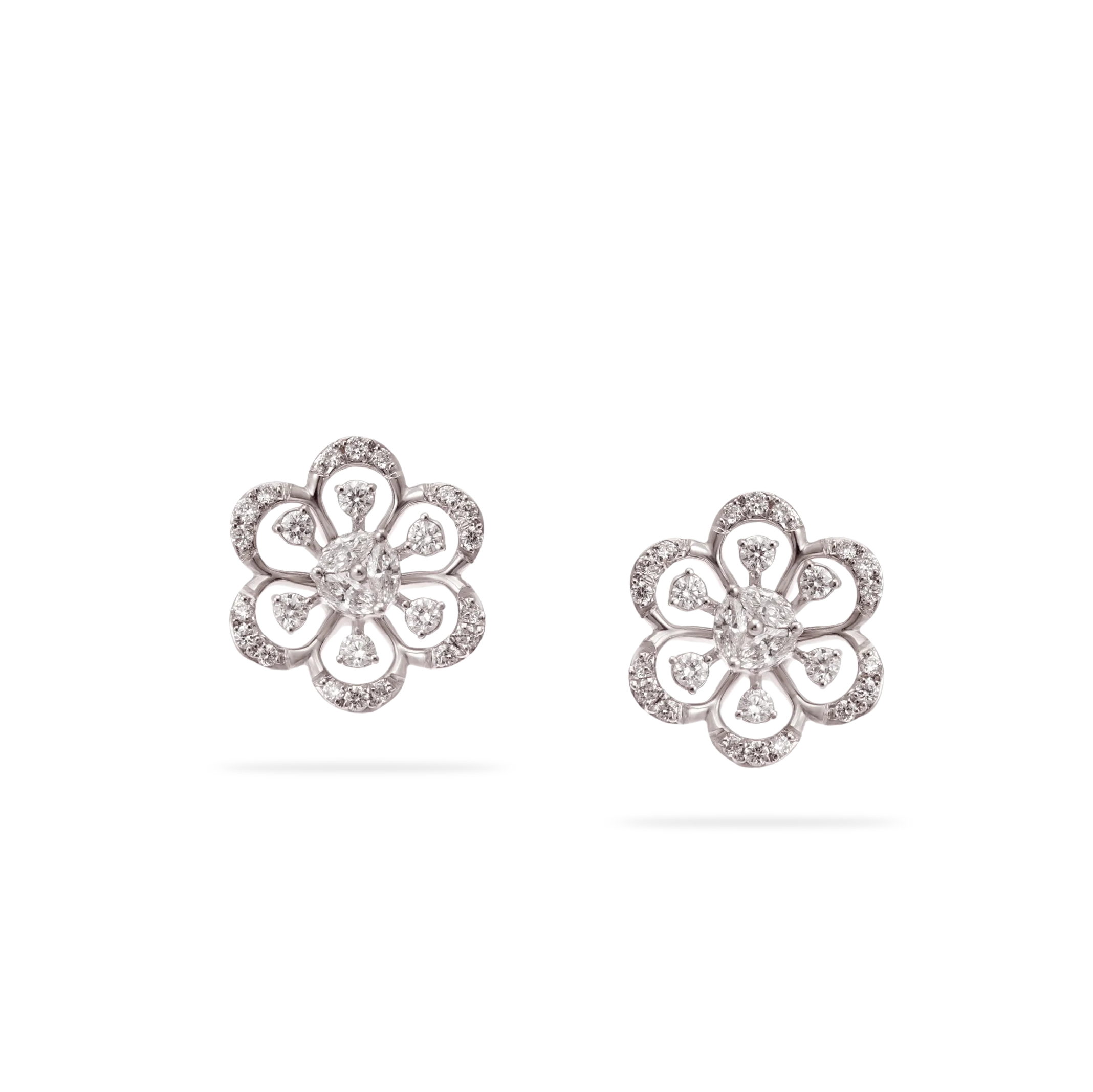
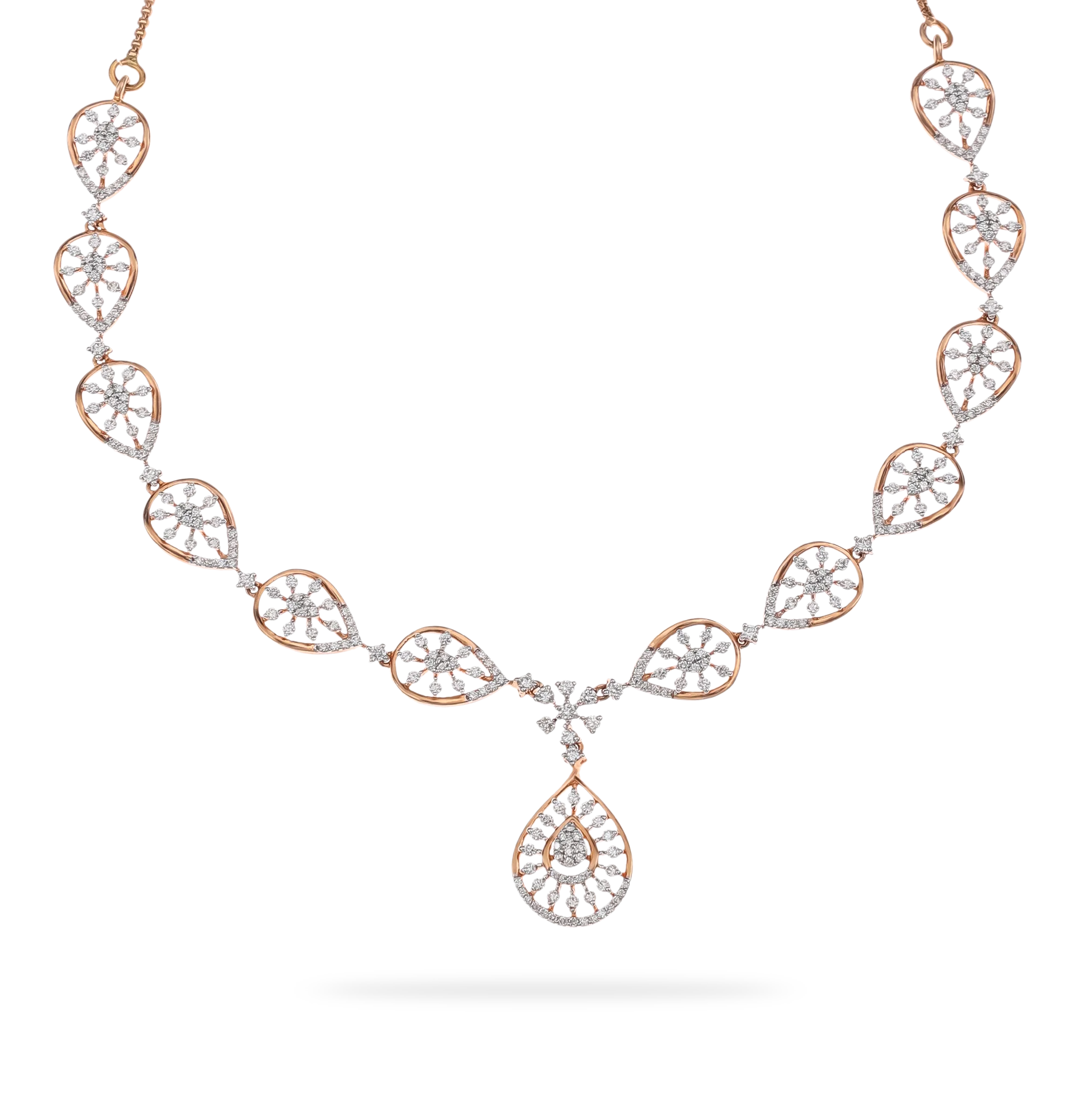
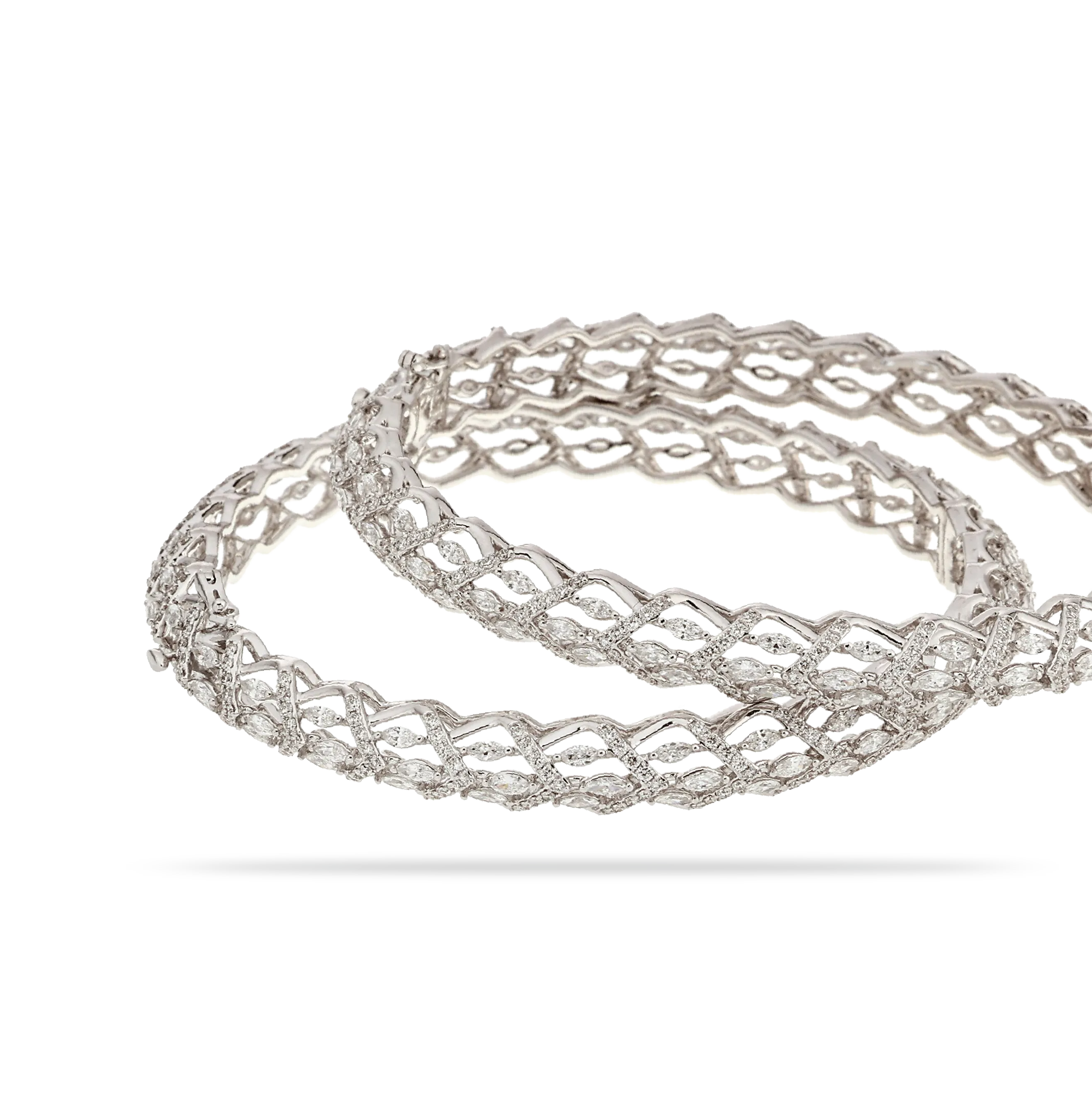
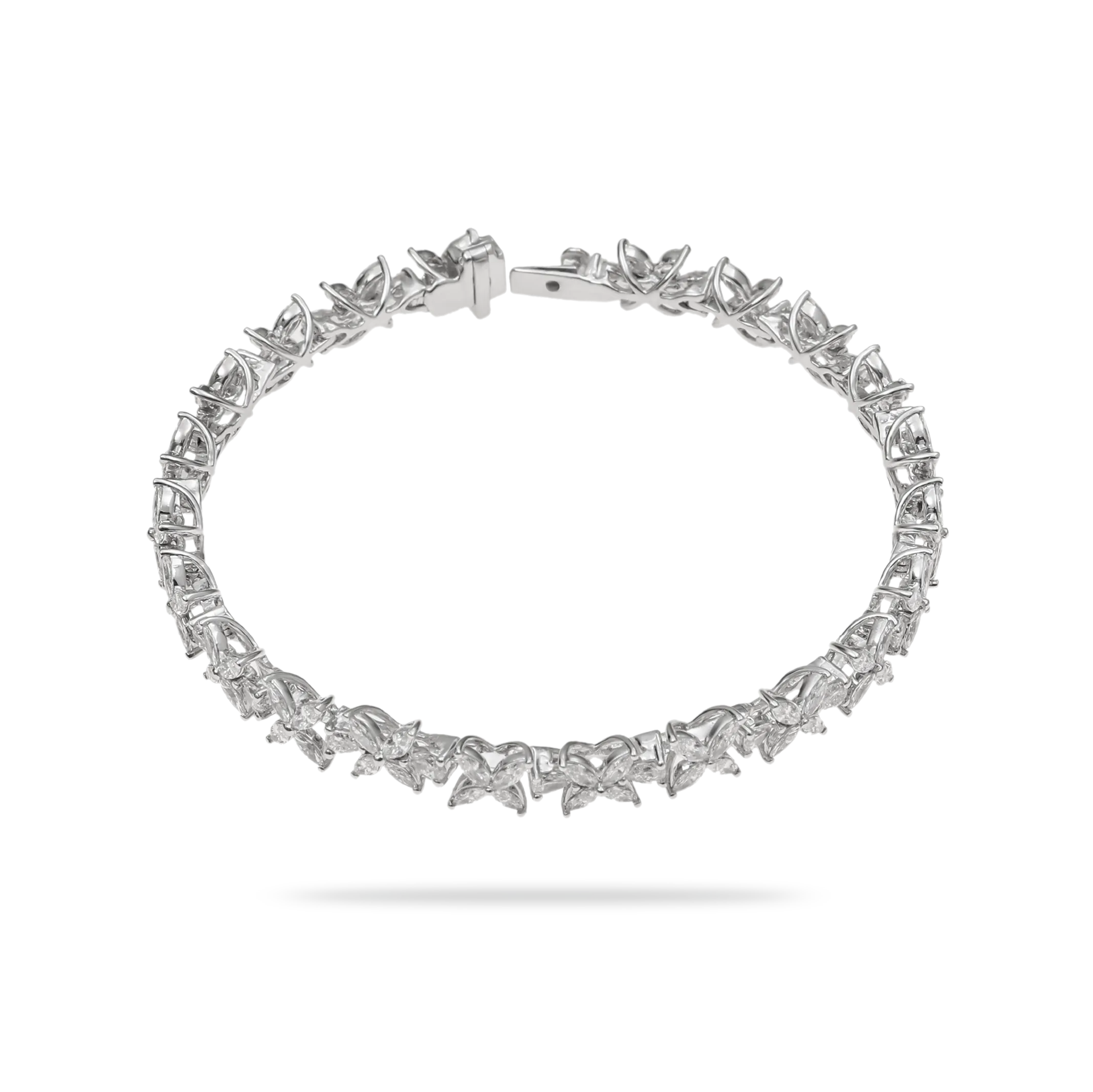
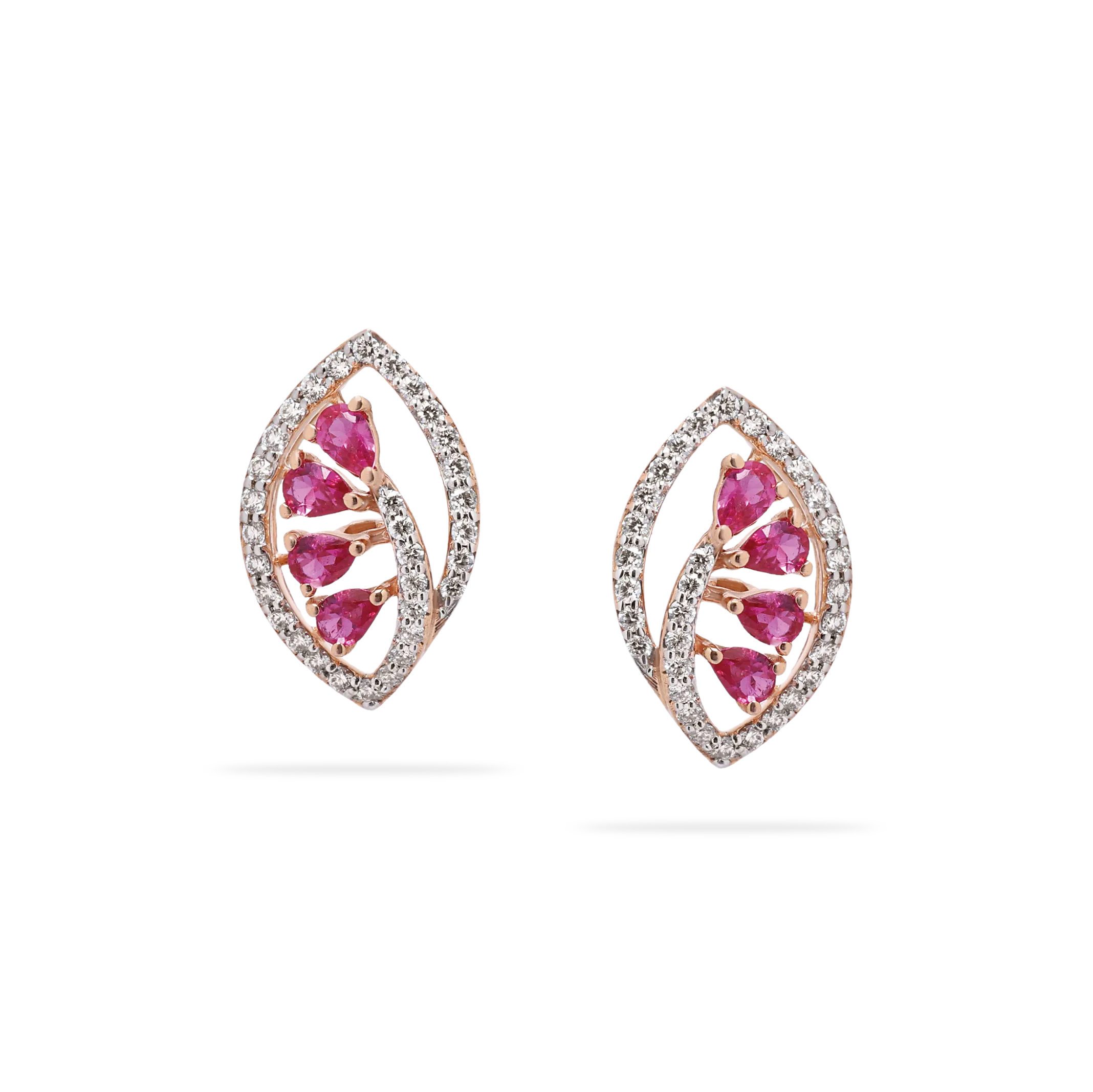
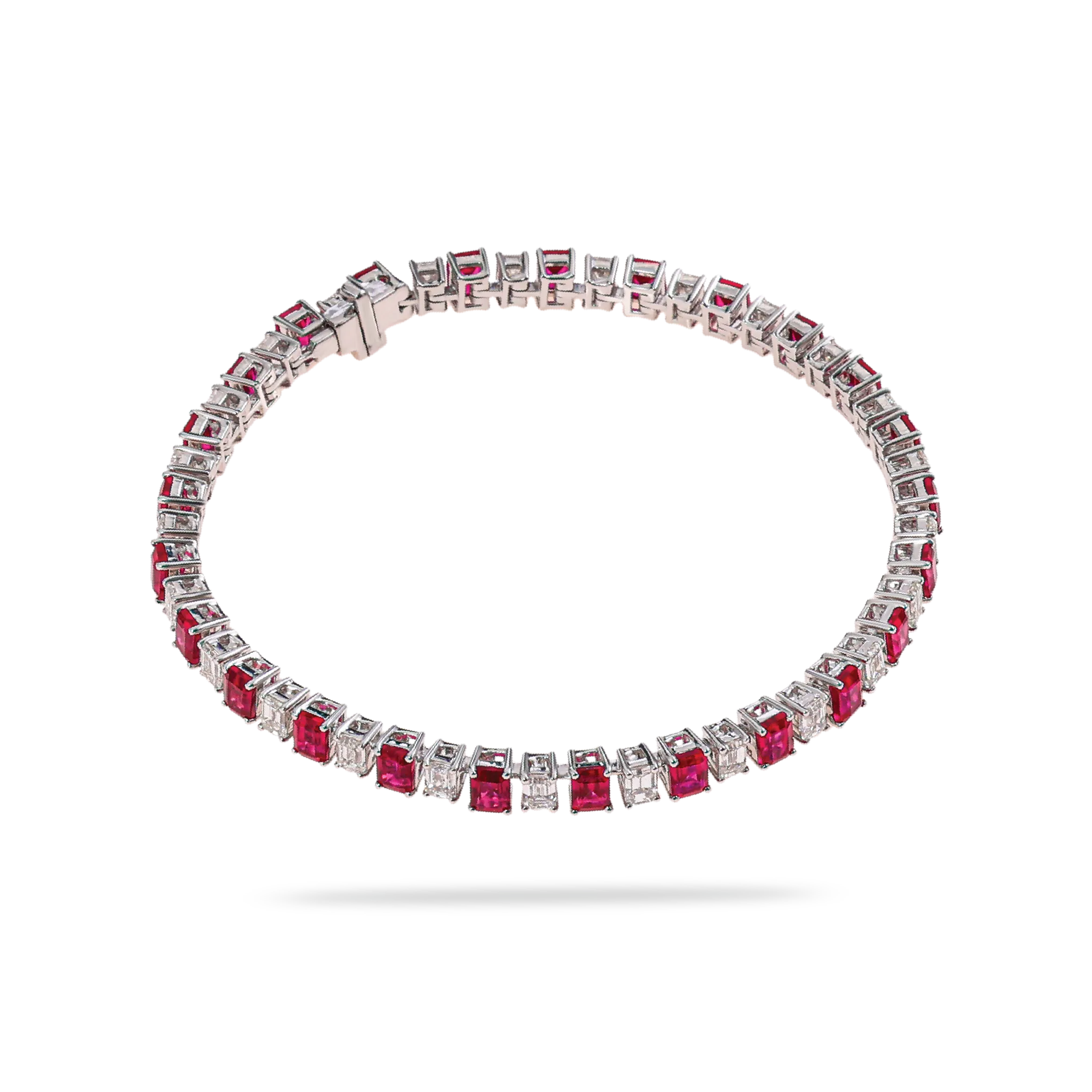
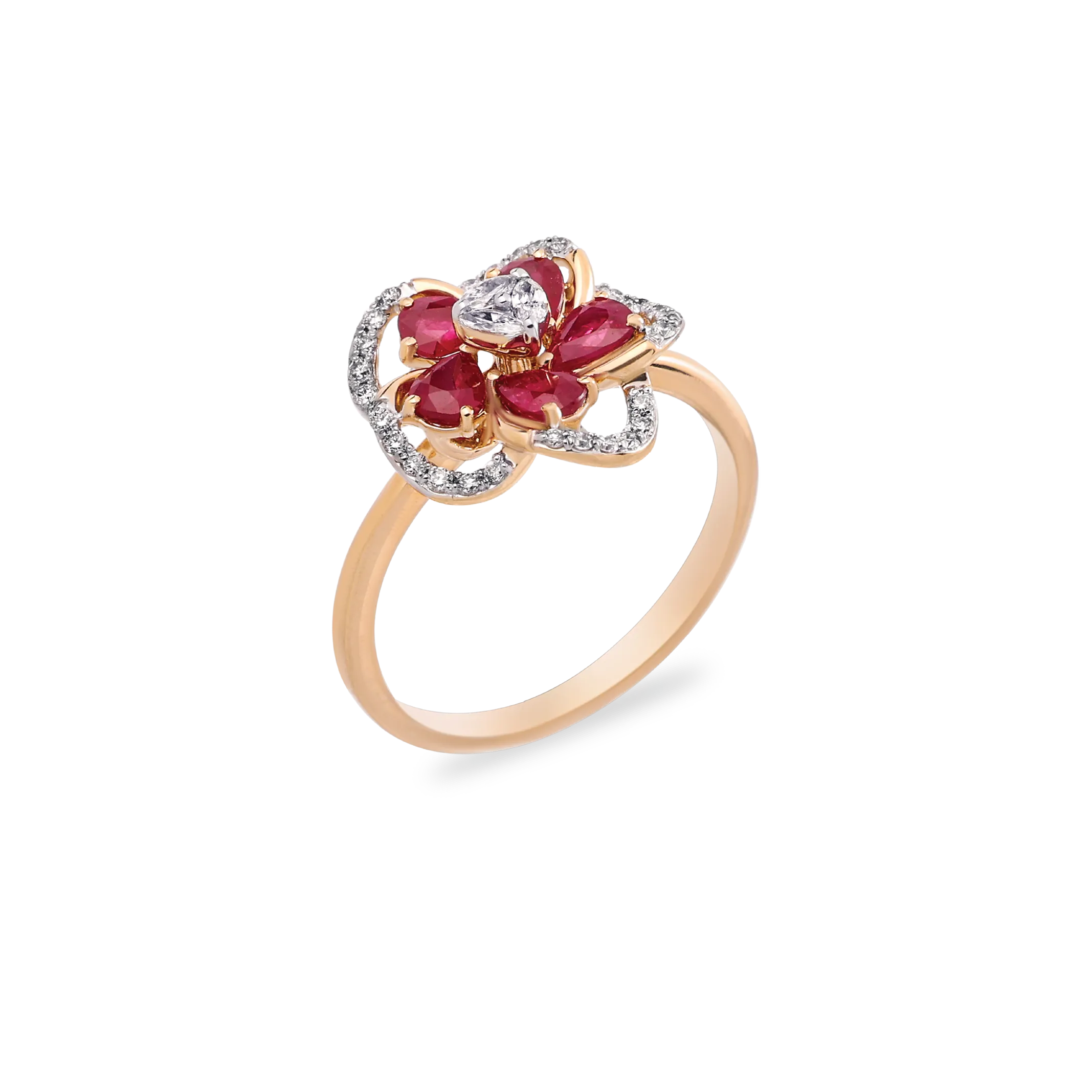
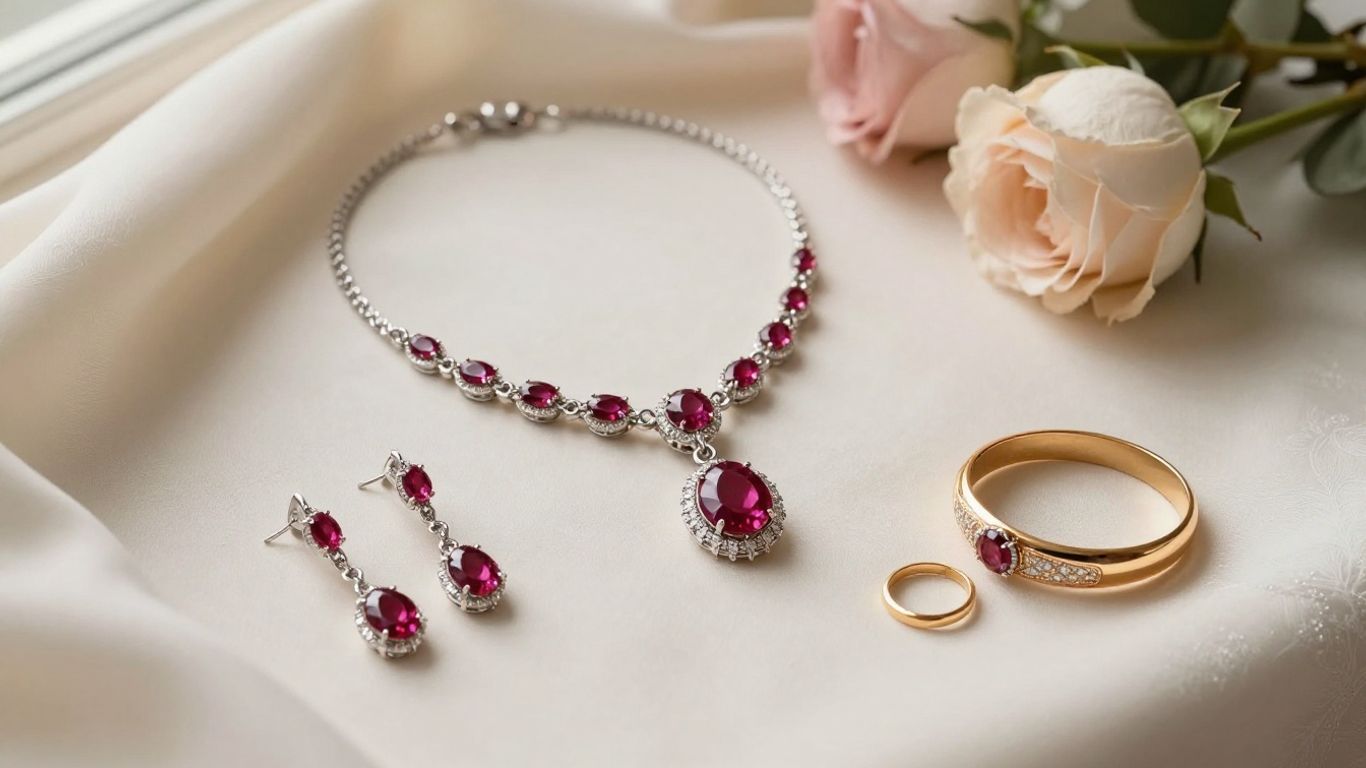
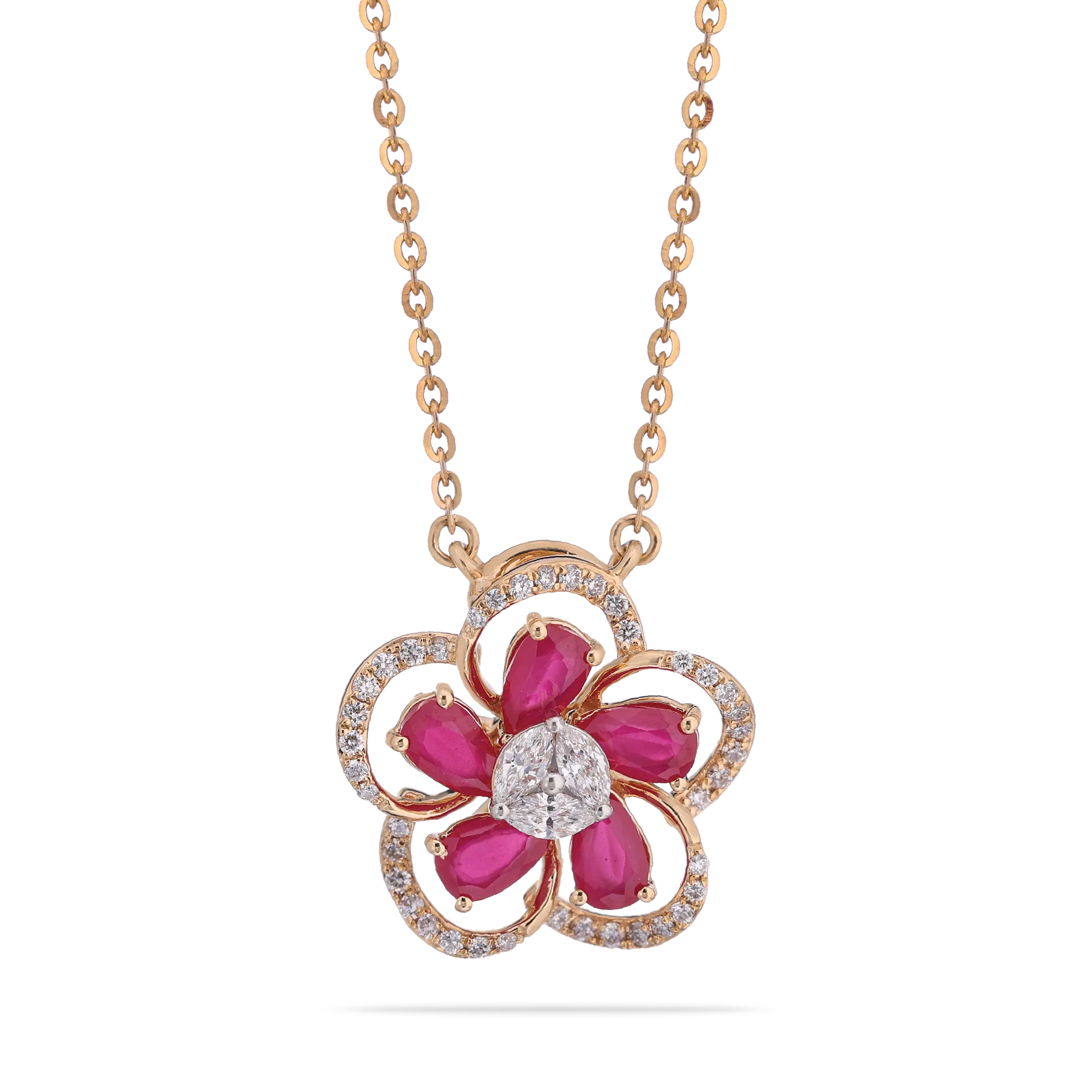
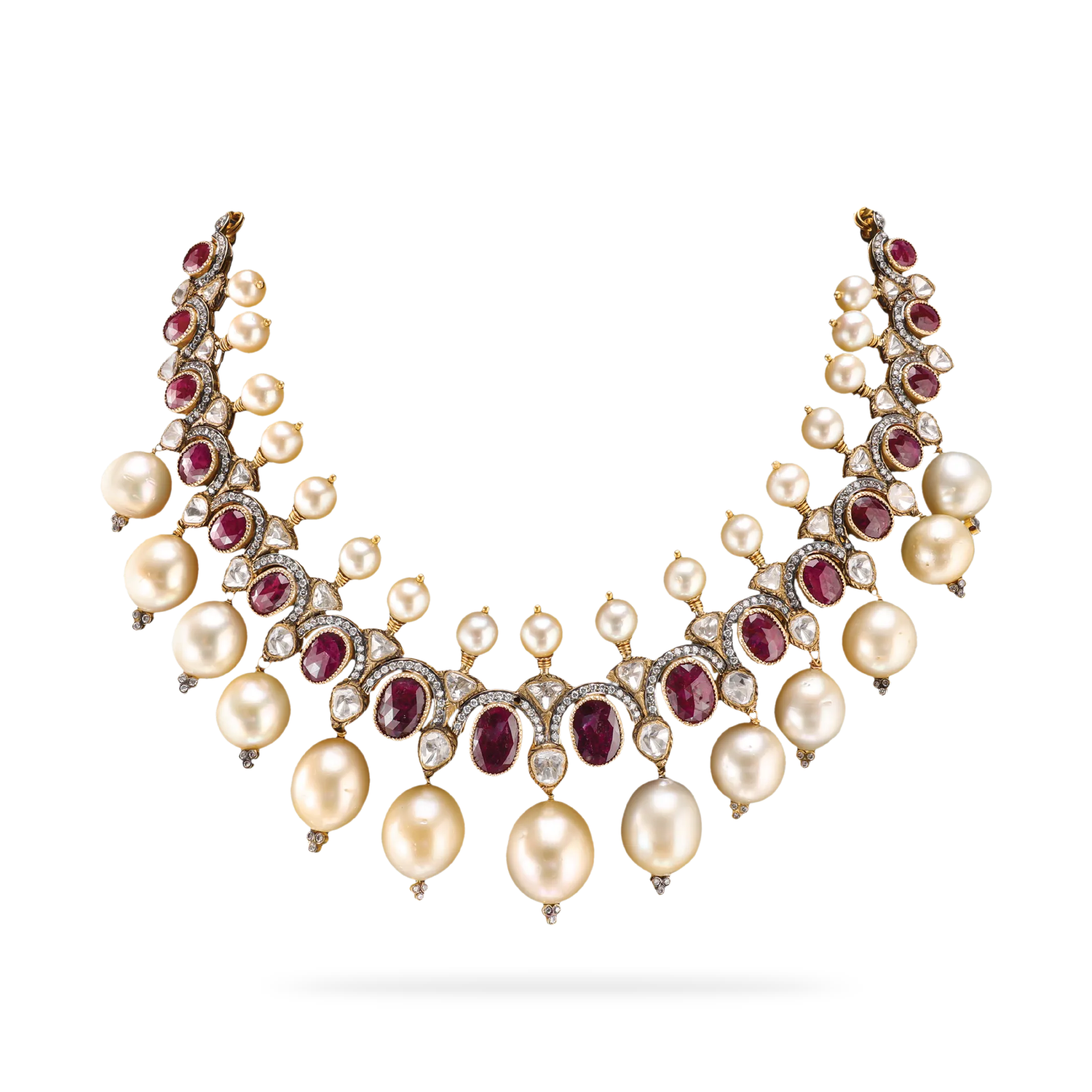
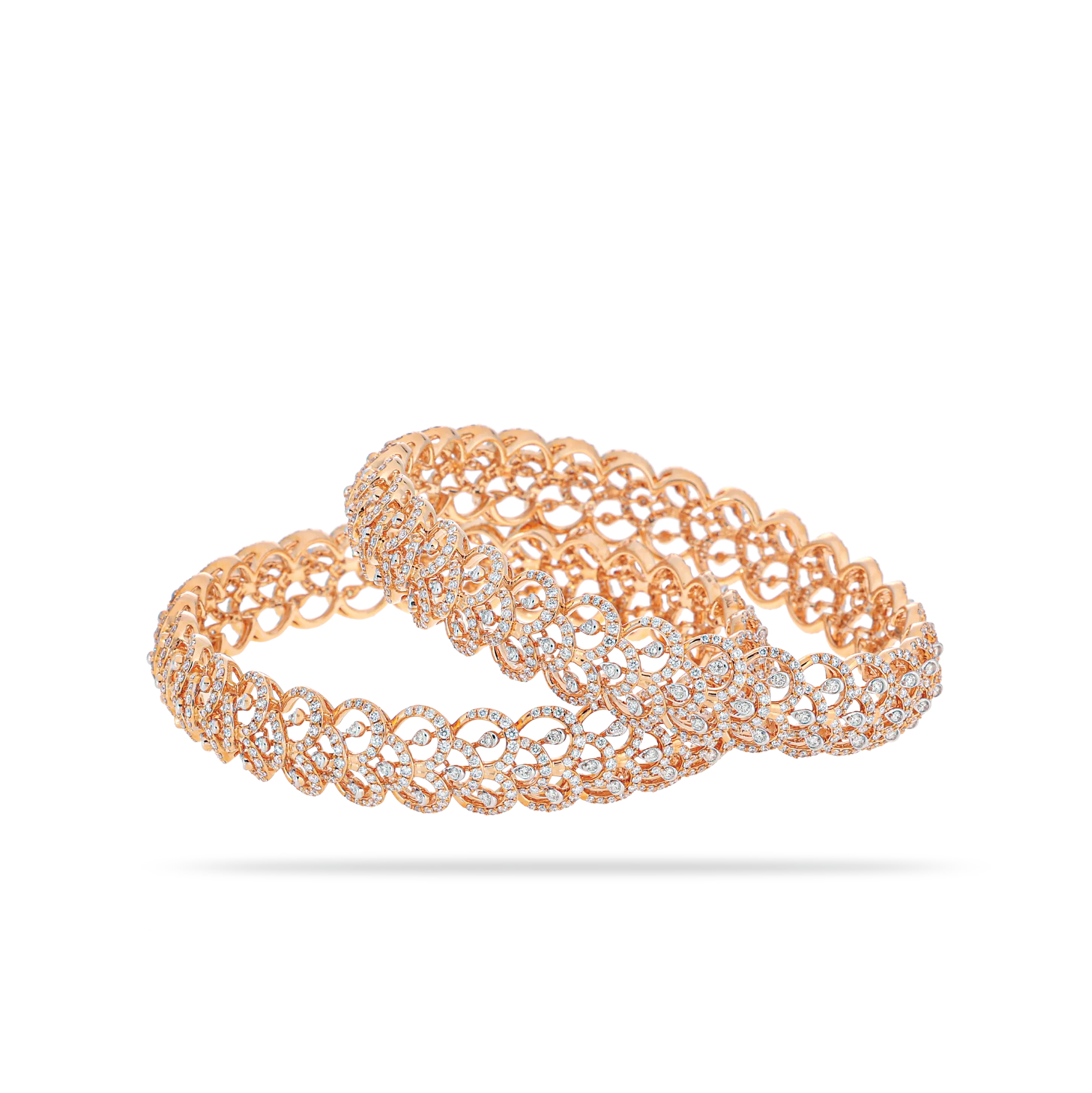
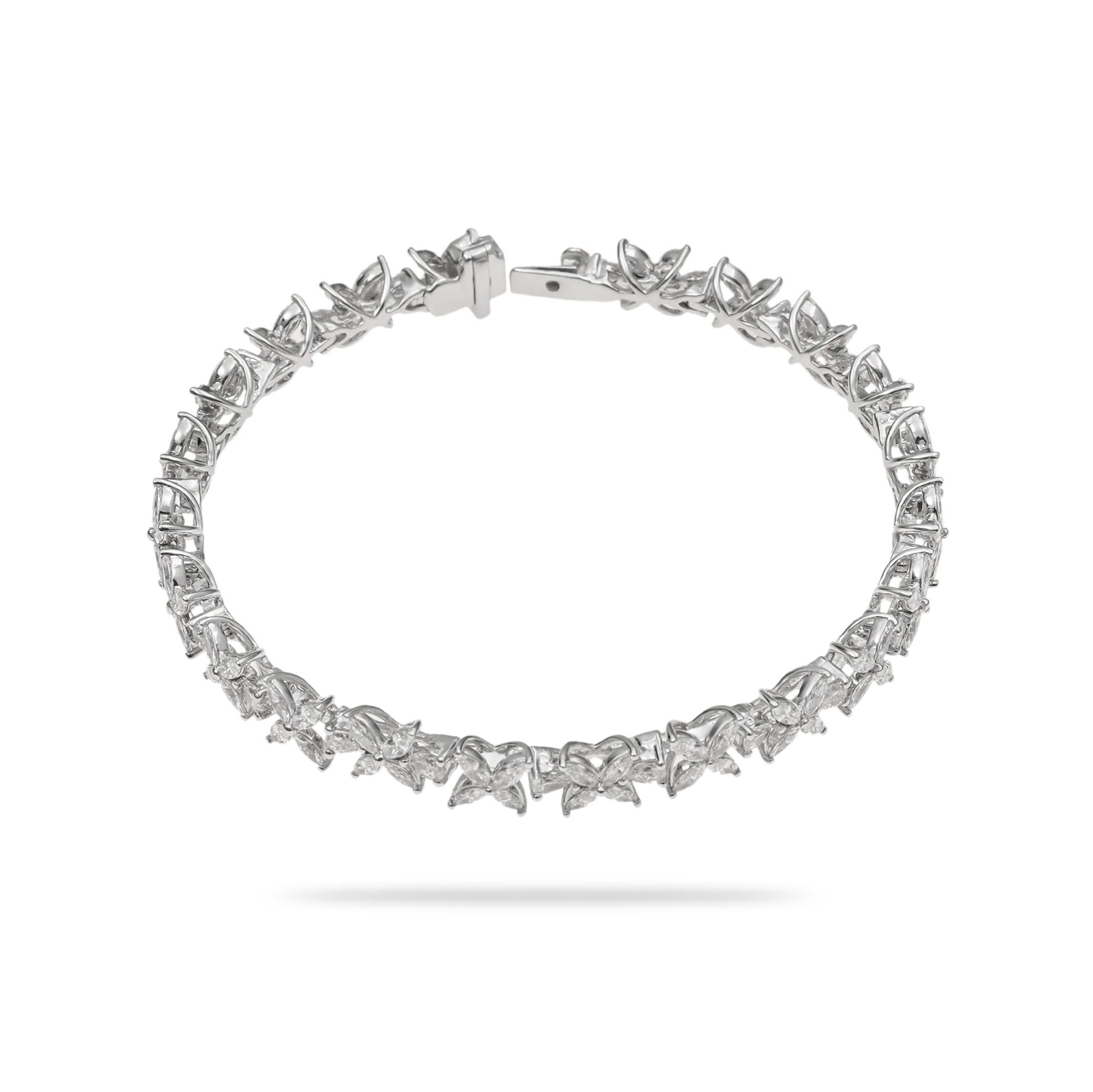
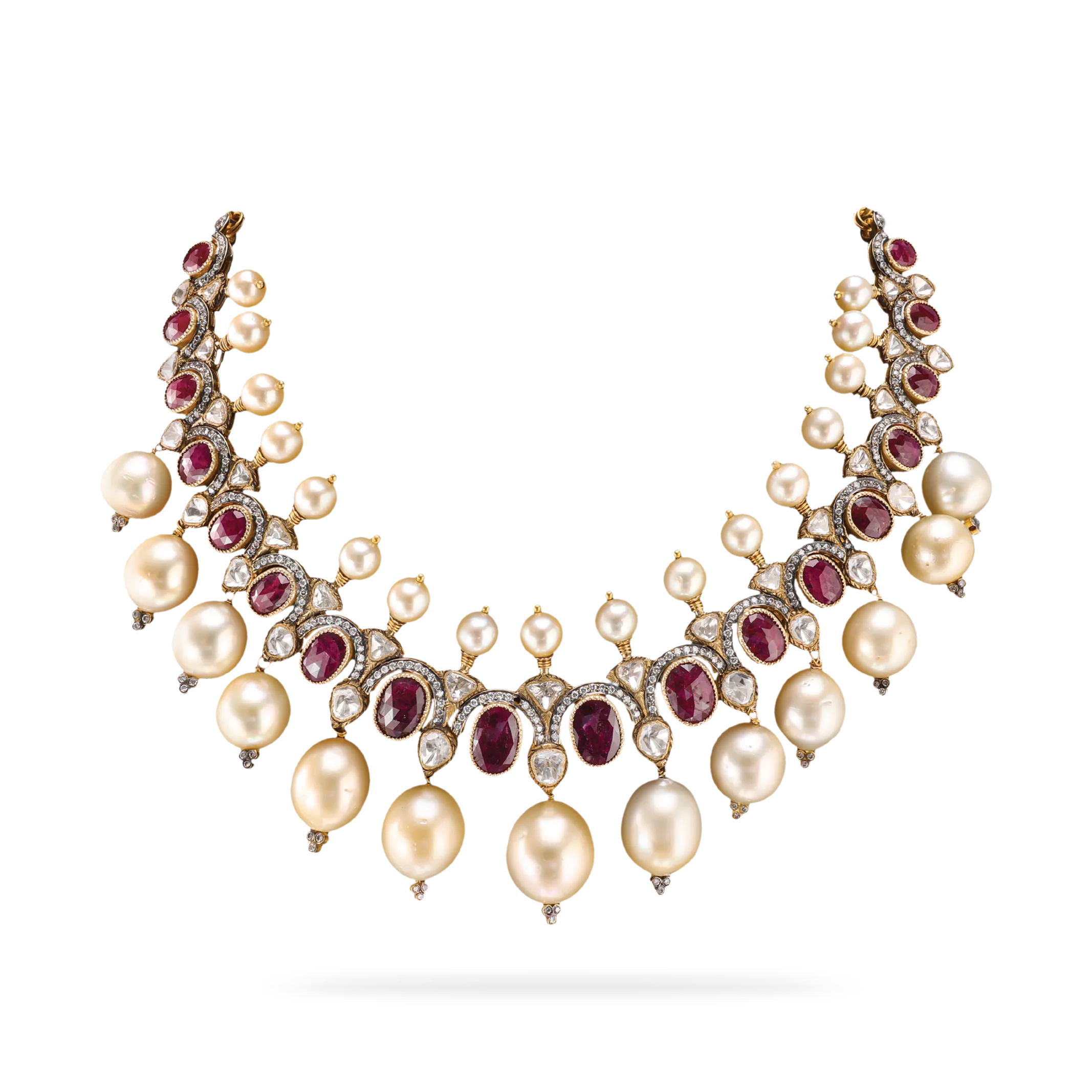
Ruby-and-diamond combinations offer a familiar contrast: saturated colour framed by bright, neutral sparkle. Halo rings, floral earrings, tennis-style bracelets, and symmetrical necklaces all work well when you want a polished finish. Keep the design coherent by repeating either the ruby shape or the metal finish across two or three pieces.
Vintage-inspired and Victorian sets
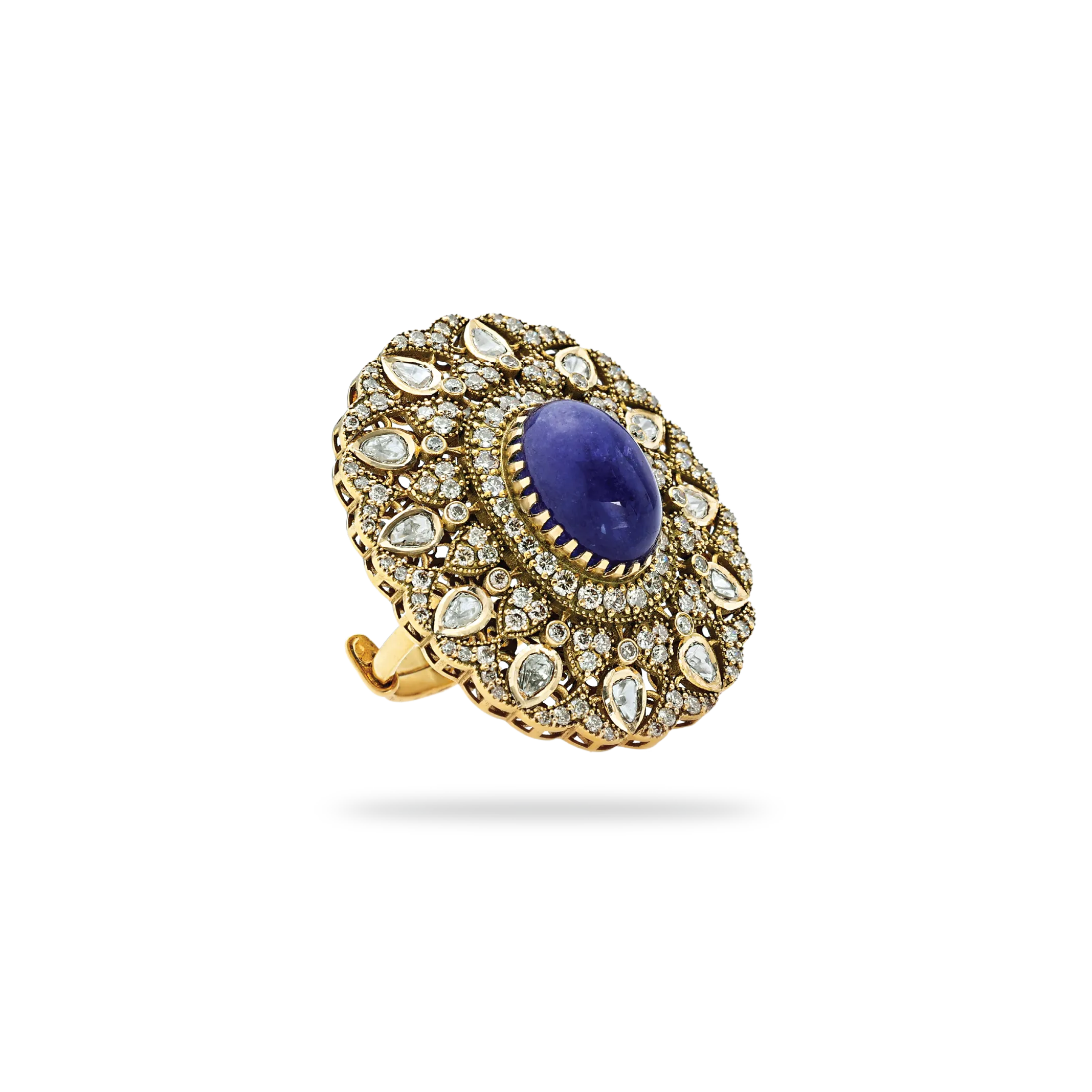
Vintage-inspired designs often use clusters, milgrain edges, scrollwork, and generous colour. They can give a simple gown more character, particularly when the rest of the styling is restrained. A Victorian ruby set can be a useful reference for the old-world direction, though you should still check the actual materials, measurements, and care requirements of any piece you consider.
Traditional Indian bridal jewellery
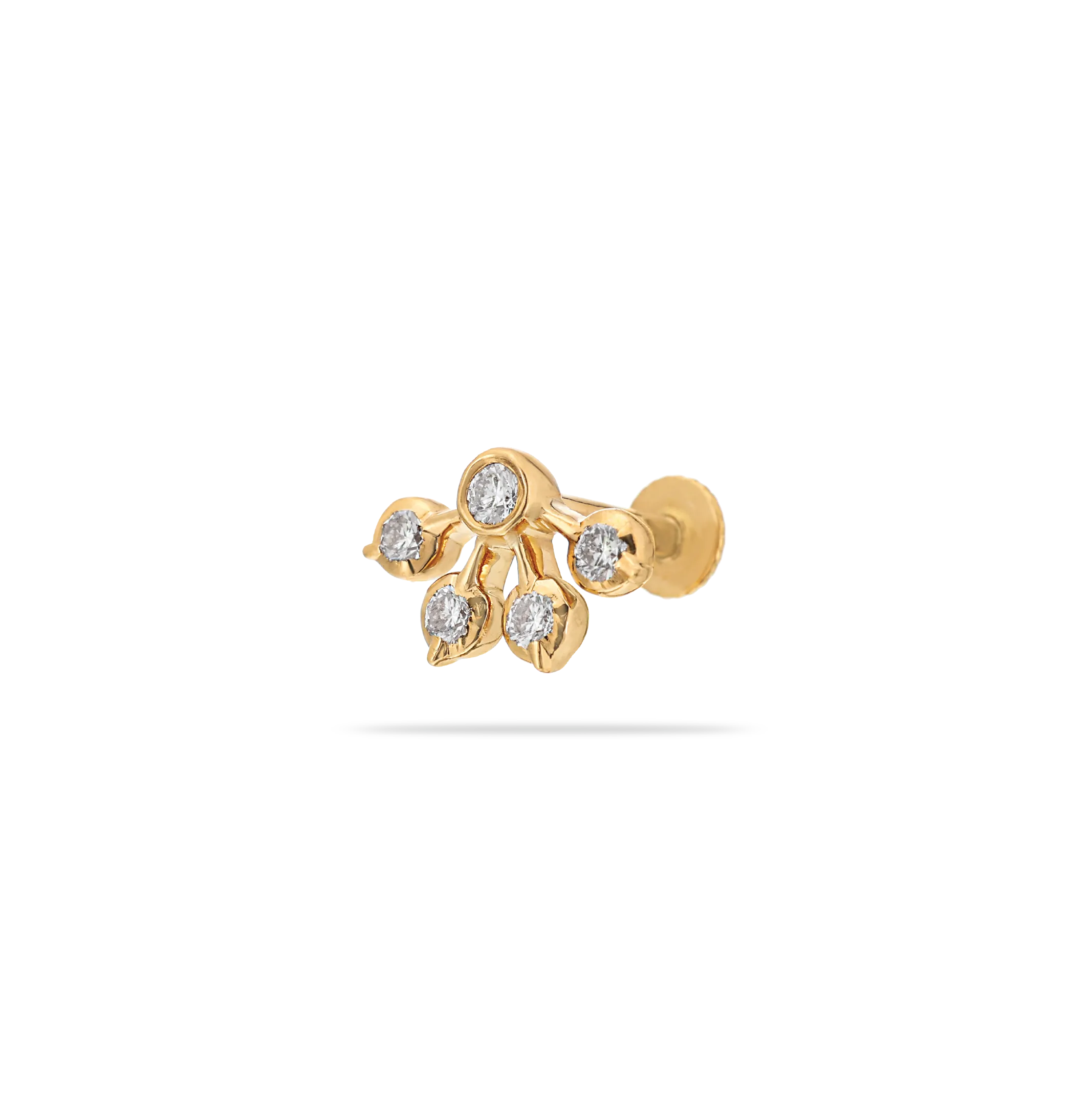
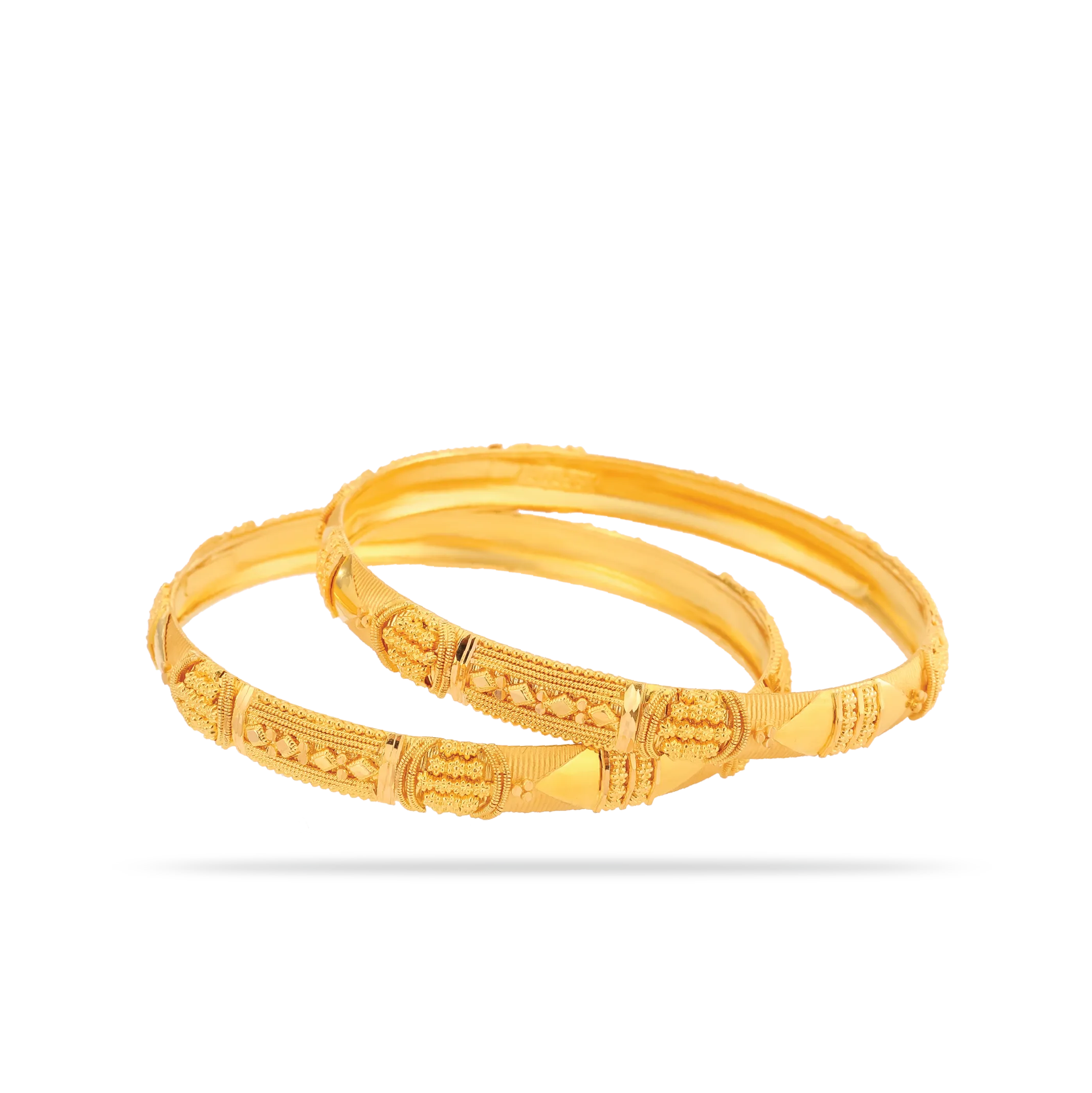
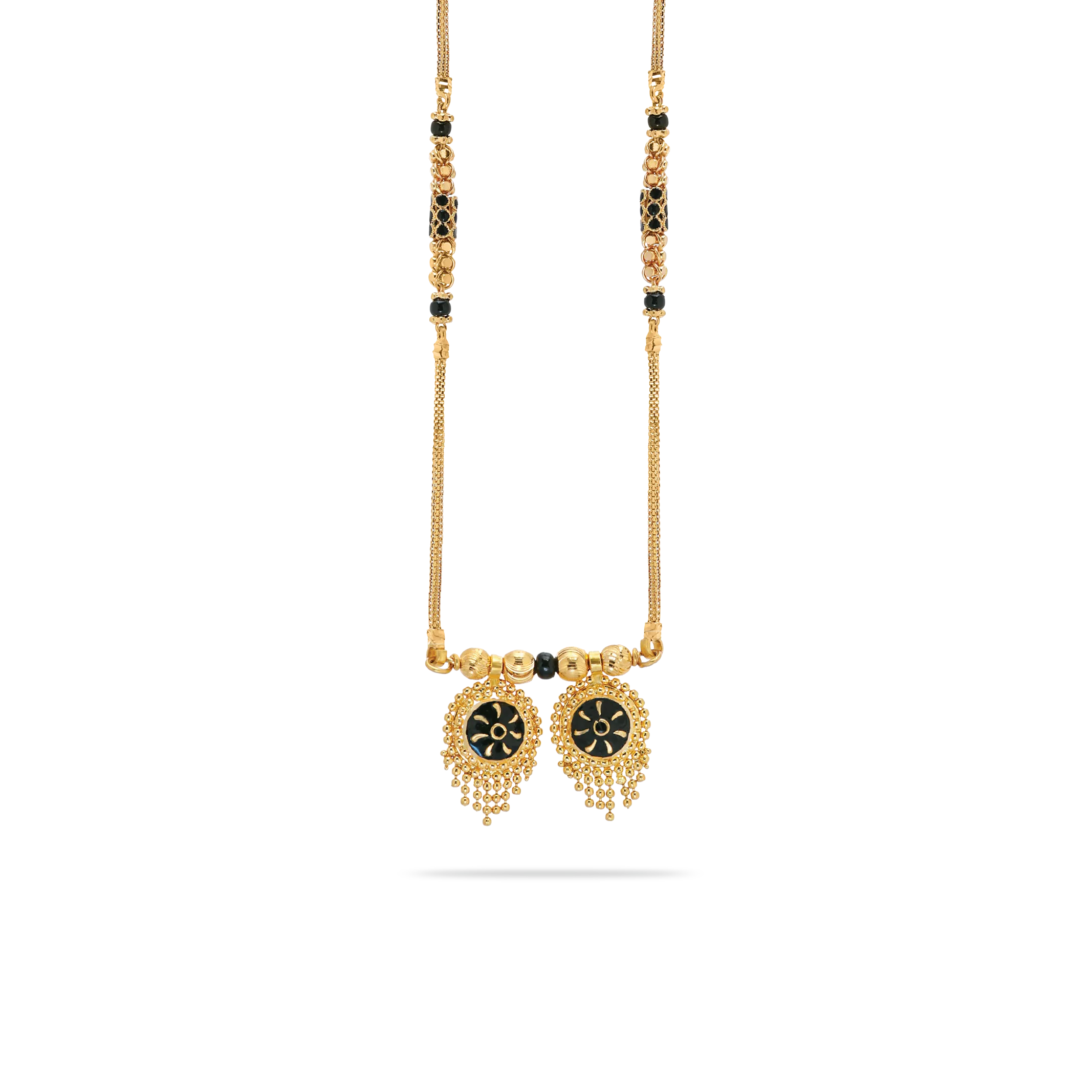
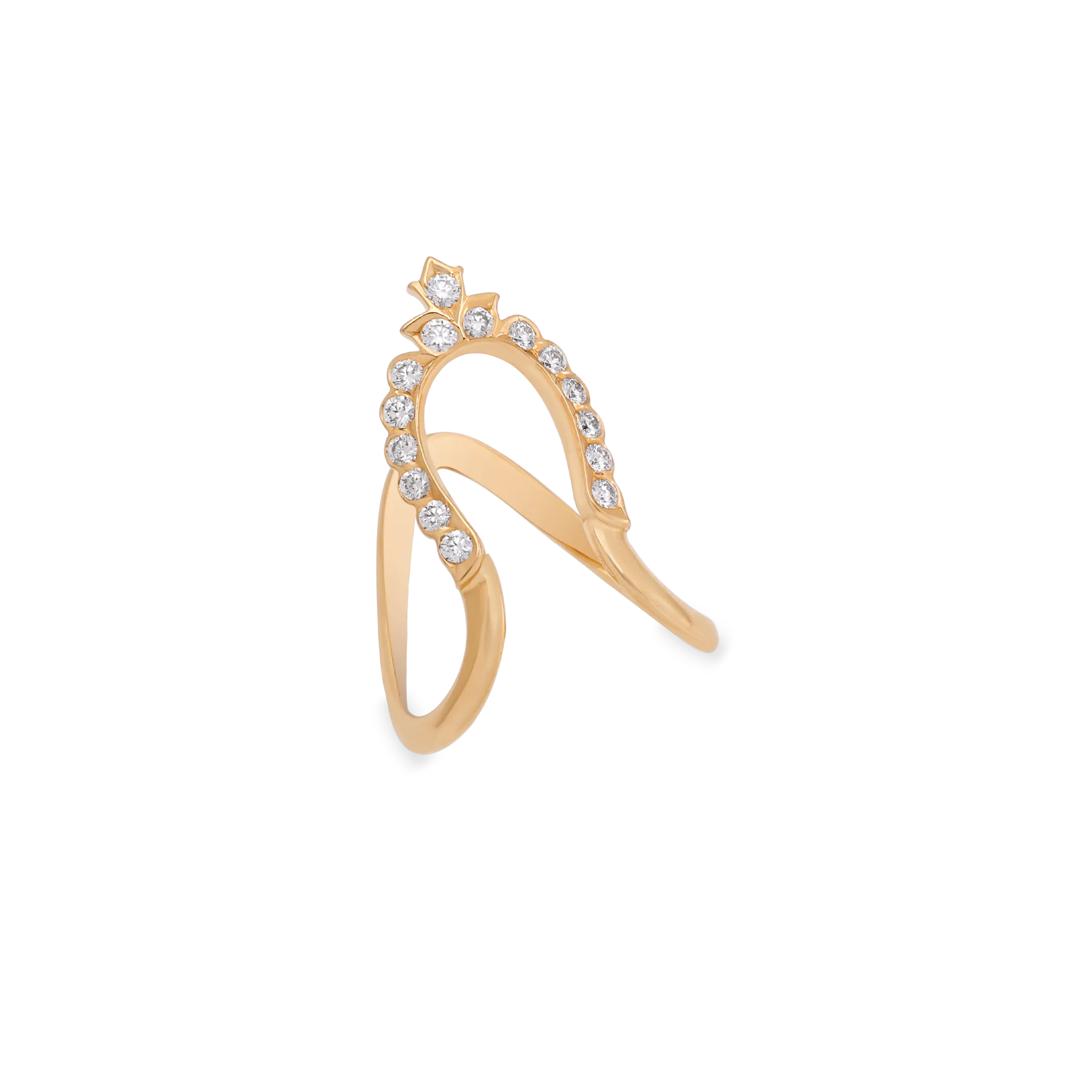
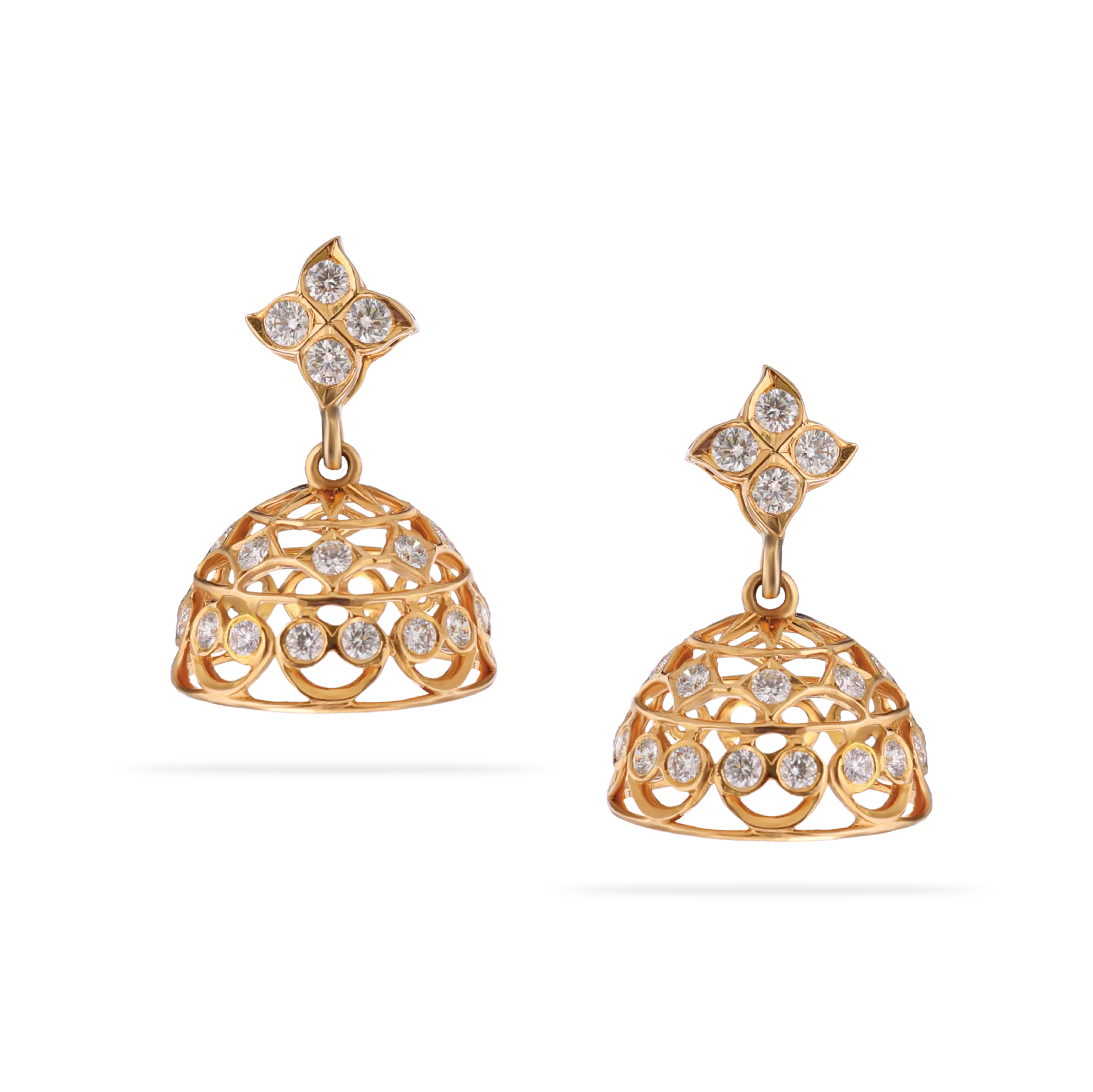
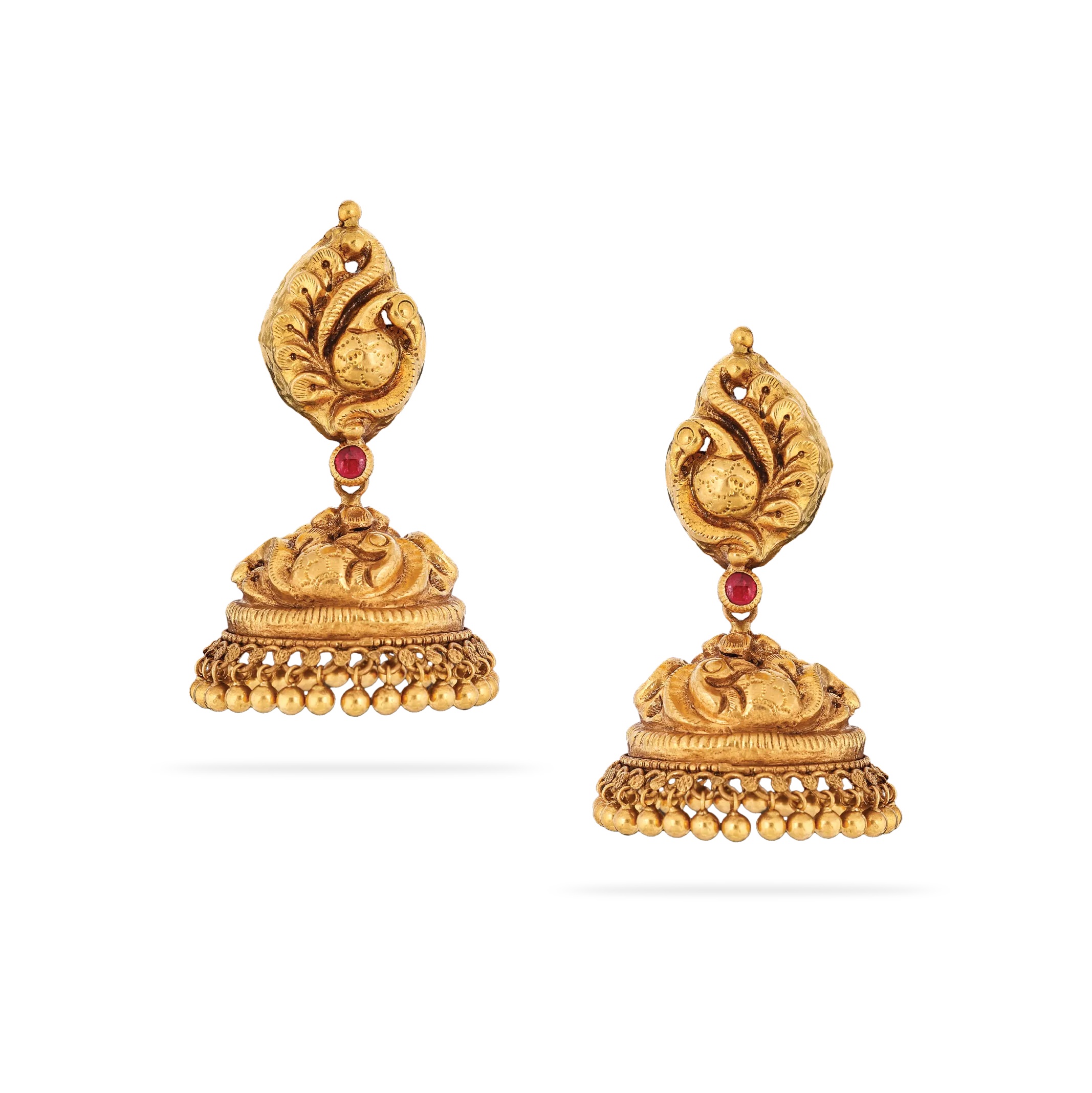
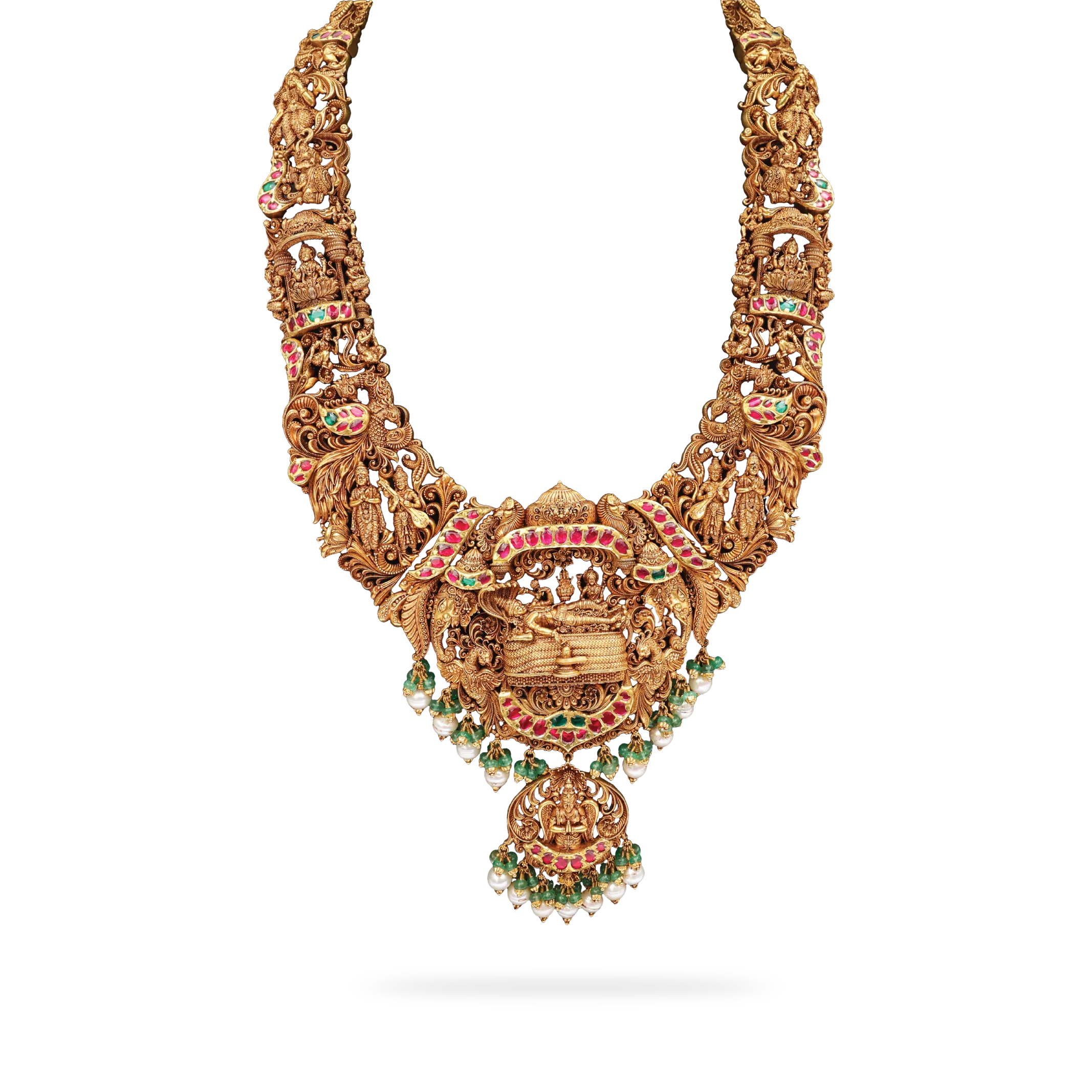
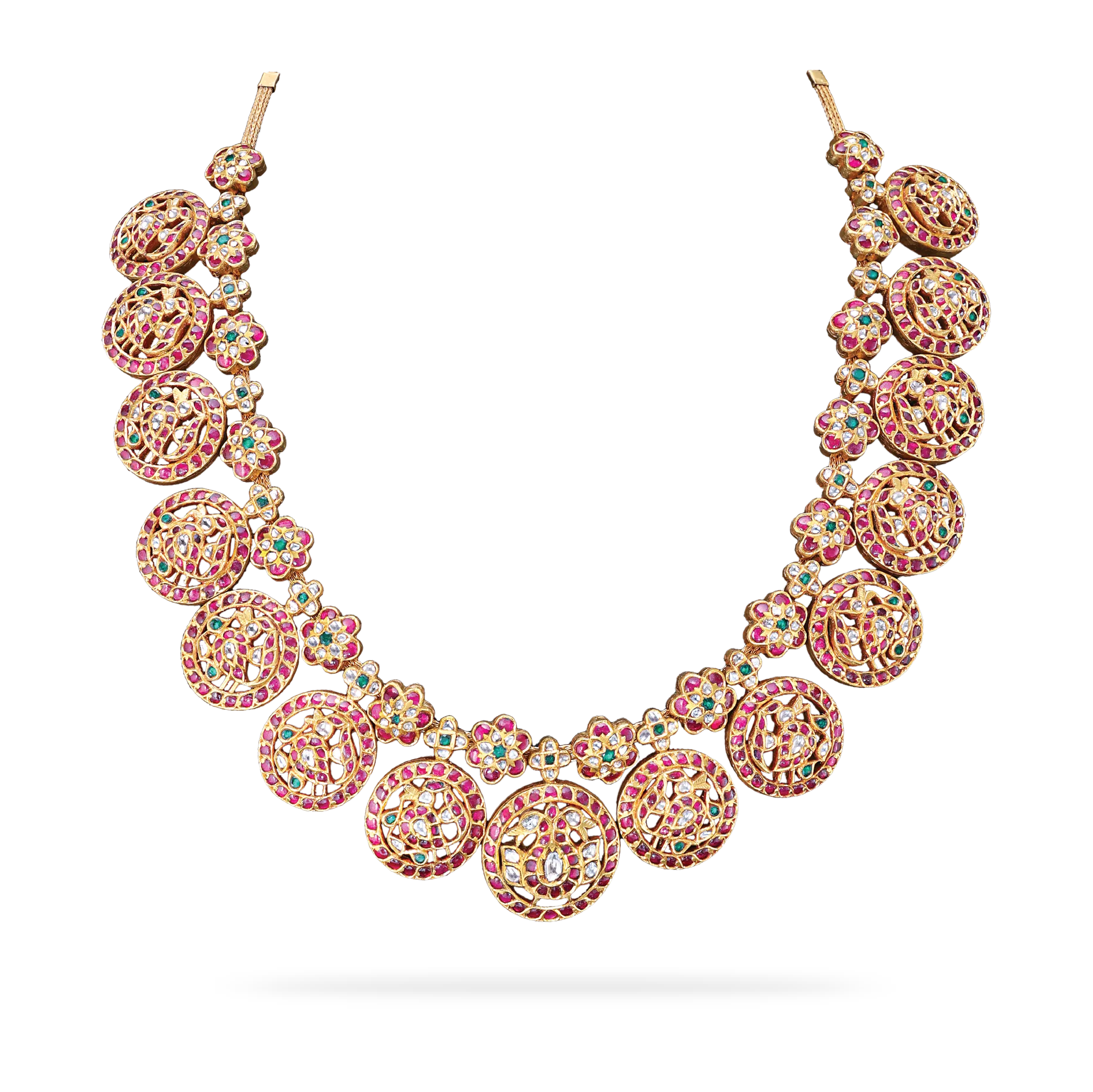
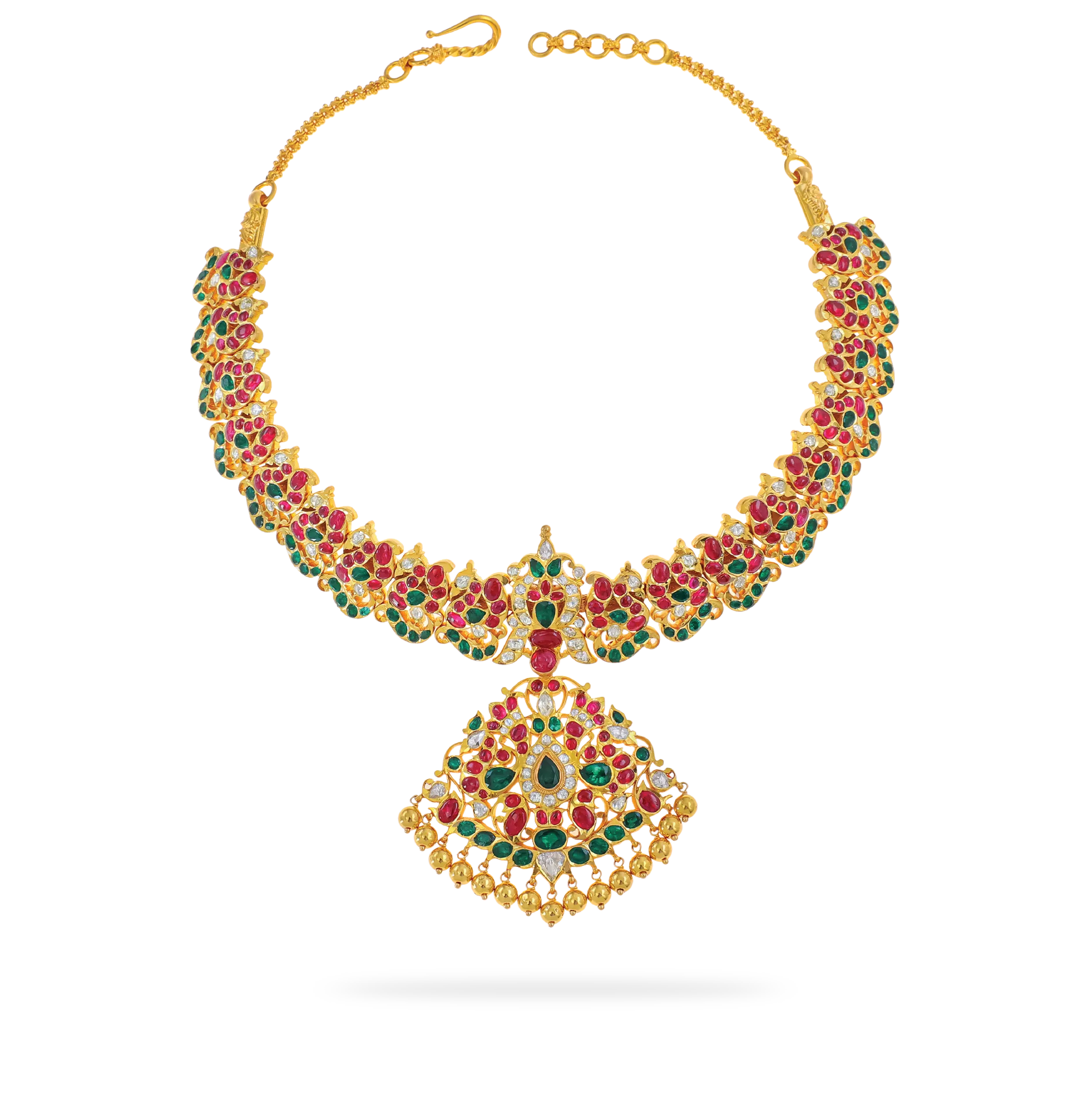
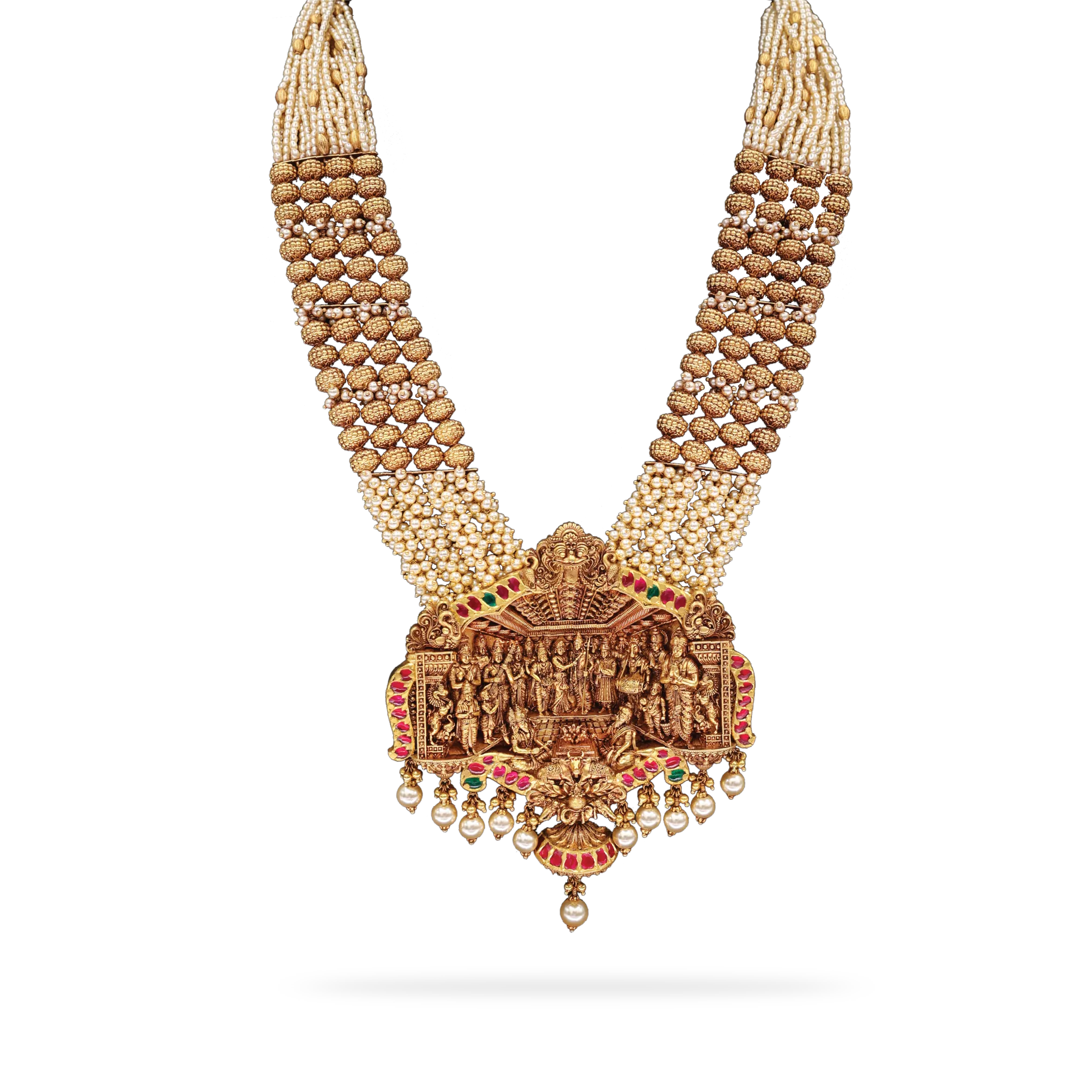
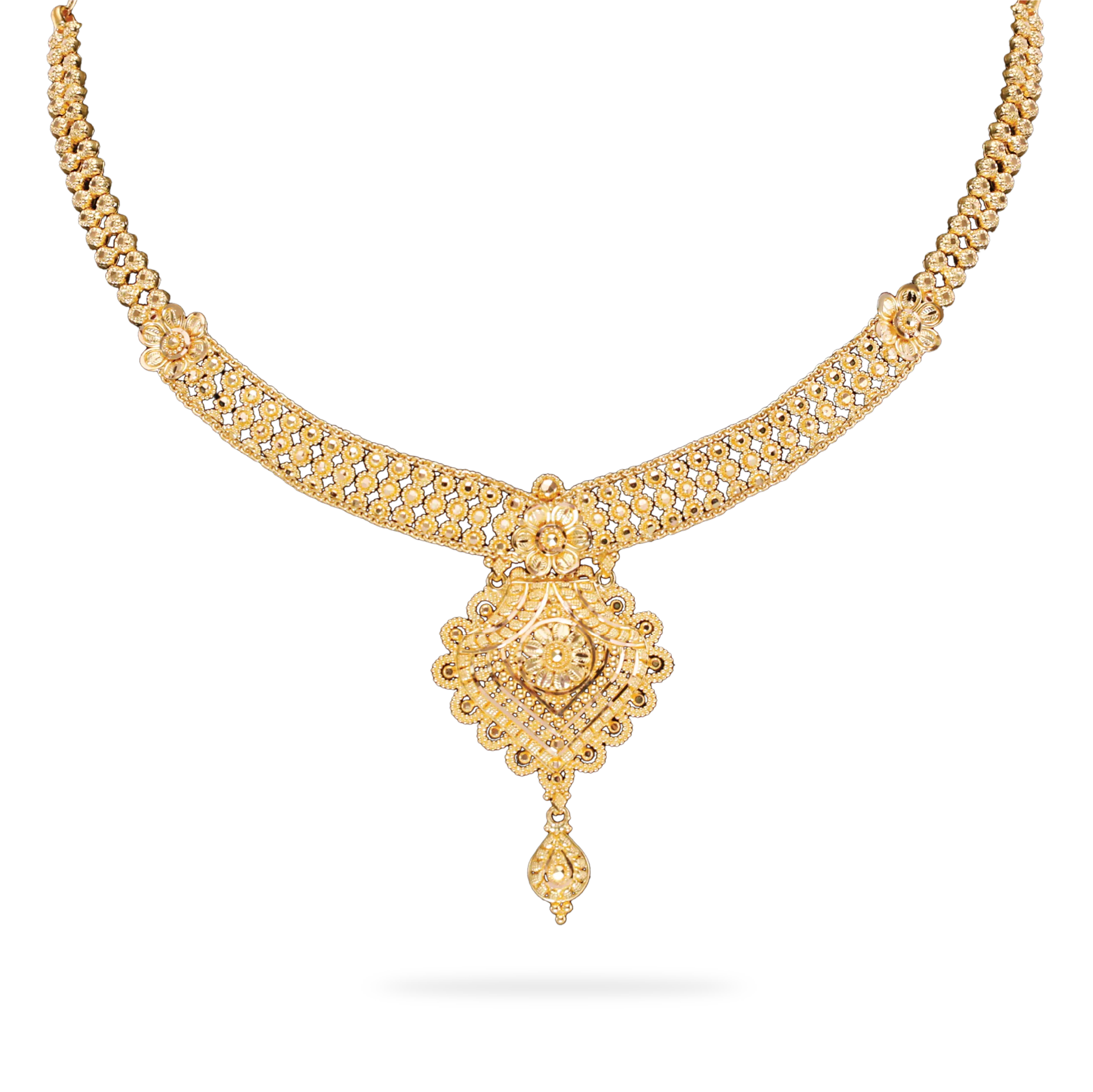
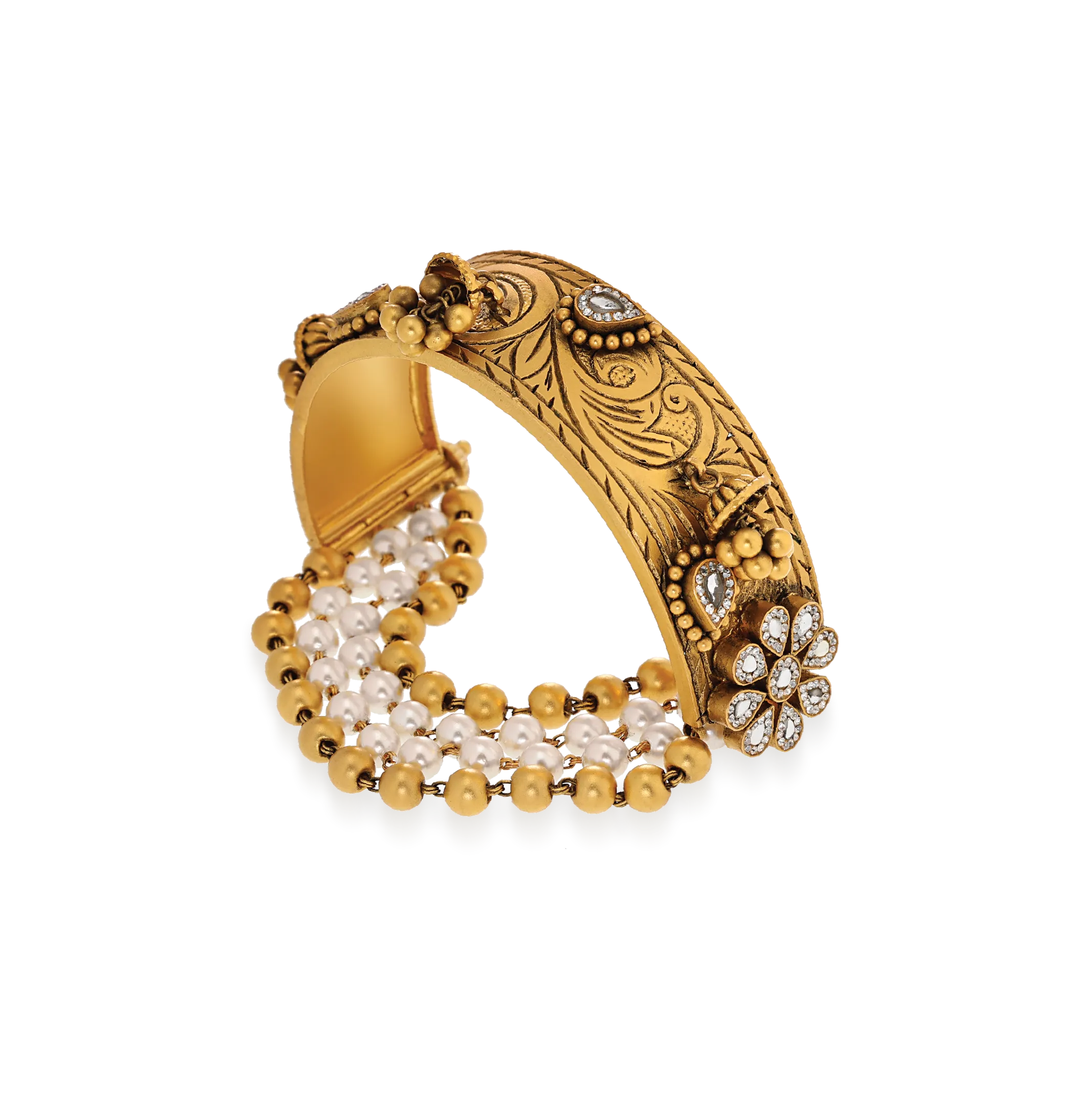
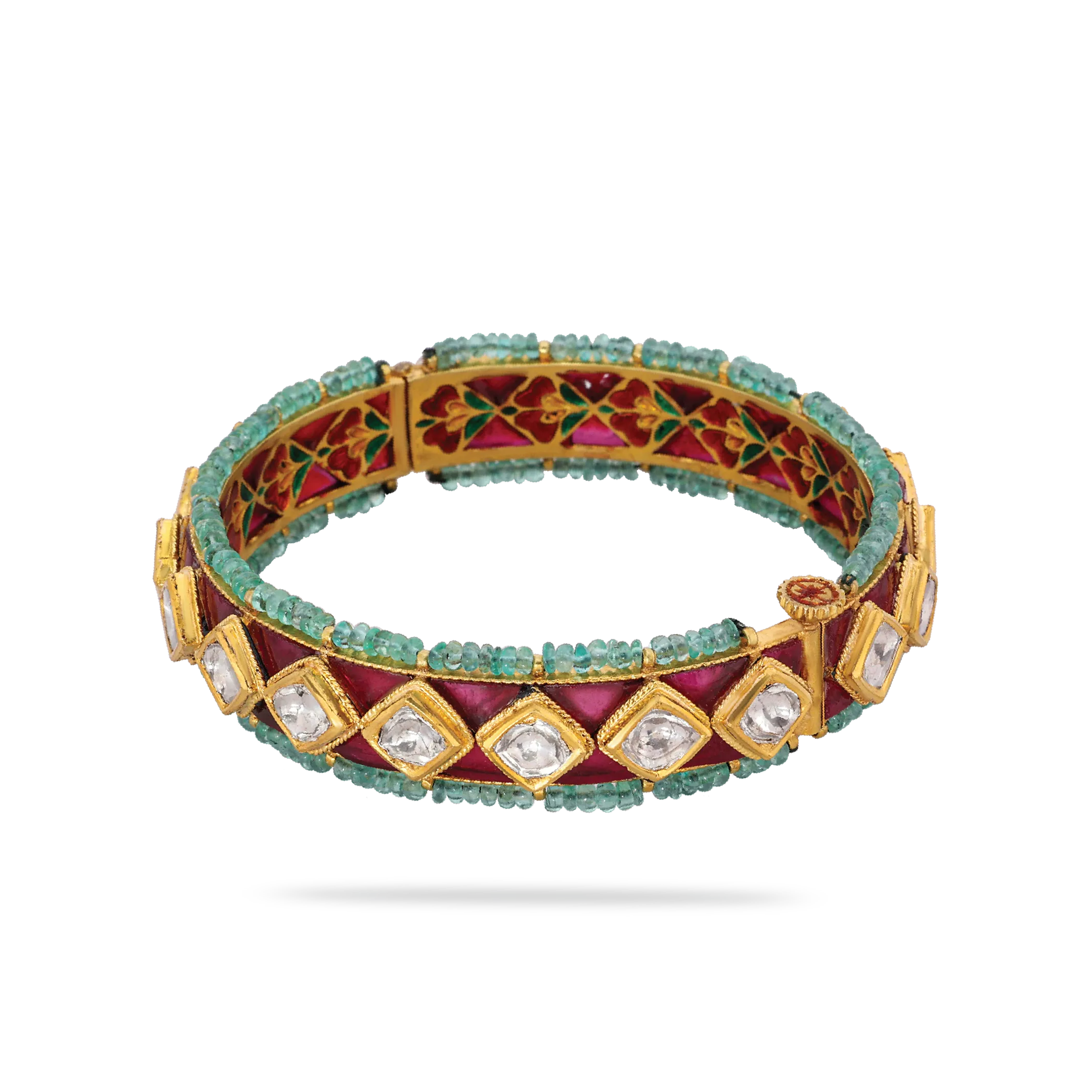
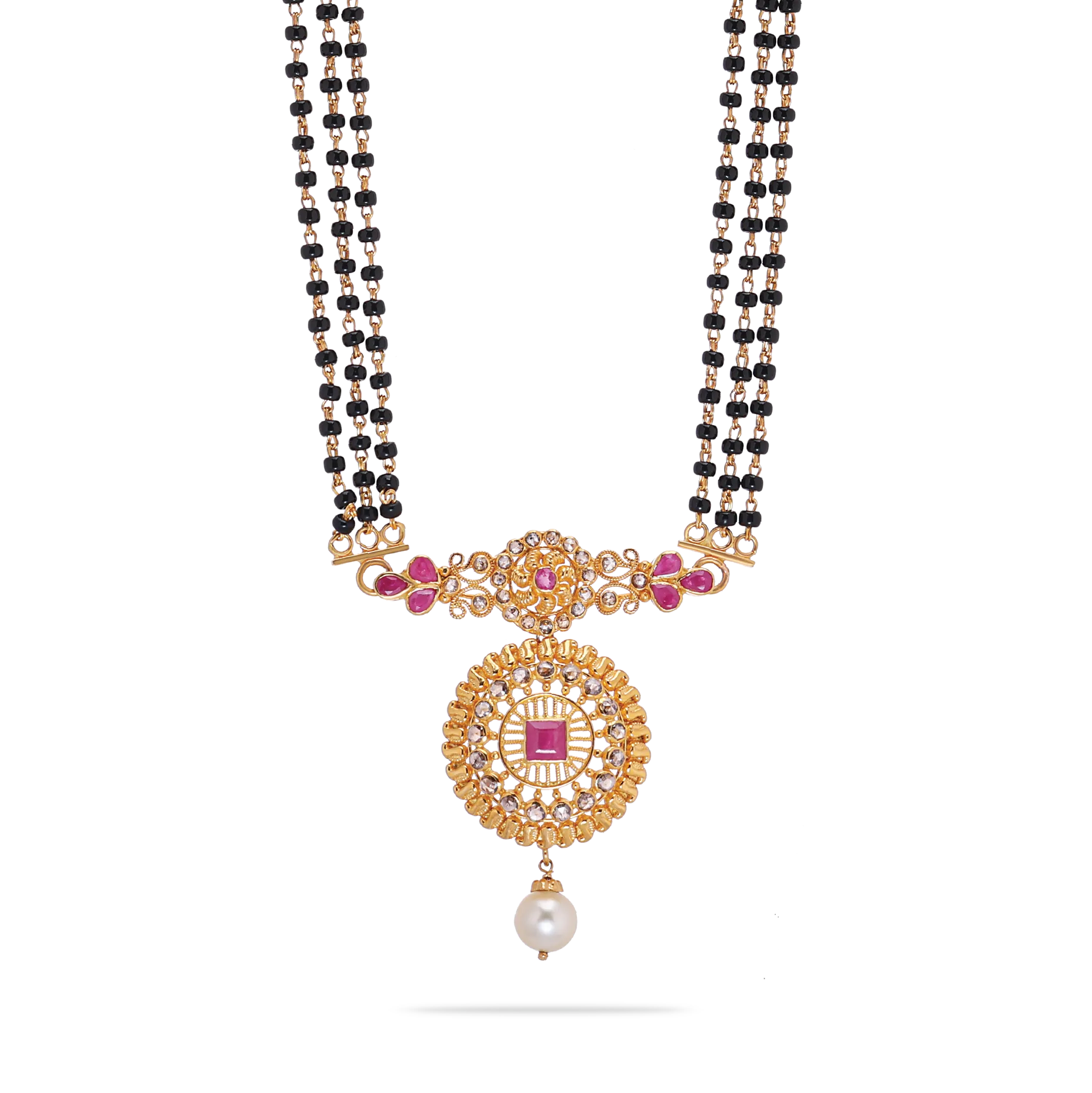
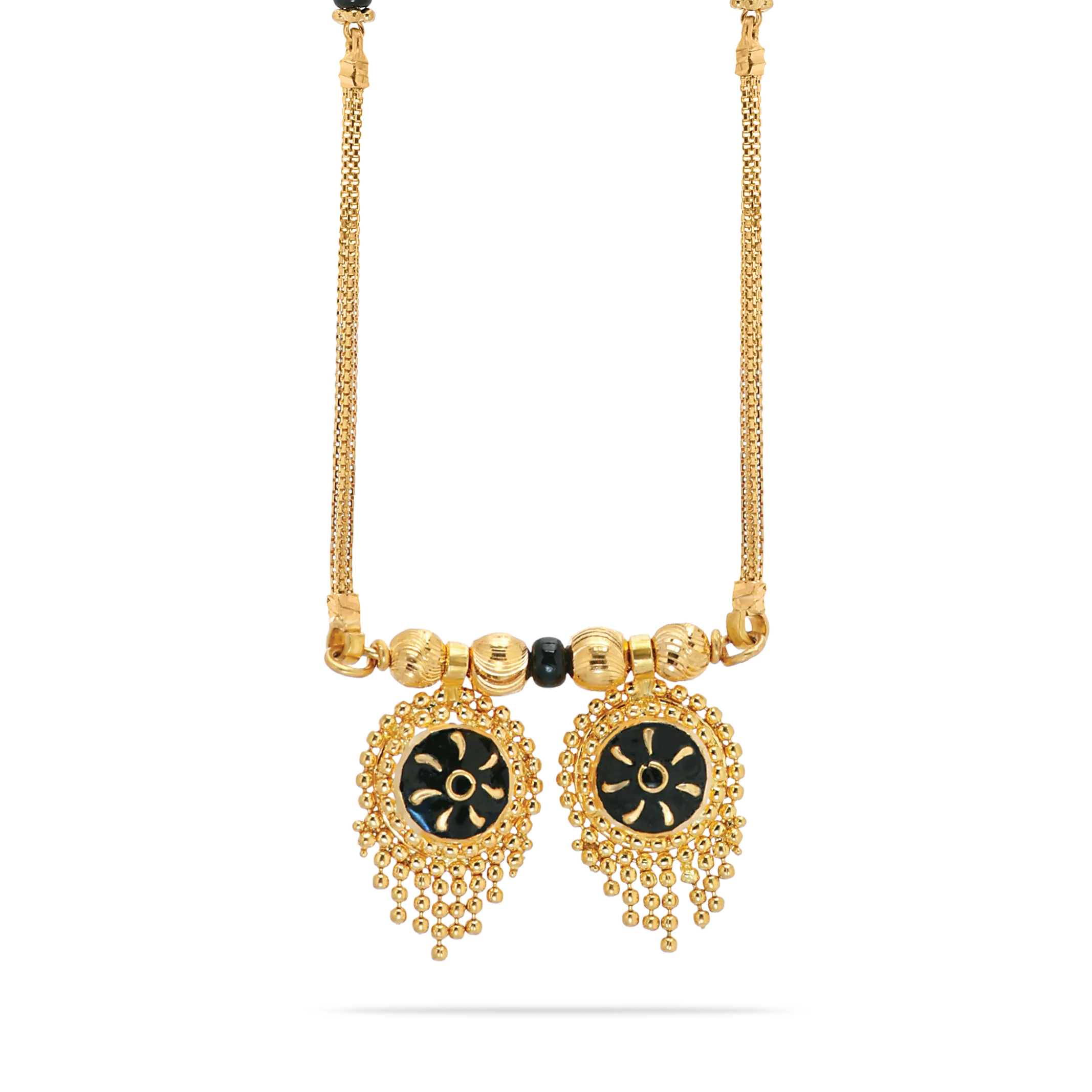
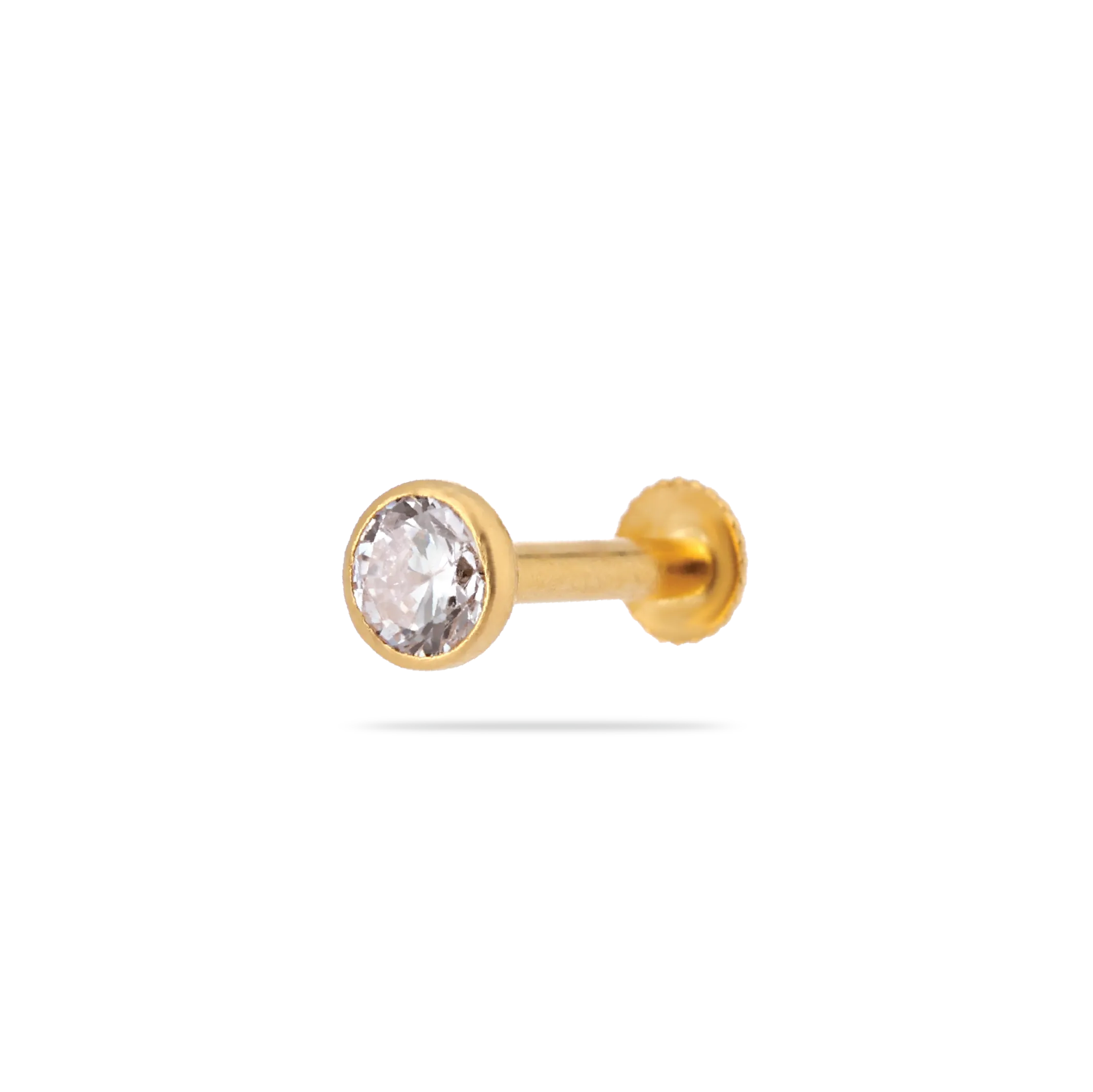
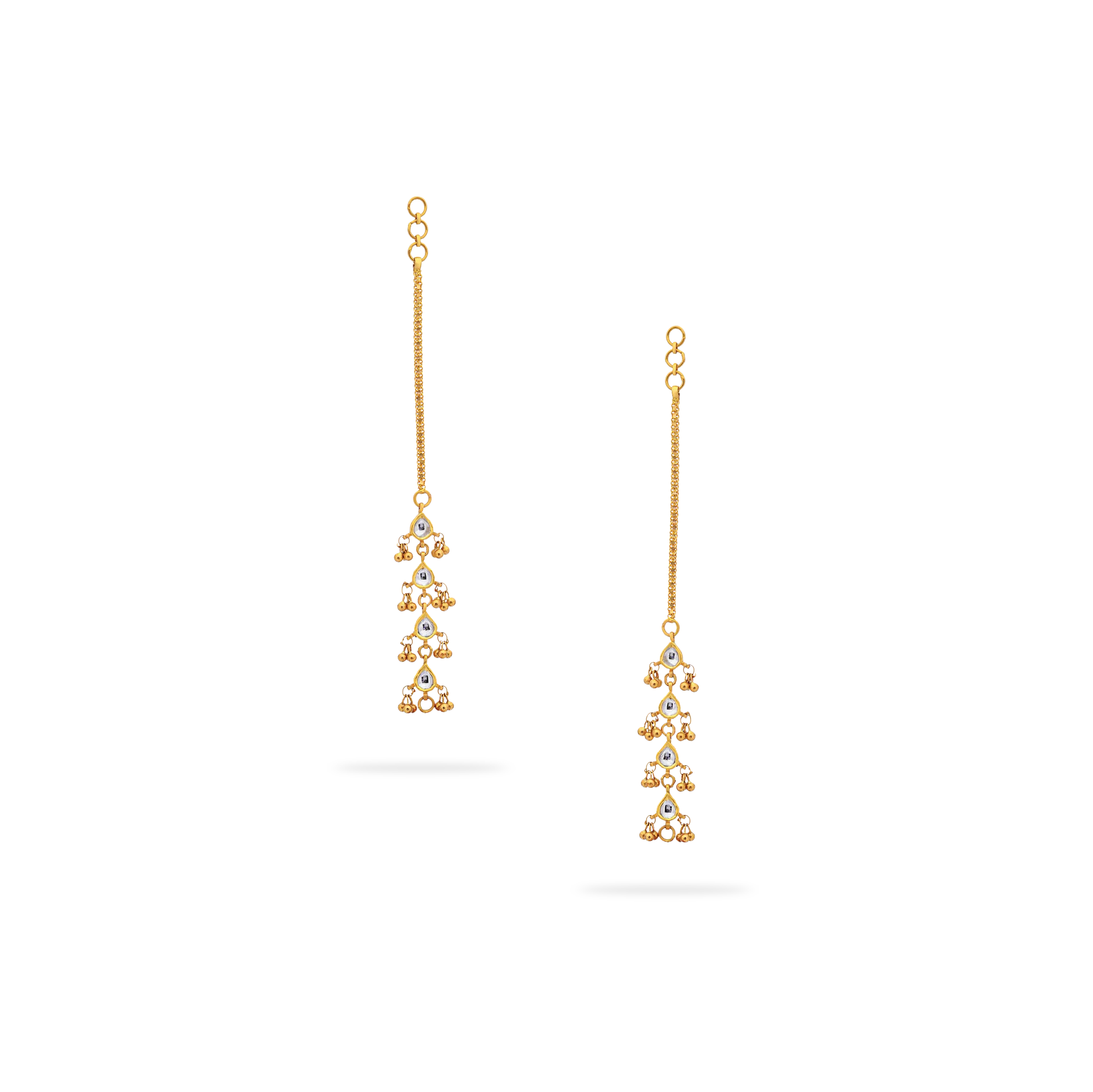
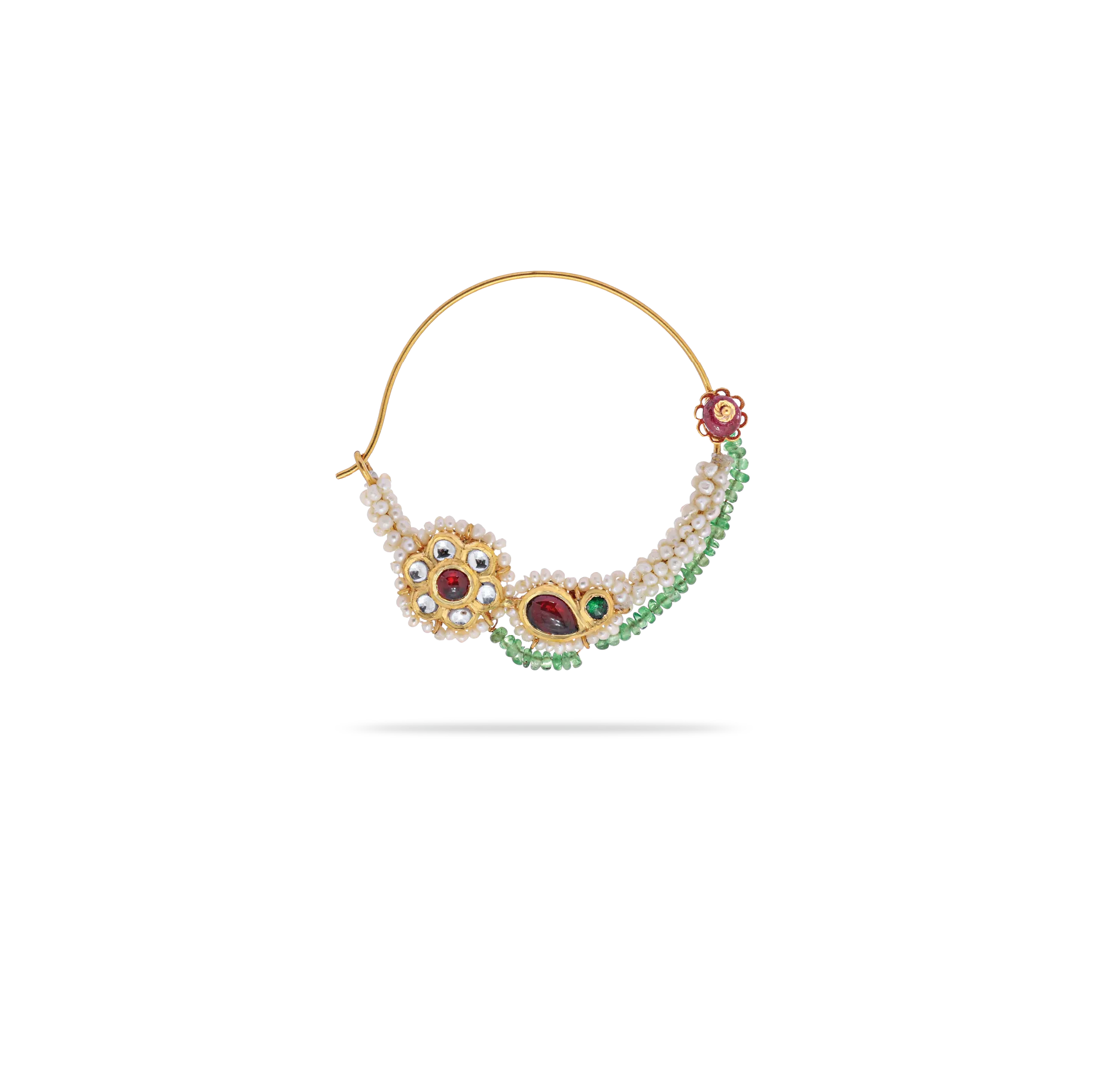
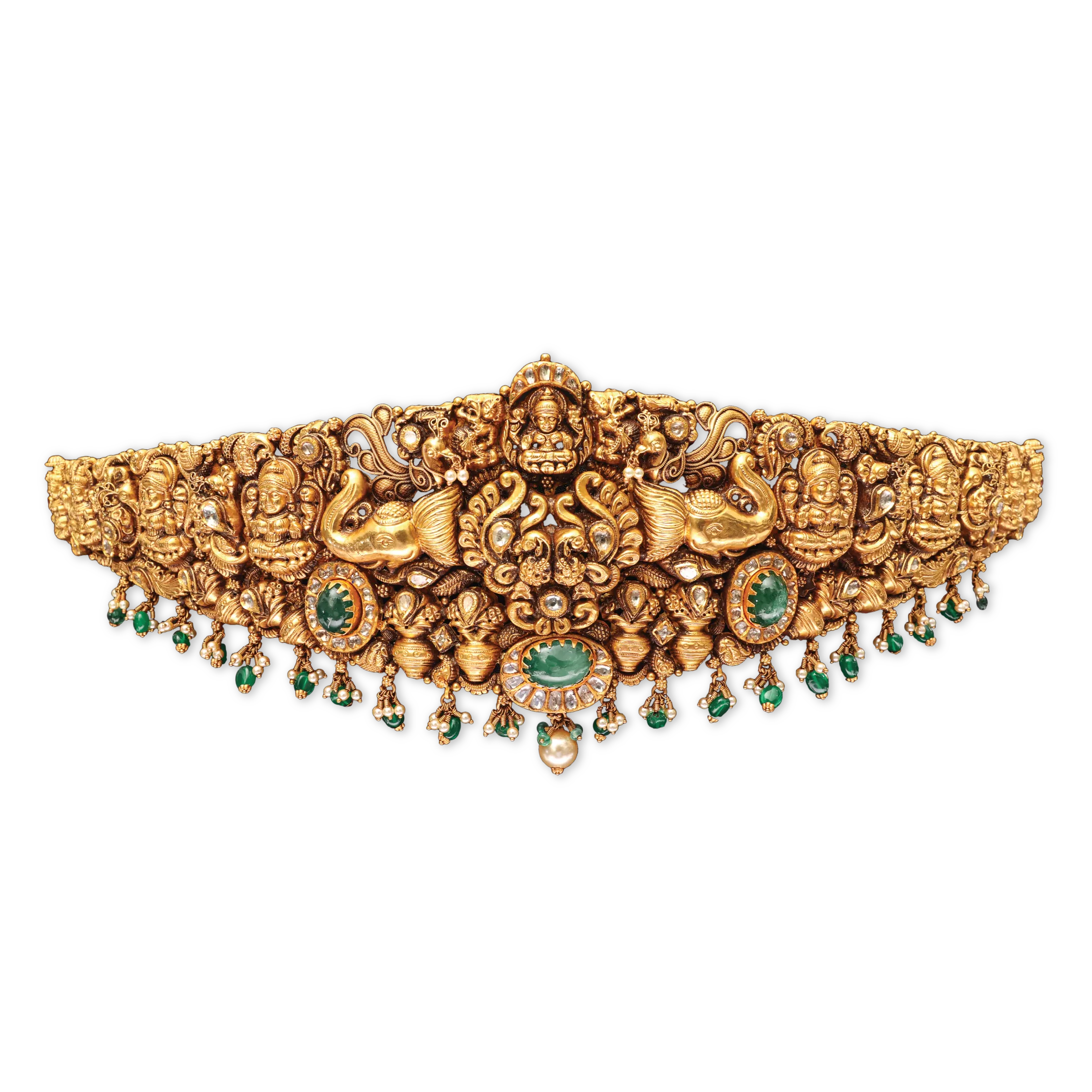
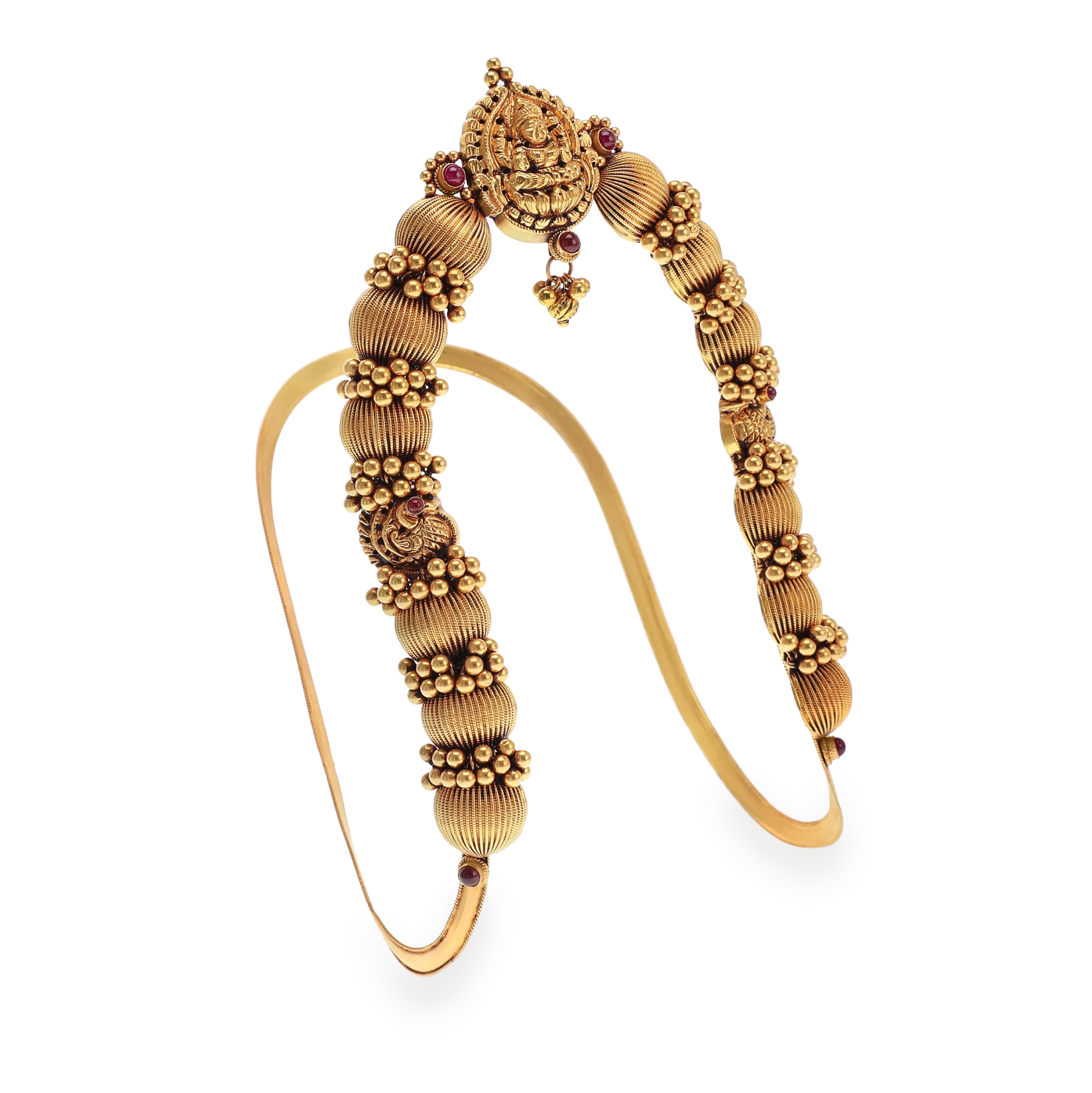
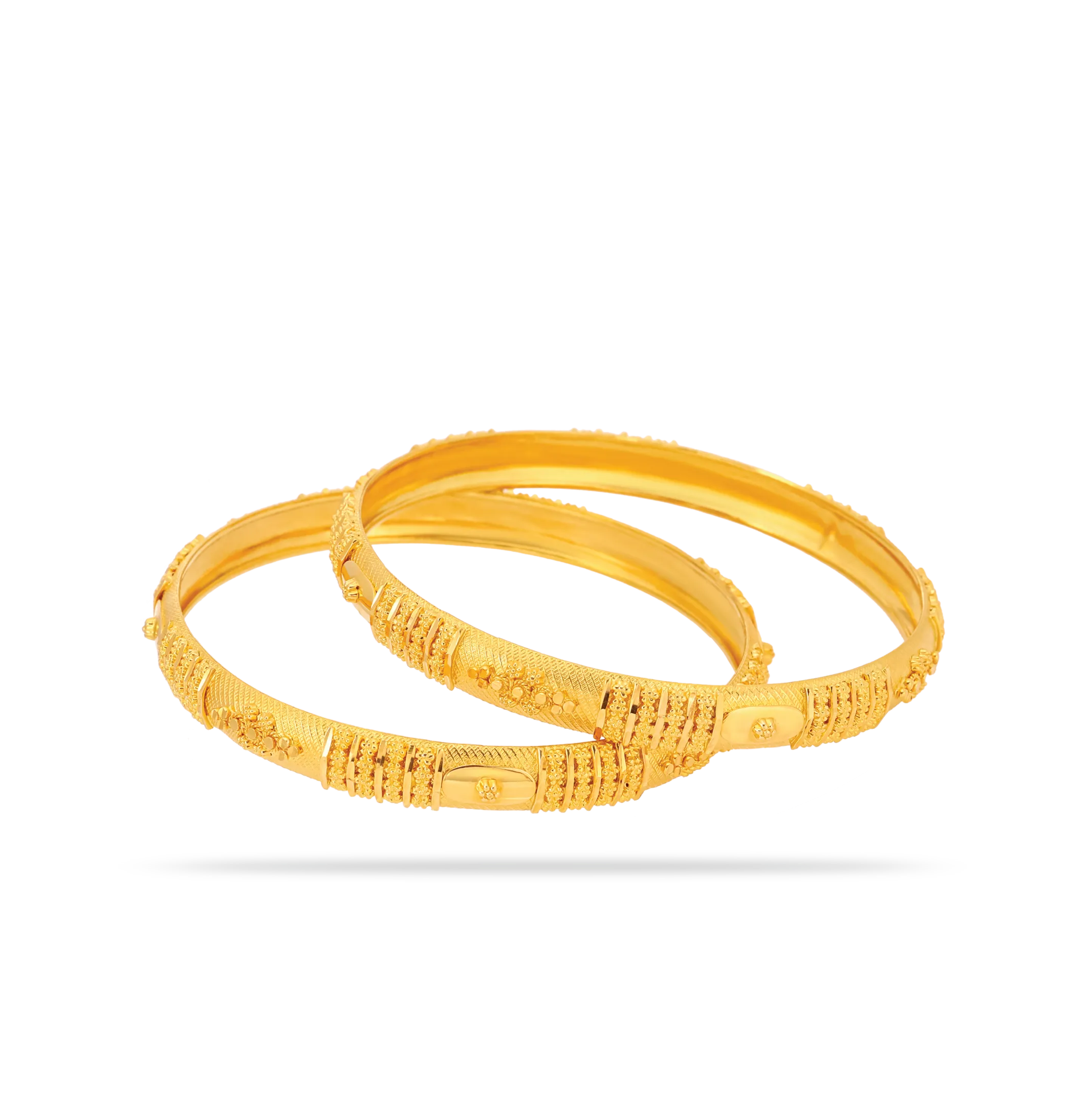
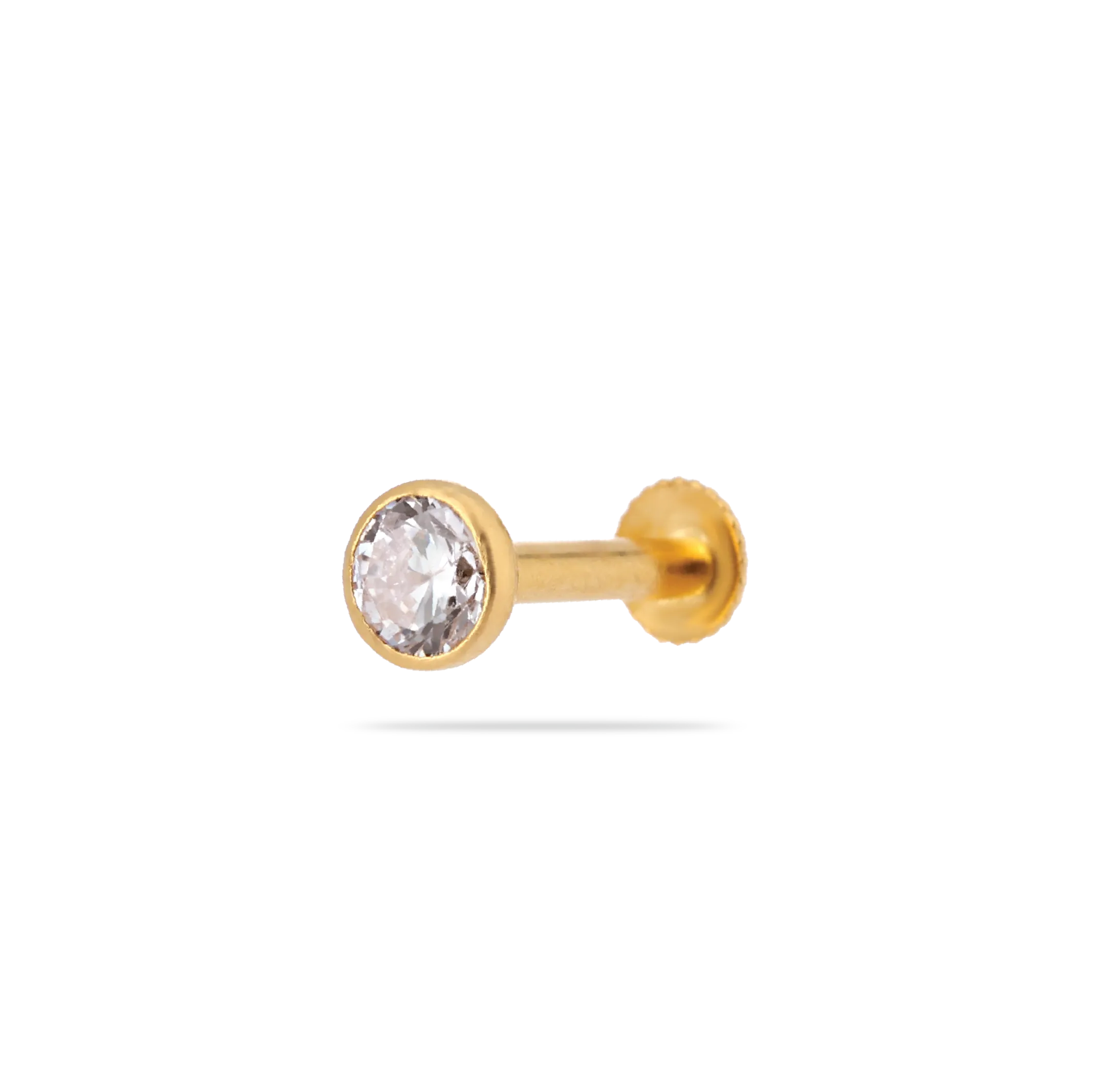
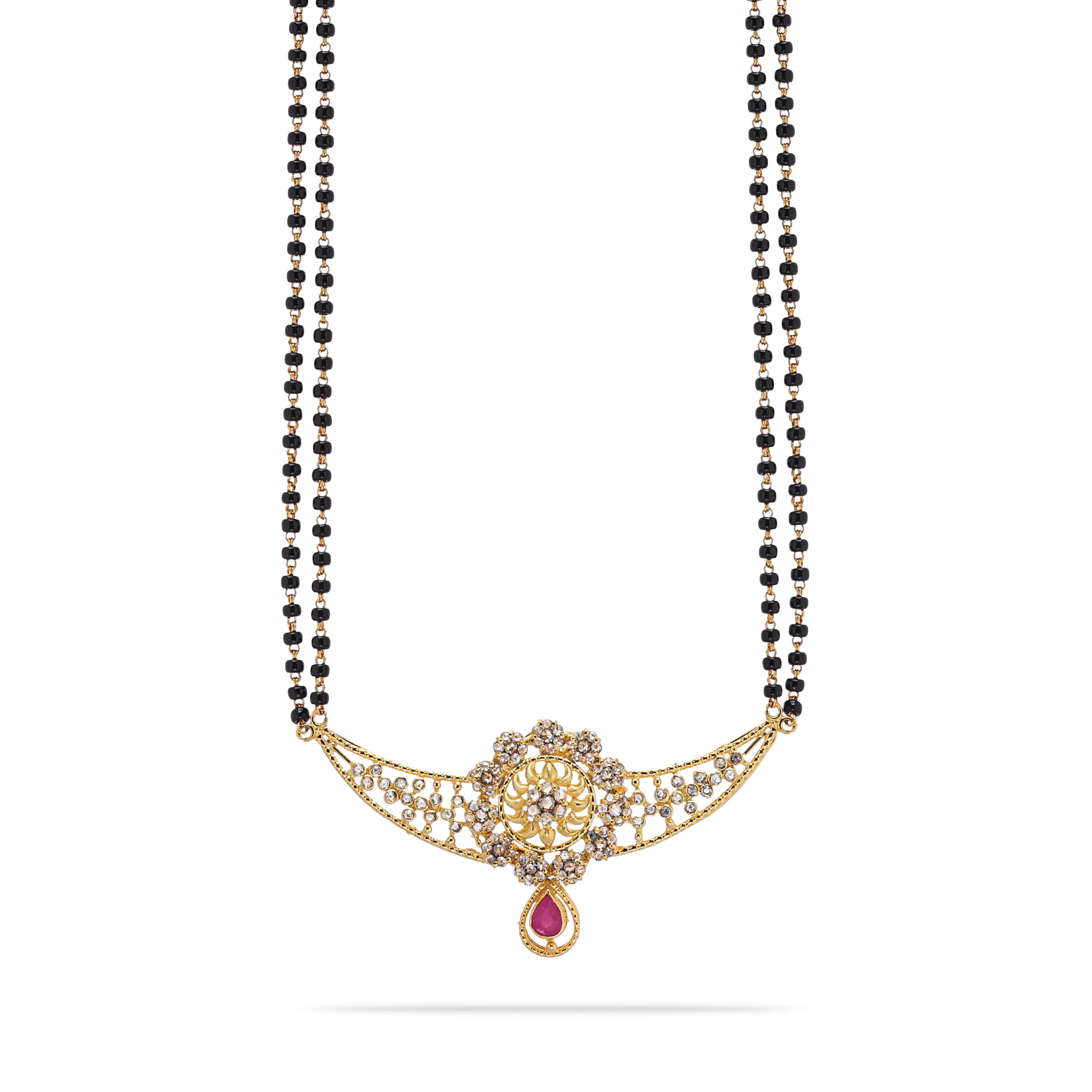
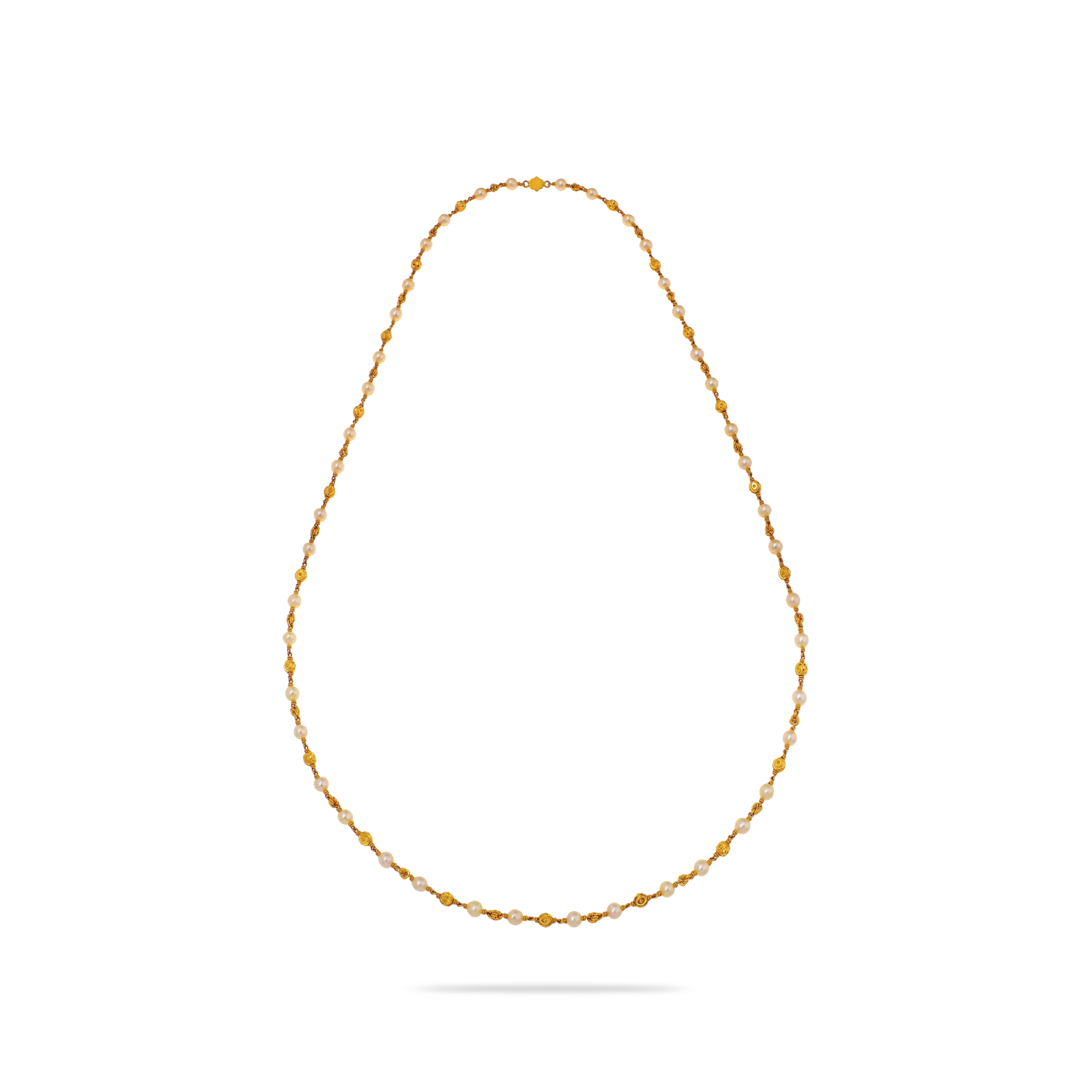
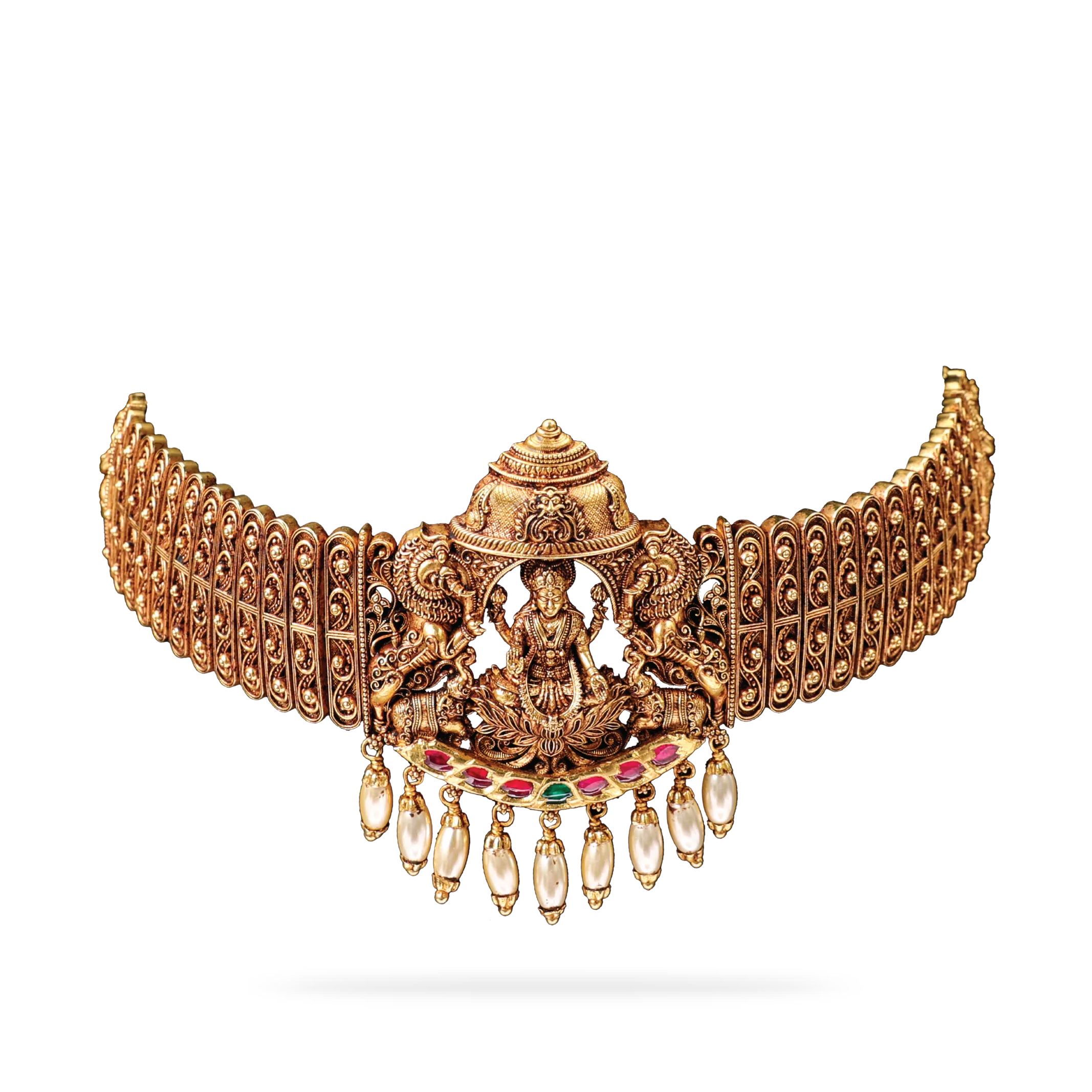
Indian bridal jewellery may combine rubies with kundan, jadau, antique finishes, pearls, or elaborate gold work. Necklaces can be layered, and pieces such as jhumkas , bangles, maang tikkas, and nose jewellery may be chosen according to regional and family traditions. For broader inspiration on traditional forms, South Indian wedding jewellery covers the range of rings, earrings, necklaces, and bangles that can be adapted to a bridal wardrobe.
Modern minimalist ruby pieces
Minimalist ruby jewellery relies on clean lines, bezel settings, slim bands, or a single carefully placed stone. It suits a courthouse ceremony, a pared-back reception dress, or a bride who wants her bouquet and neckline to remain prominent. Small scale does not have to mean forgettable; a well-cut ruby in a simple setting can be striking in photographs.
Statement jewellery for a fashion-forward bride
A statement necklace, sculptural earring, or oversized cocktail ring can become the visual centre of the outfit. Choose one dominant piece first, then let the remaining jewellery support it rather than compete with it. A ruby-red crystal set can offer a colour-led effect without the cost of fine ruby jewellery, provided the finish and materials are described honestly.
Evaluate ruby quality before you buy
Ruby quality is not captured by one number. Colour, transparency, cut, size, treatment, provenance, and craftsmanship all affect the appearance and price of a piece. Ask questions in plain language and compare similar stones under the same lighting before making a decision.
How colour affects a ruby’s appearance
Colour is usually the first feature people notice. Look for a red that feels lively rather than dull, and check whether the stone appears evenly coloured from the front. Very dark rubies may lose brightness in a heavy setting, while pale or pinkish stones can look delicate and modern; neither is automatically better if it suits your taste and budget.
Understanding clarity, cut, and carat weight
Inclusions are common in rubies, so clarity should be judged by how much they affect beauty and durability rather than by expecting complete flawlessness. A thoughtful cut can improve colour and light return, while carat weight affects presence but not necessarily overall quality. Examine the stone face-up and from the side, paying attention to thin areas and secure setting work.
Comparing natural, treated, and lab-grown rubies
Ask whether a natural stone has been heated or otherwise treated, because treatment can influence care, value, and disclosure requirements. Lab-grown rubies have the same basic chemical composition as natural rubies but are created under controlled conditions. Alternatives such as red crystal or glass should be labelled as alternatives, not casually described as ruby.
Checking certificates and seller credentials
A report from a recognised gemological laboratory can clarify whether a stone is natural or laboratory-grown and identify disclosed treatments. It does not replace inspecting the mounting, workmanship, return policy, and warranty. Keep invoices, reports, photographs, and sizing records together, especially for a high-value purchase.
Match ruby jewellery with your wedding outfit
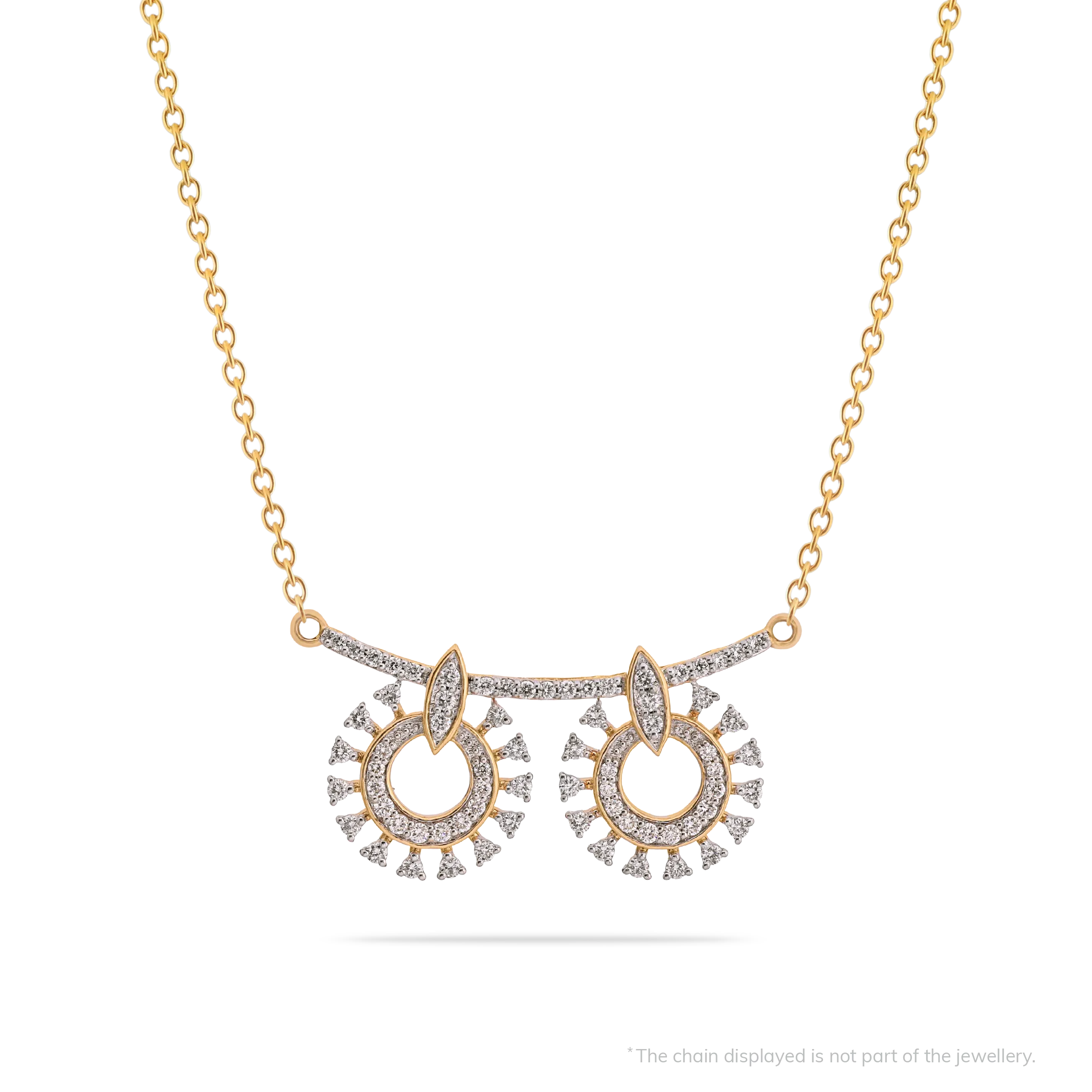
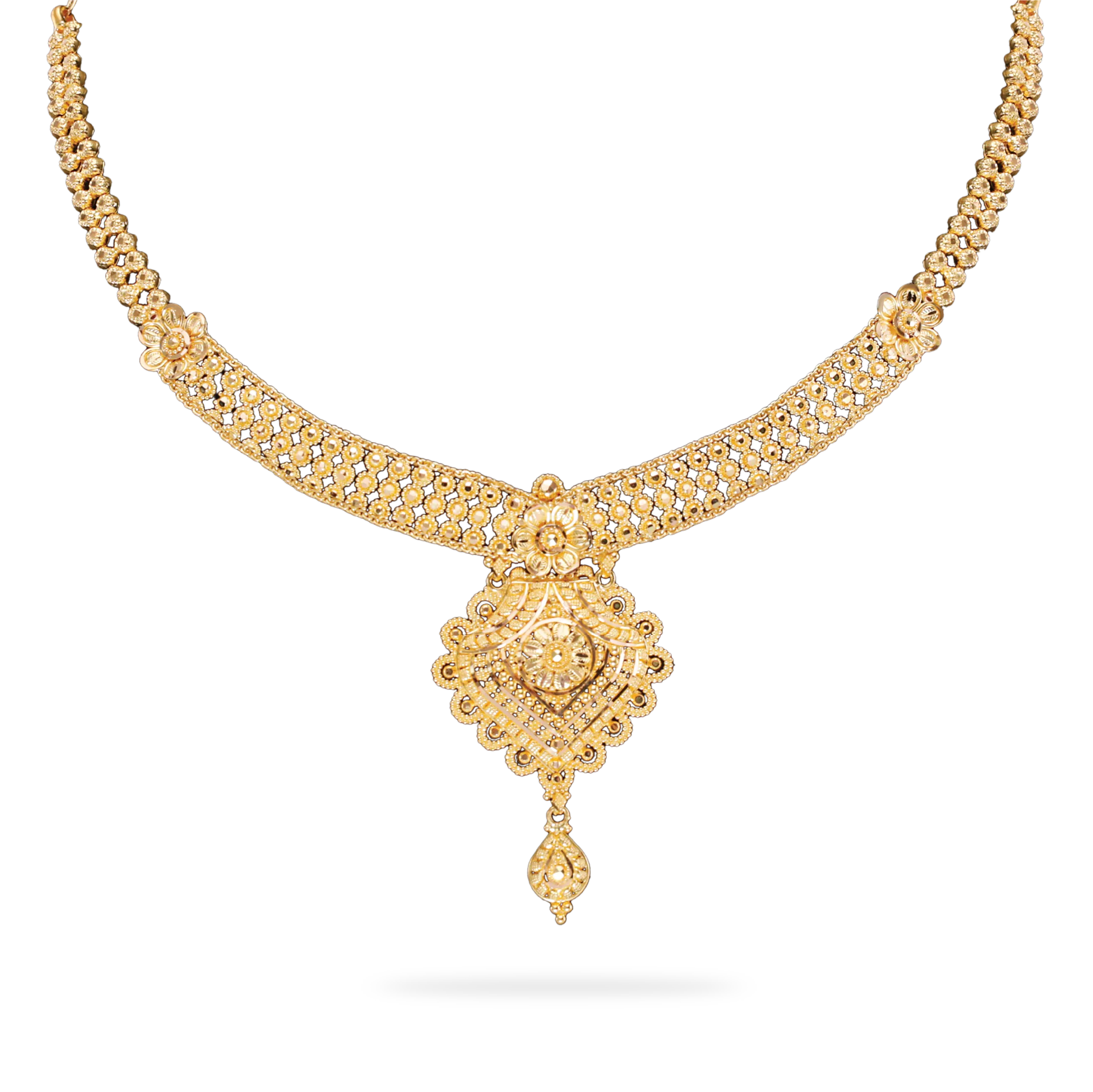
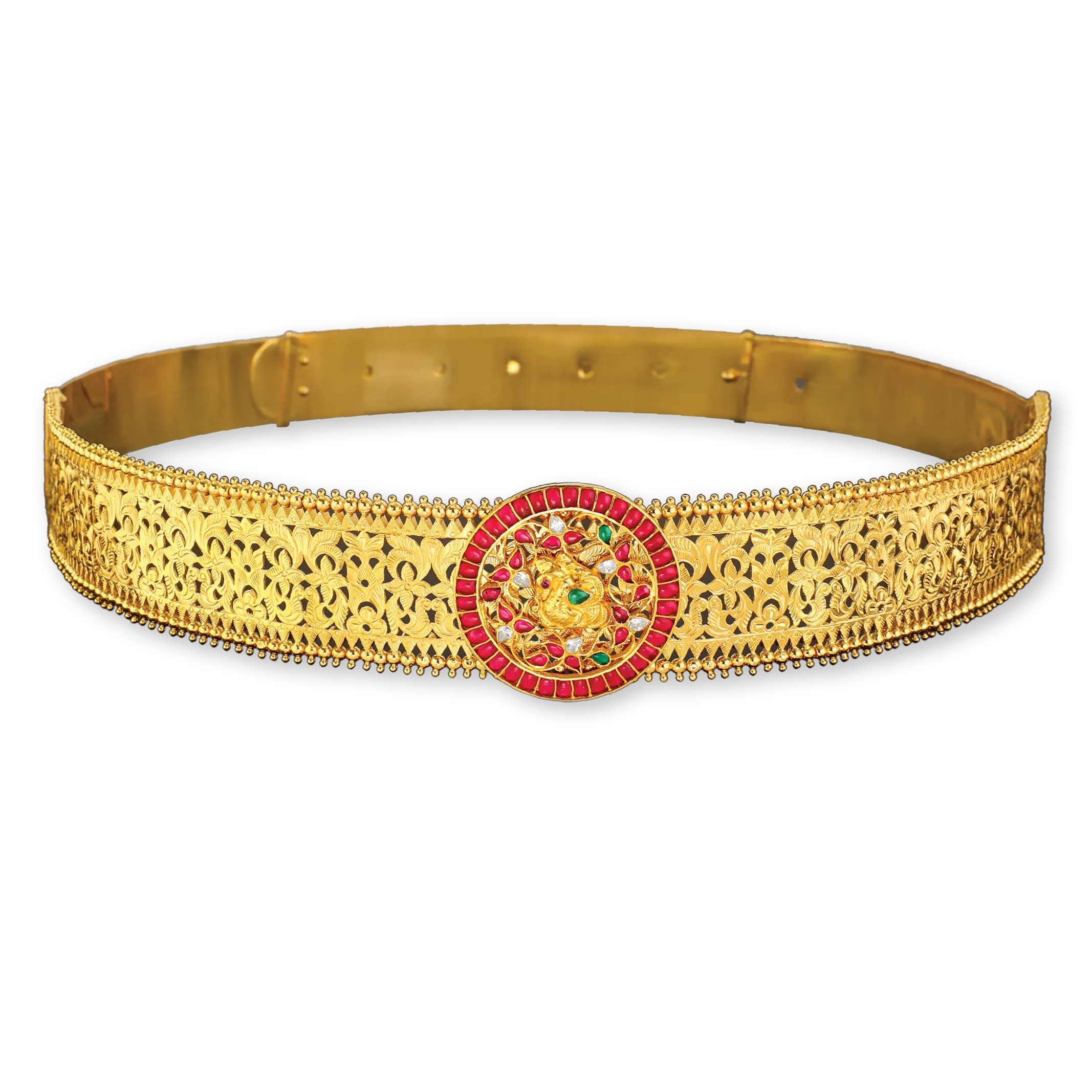
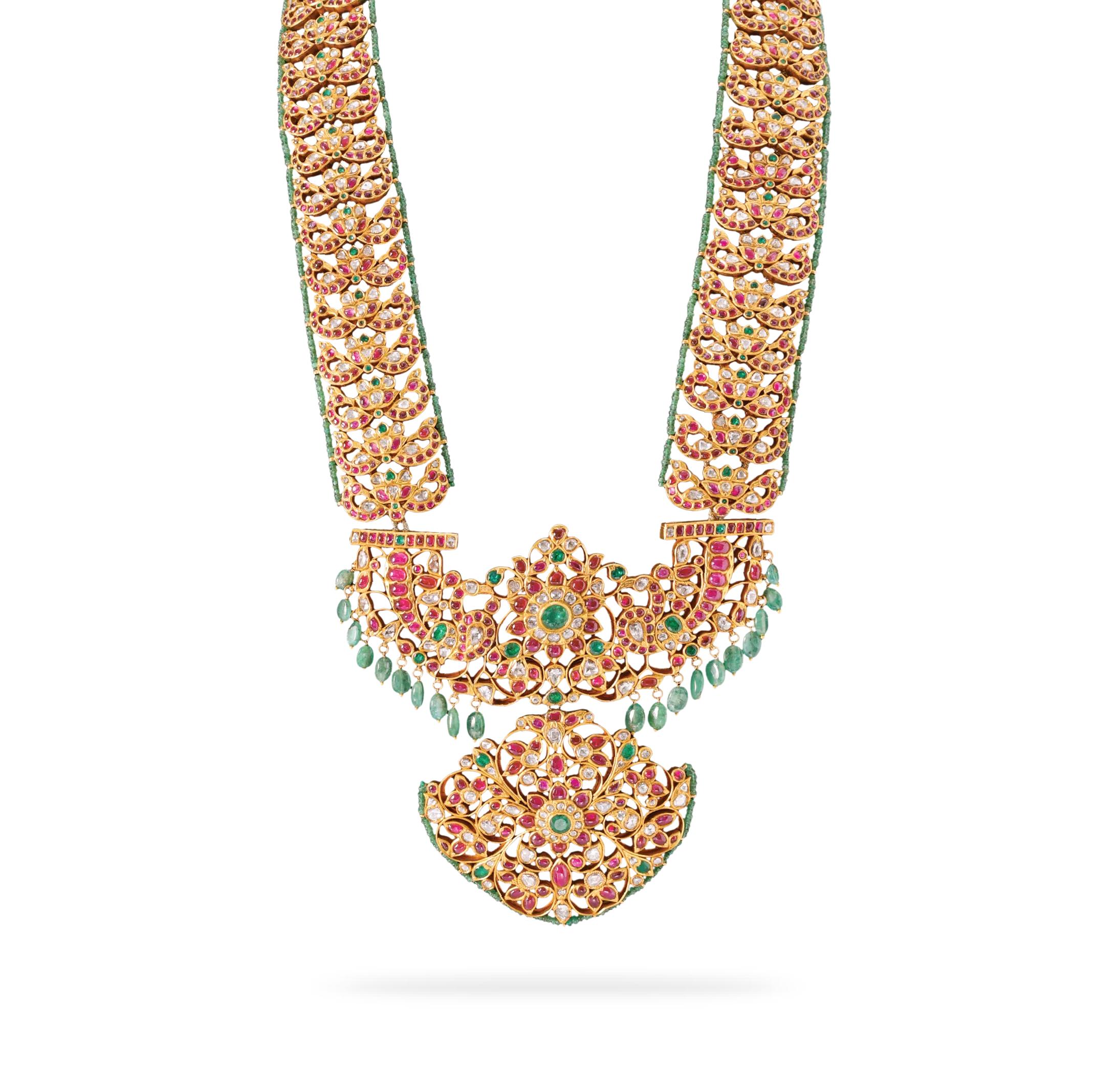
The jewellery should support the outfit’s colour and shape, not make every element compete for attention. Consider the gown, embroidery, veil, bouquet, hairstyle, and ceremony traditions as one visual composition. A useful wedding necklace guide can help you think through necklace length, neckline, layering, and the relationship between a bridal haram and different outfits.
Pairing rubies with white, ivory, and coloured gowns
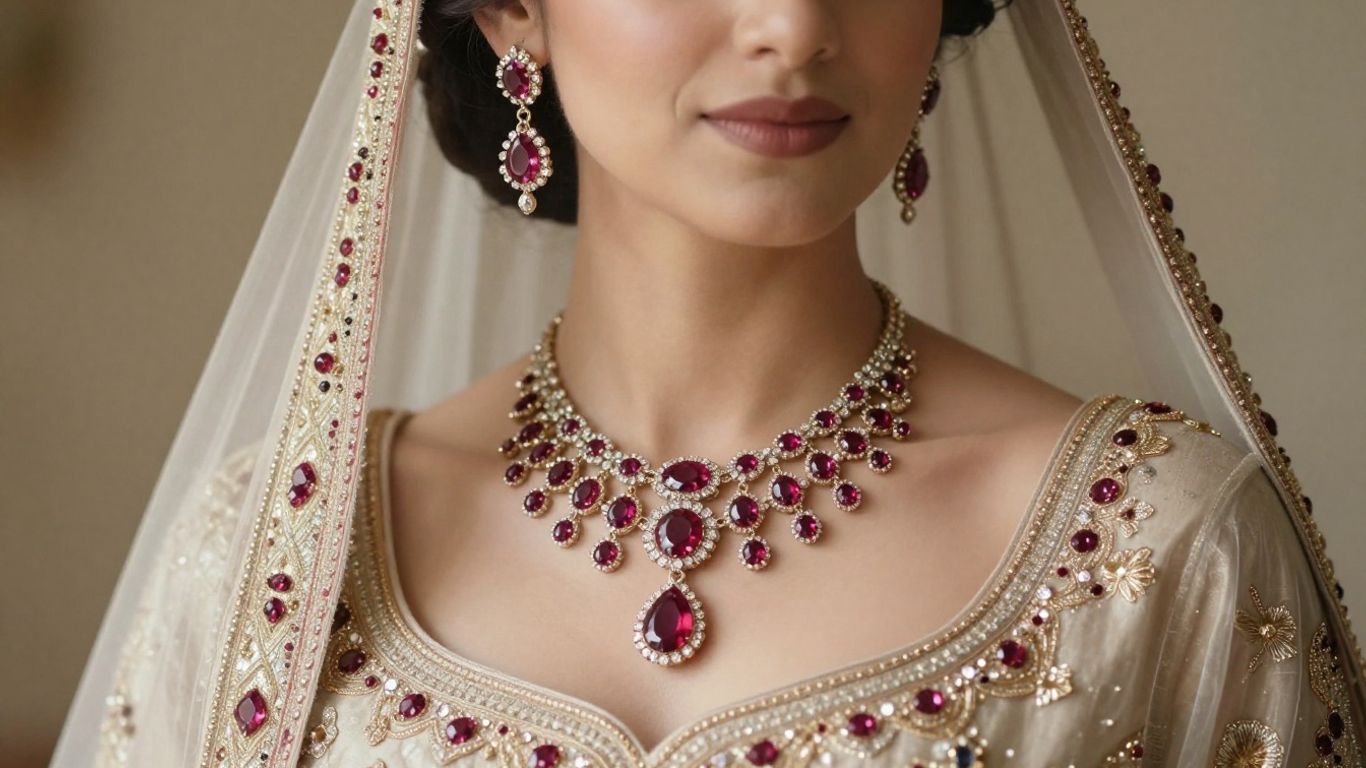
Against pure white, ruby can look crisp and dramatic, especially with white gold or platinum. Ivory and champagne fabrics often make yellow or rose gold feel warmer, while blush, peach, emerald, and deep red outfits call for more careful colour matching. Hold the jewellery beside the actual fabric rather than relying on an online image.
Coordinating jewellery with lehengas, sarees, and other bridalwear
For a lehenga or saree with dense embroidery, repeat one colour from the fabric in the jewellery and leave some breathing room around the face. A simpler silk saree can accommodate a more detailed necklace or layered set. When the clothing already carries traditional motifs, select jewellery that echoes those shapes instead of introducing an unrelated decorative language.
Choosing pieces for necklines and hairstyles
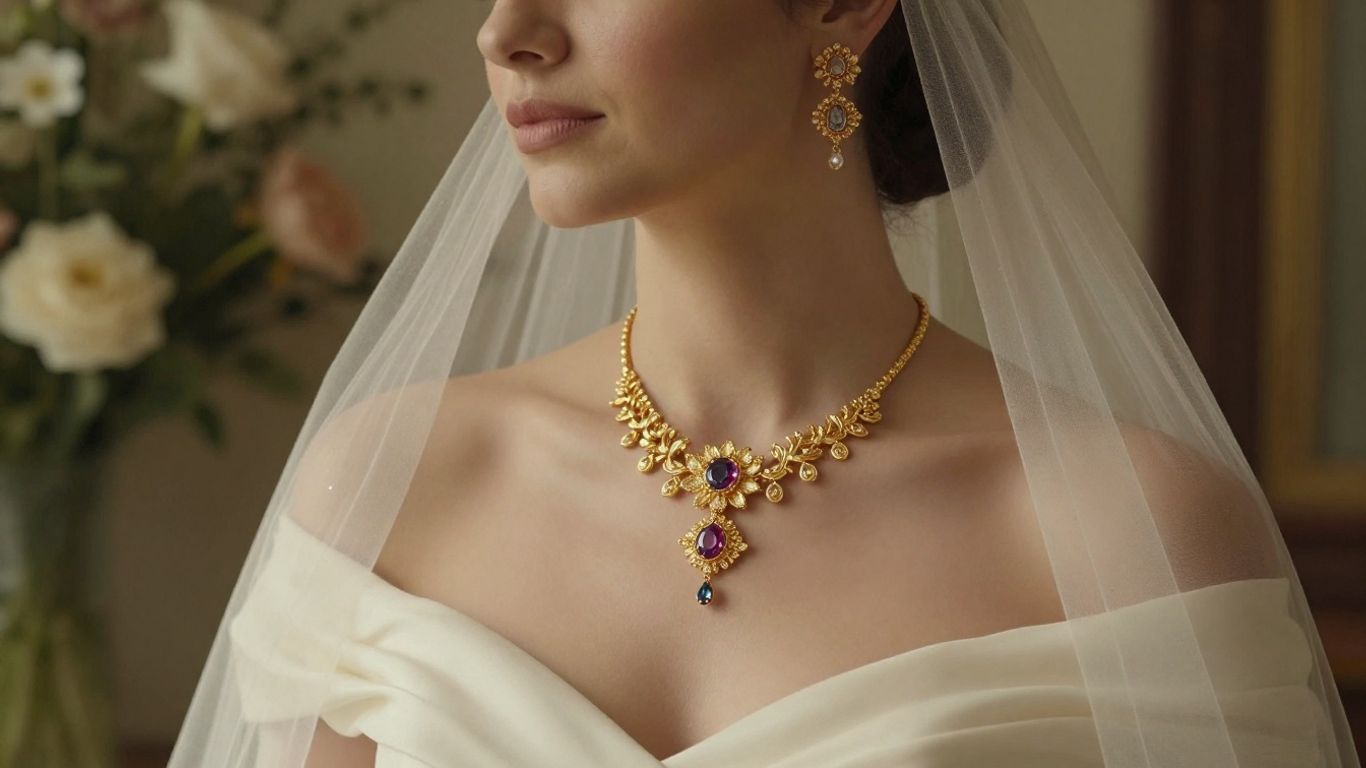
Chokers and short necklaces suit open necklines, while longer pendants can fill the vertical space of a deep or square neckline. High necks may work better with earrings and a bracelet than with a crowded necklace. Your hairstyle matters too: a low bun can frame drop earrings, whereas loose hair may call for a brighter, more substantial pair.
Balancing statement earrings, necklaces, and headpieces
A statement earring, necklace, and headpiece can work together when their visual weight is carefully distributed. The easiest approach is to choose one focal area—usually the face or neckline—and keep the others quieter. For a practical starting point, consider these checks before the final fitting:
- Can you turn your head and sit comfortably?
- Does the veil catch on any prongs, chains, or textured edges?
- Do the earrings remain visible with your hairstyle?
- Does the necklace stay centred when you move?
These small tests often reveal problems that are invisible while standing still. They also help you decide whether a lighter ceremony piece or a second reception look would make the day easier.
Select the right metal and gemstone pairings
Metal changes the character of a ruby as much as the setting does. Yellow gold can make red look warmer and more traditional, while white metals create sharper contrast. Think about the jewellery you already wear, your comfort with different finishes, and whether the new pieces should become heirlooms or simply complete one outfit.
Comparing yellow gold , white gold , rose gold , and platinum
Yellow gold has a classic relationship with ruby and works especially well with traditional Indian designs. White gold and platinum provide a cooler frame that can make the red appear particularly vivid, while rose gold creates a softer, romantic blend. Compare the tone in person, since photographs often flatten the difference between metal finishes.
When diamonds enhance ruby jewellery
Diamonds can outline a ruby, add sparkle between stones, or provide a quiet contrast in an otherwise colourful design. They are most effective when their scale supports the ruby rather than turning the piece into a contest between two focal points. A diamond halo may suit a ring, while small diamond accents can keep a necklace refined.
Combining rubies with pearls and other gemstones
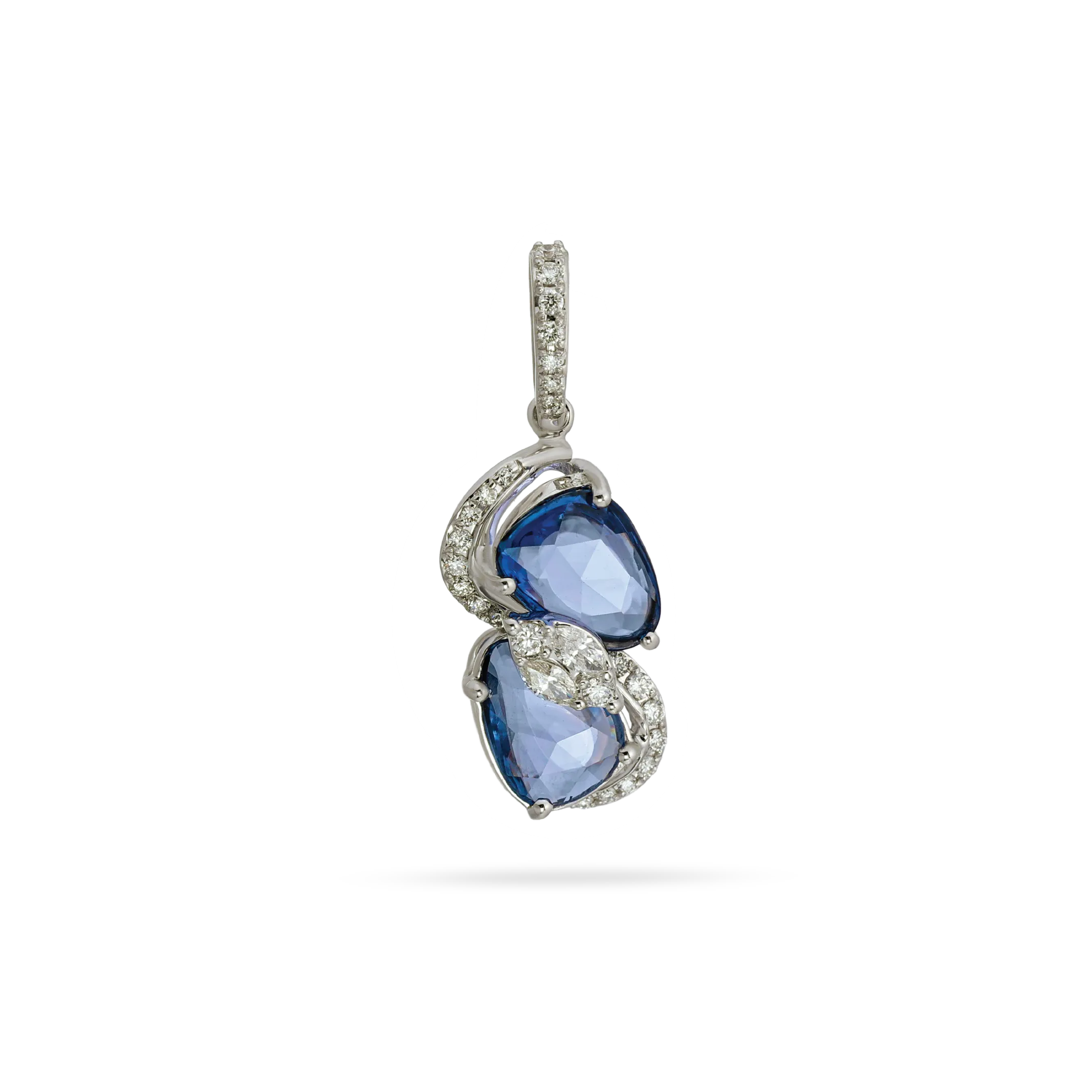
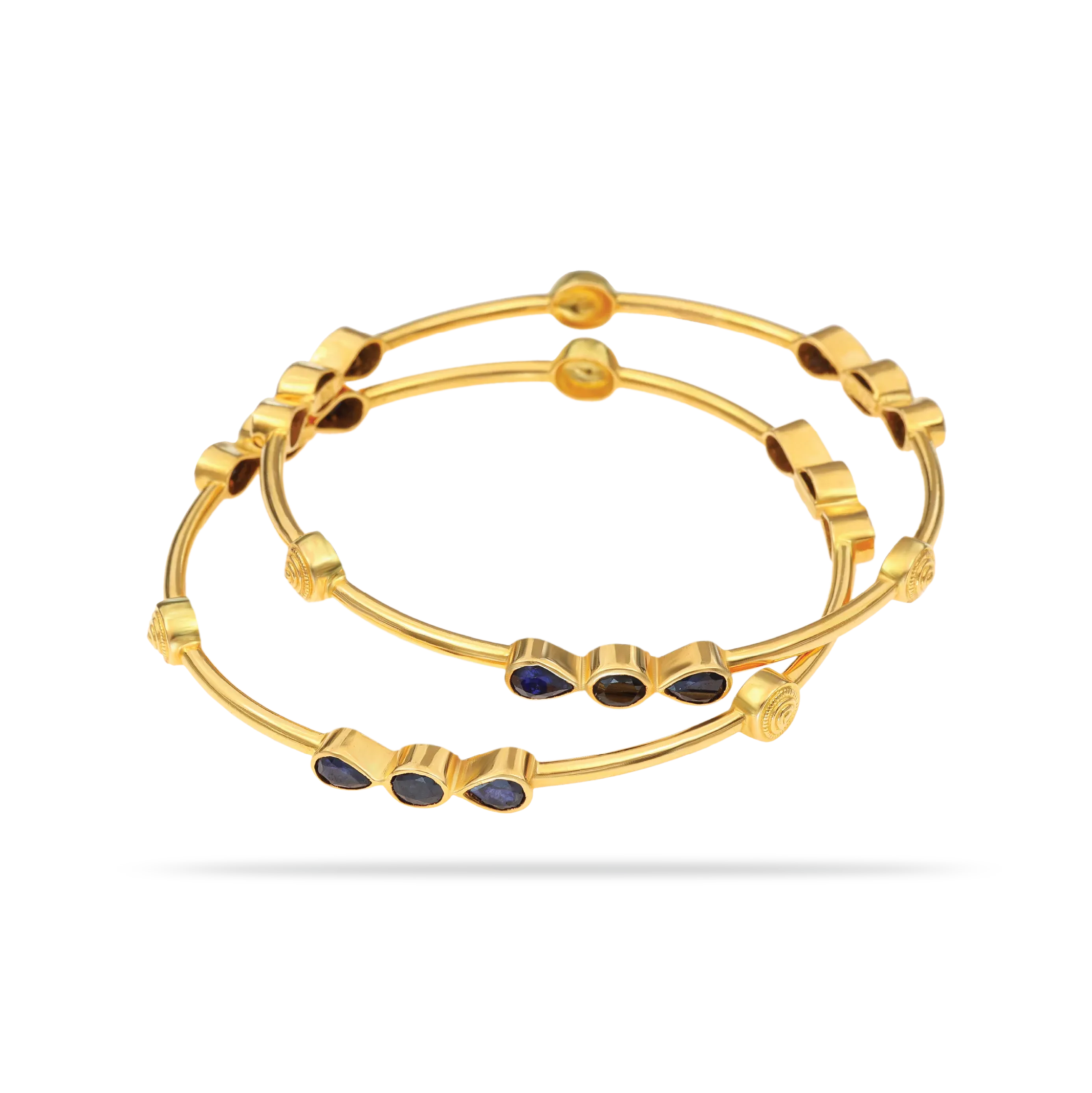
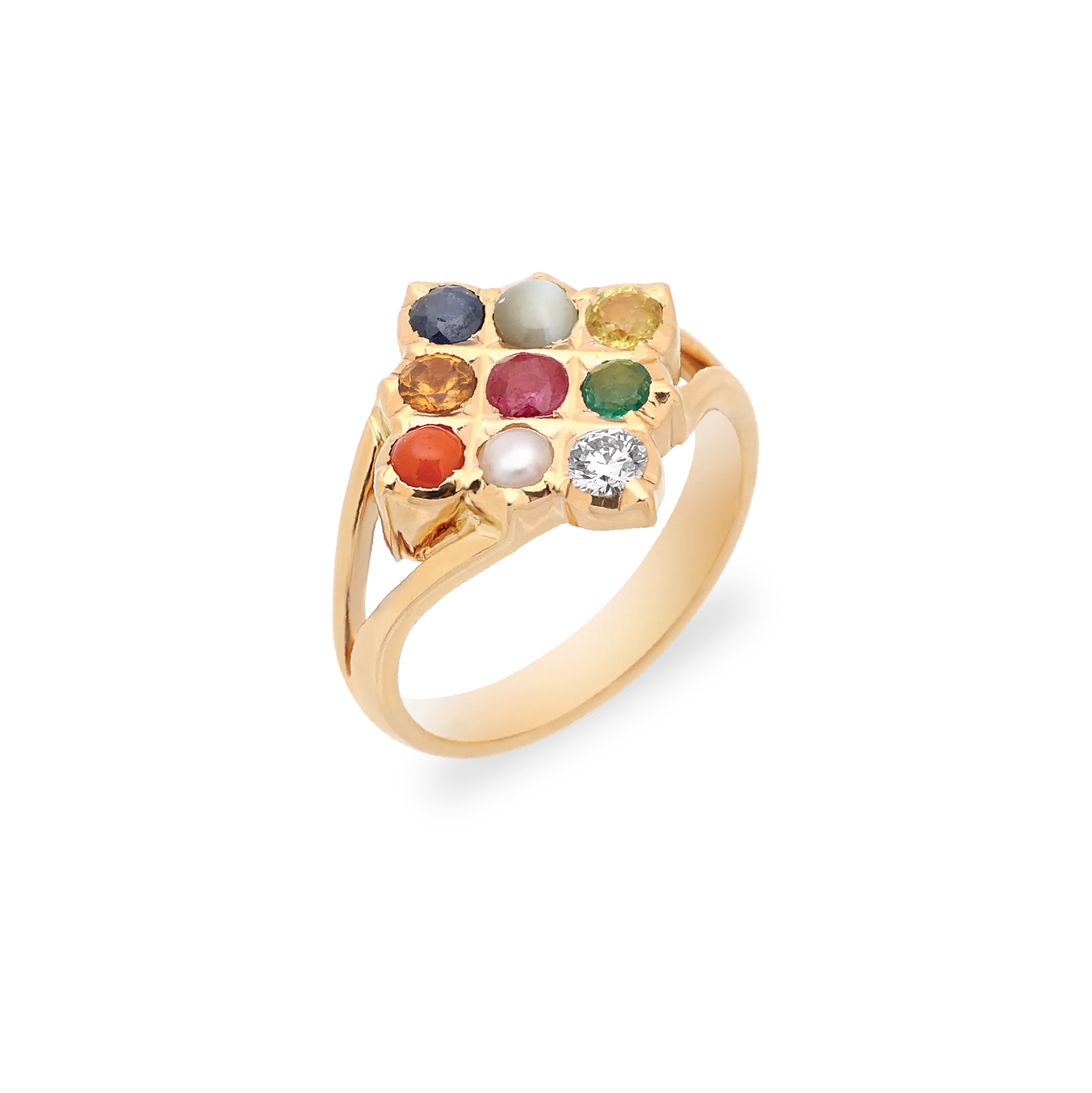
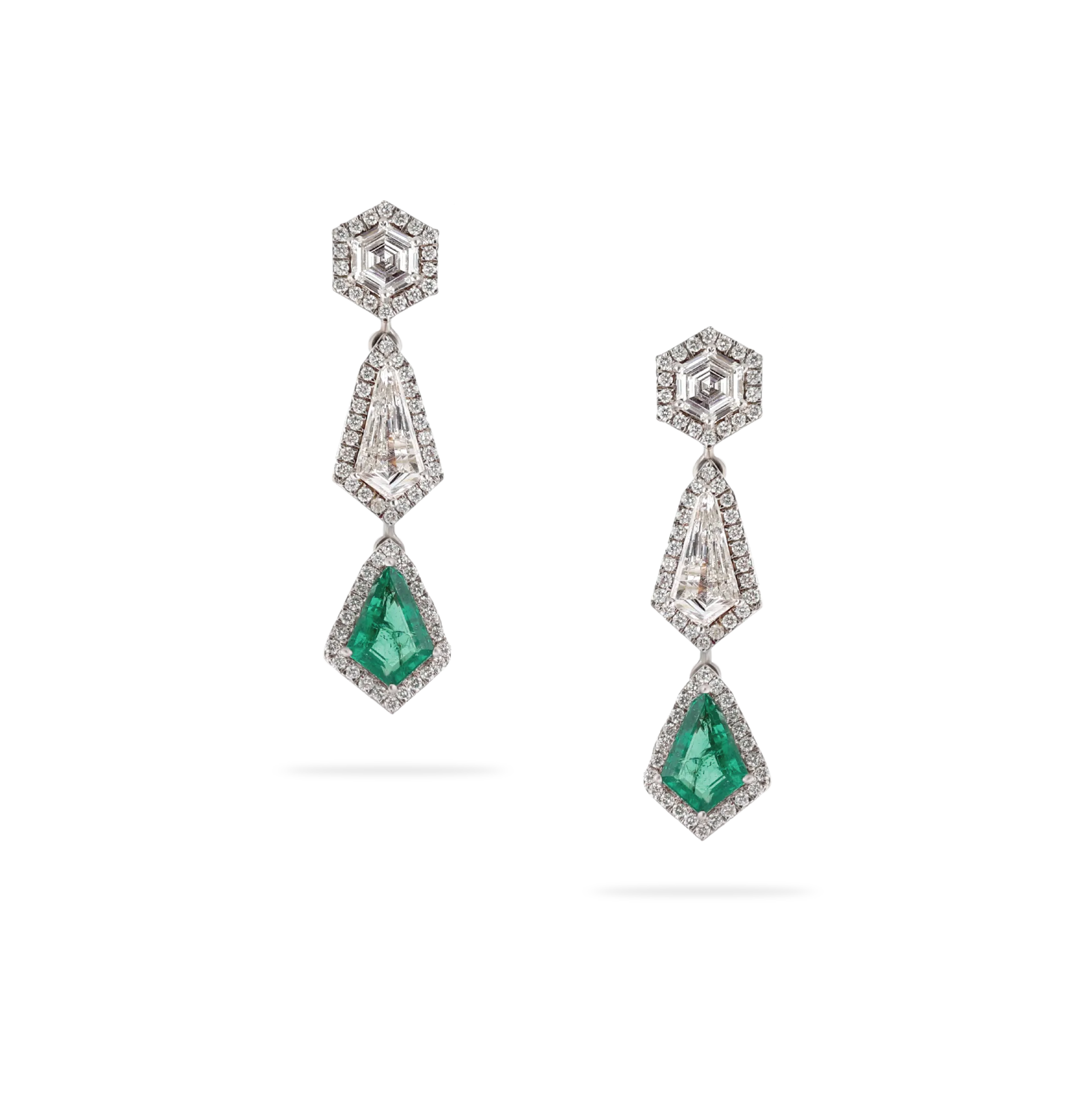
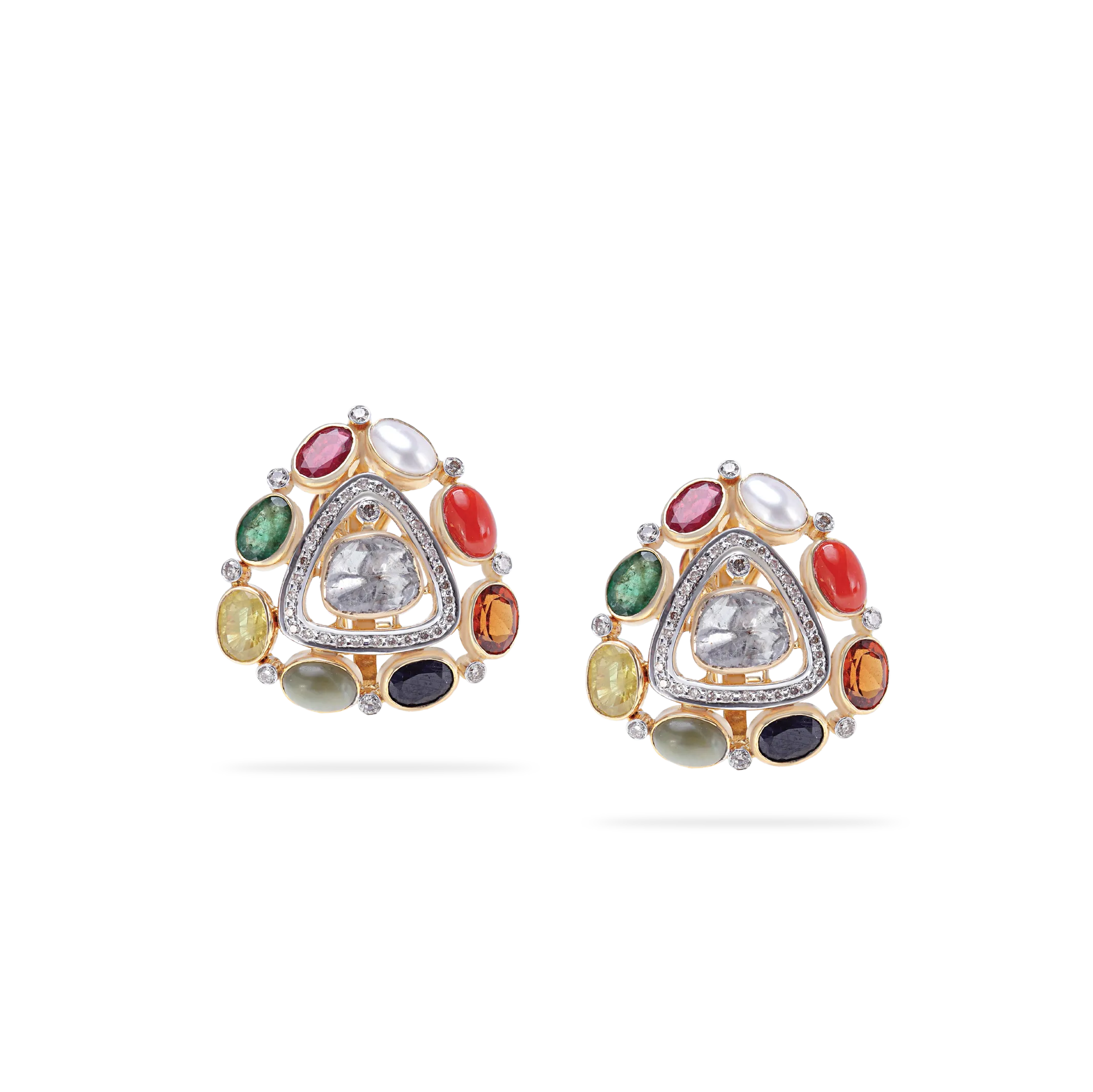
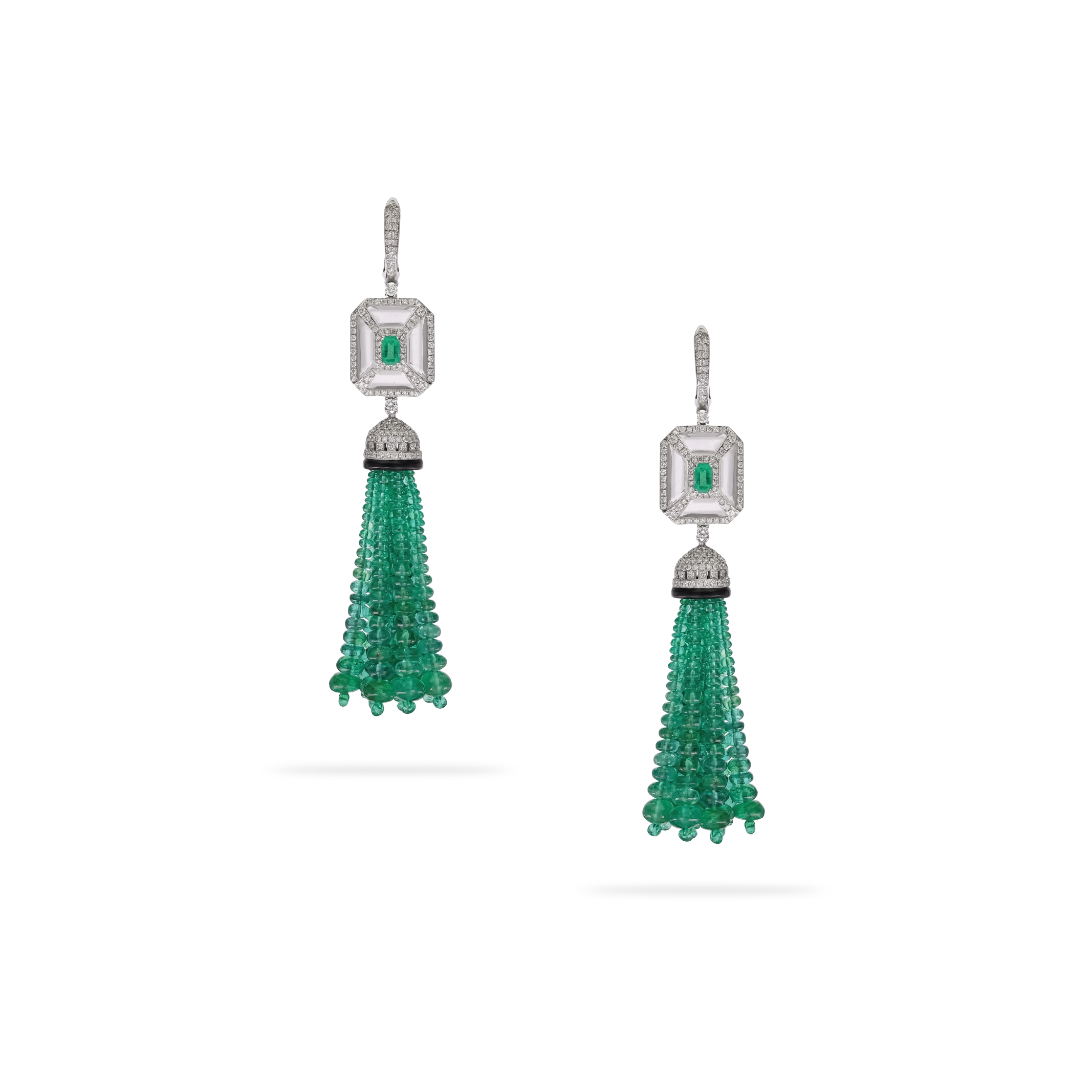
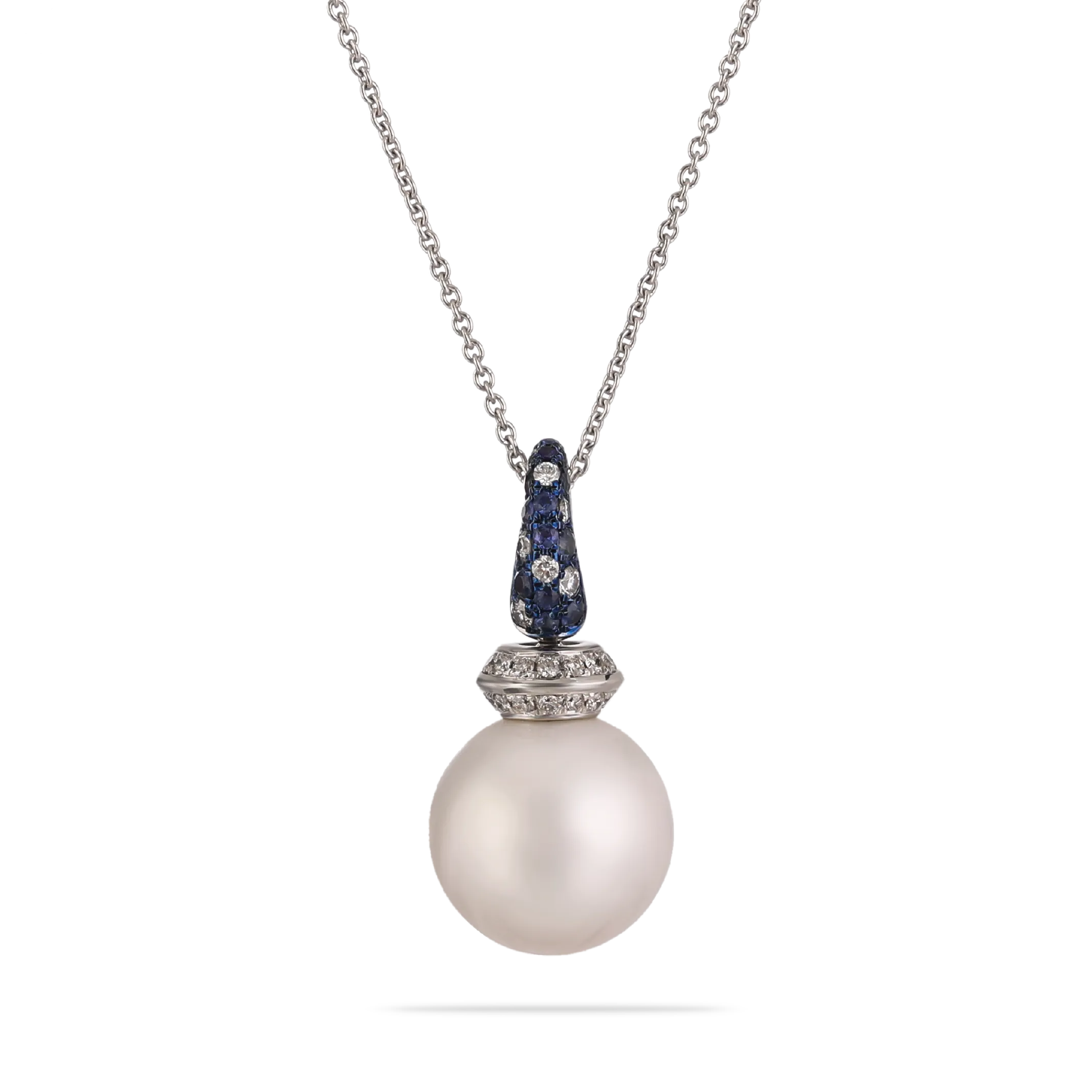
Pearls soften the intensity of ruby and can be especially graceful with silk, satin, and vintage-inspired clothing. Emeralds create a bold jewel-toned palette, while sapphires offer a cooler contrast. If combining several gemstones, repeat one colour elsewhere in the outfit so the final look feels intentional rather than busy.
Matching the metal to your skin tone and accessories
Skin tone can guide you, but it should not limit you. Warm undertones often sit comfortably with yellow or rose gold , while cool undertones may favour white metals; many people can wear all four successfully. Match the chosen finish with your rings, watch, hair accessories, and clothing hardware for a quietly pulled-together result.
Build a complete bridal jewellery collection
A complete collection is less about owning every possible accessory and more about creating useful relationships between pieces. Start with the item that matters most to you, then add only what improves the outfit or gives you another way to wear it. The lightweight bridal jewellery guide is a helpful reminder that comfort, movement, and versatility belong in the decision—not just visual impact.
Choosing a necklace, earrings, and bracelet combination
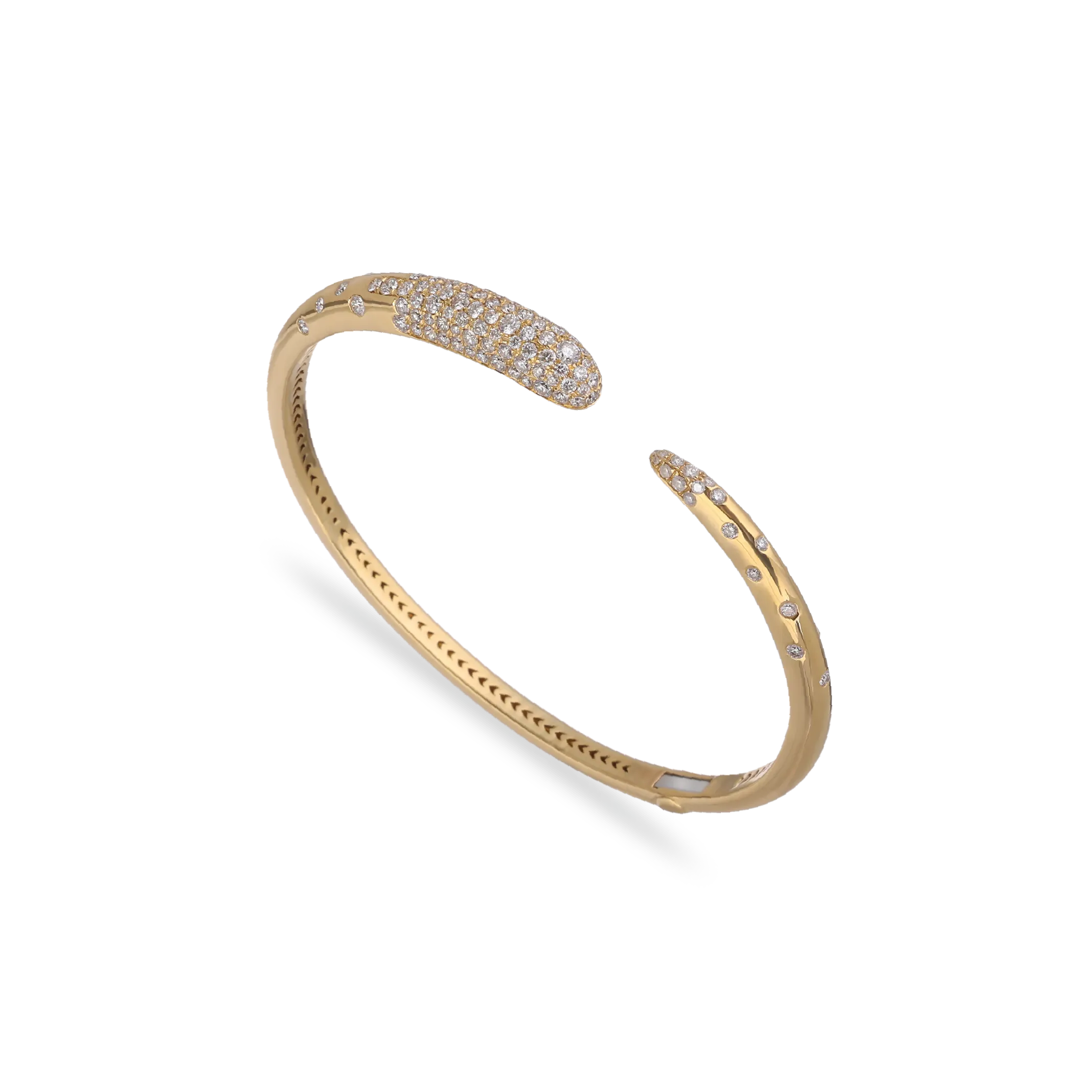
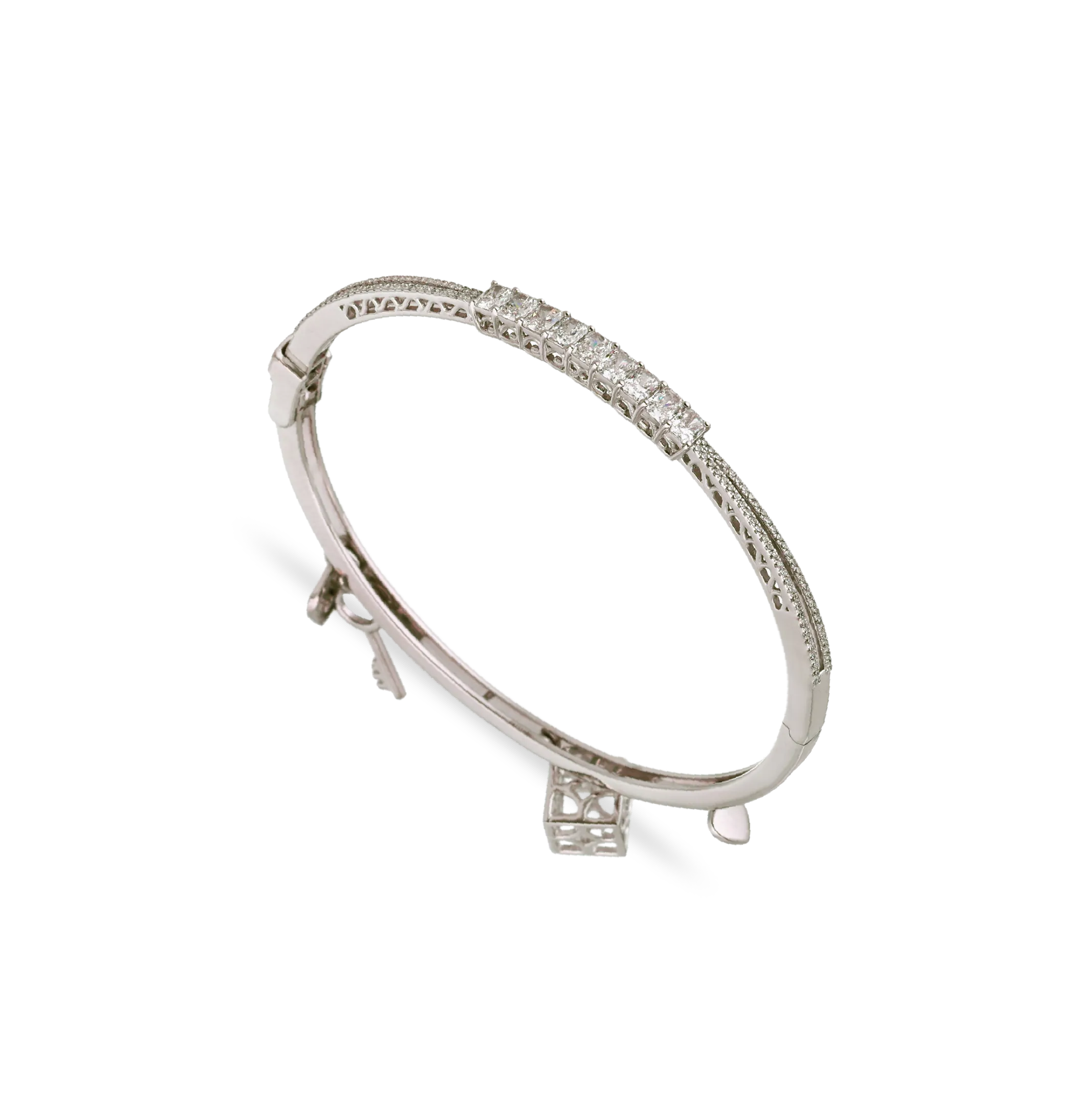
A necklace and earrings usually establish the face-and-neckline balance, while a bracelet adds detail when your hands will appear in photographs. If the necklace is elaborate, choose earrings with a similar finish but a simpler silhouette. A slim bracelet or a small stack can then provide continuity without making the whole collection feel heavy.
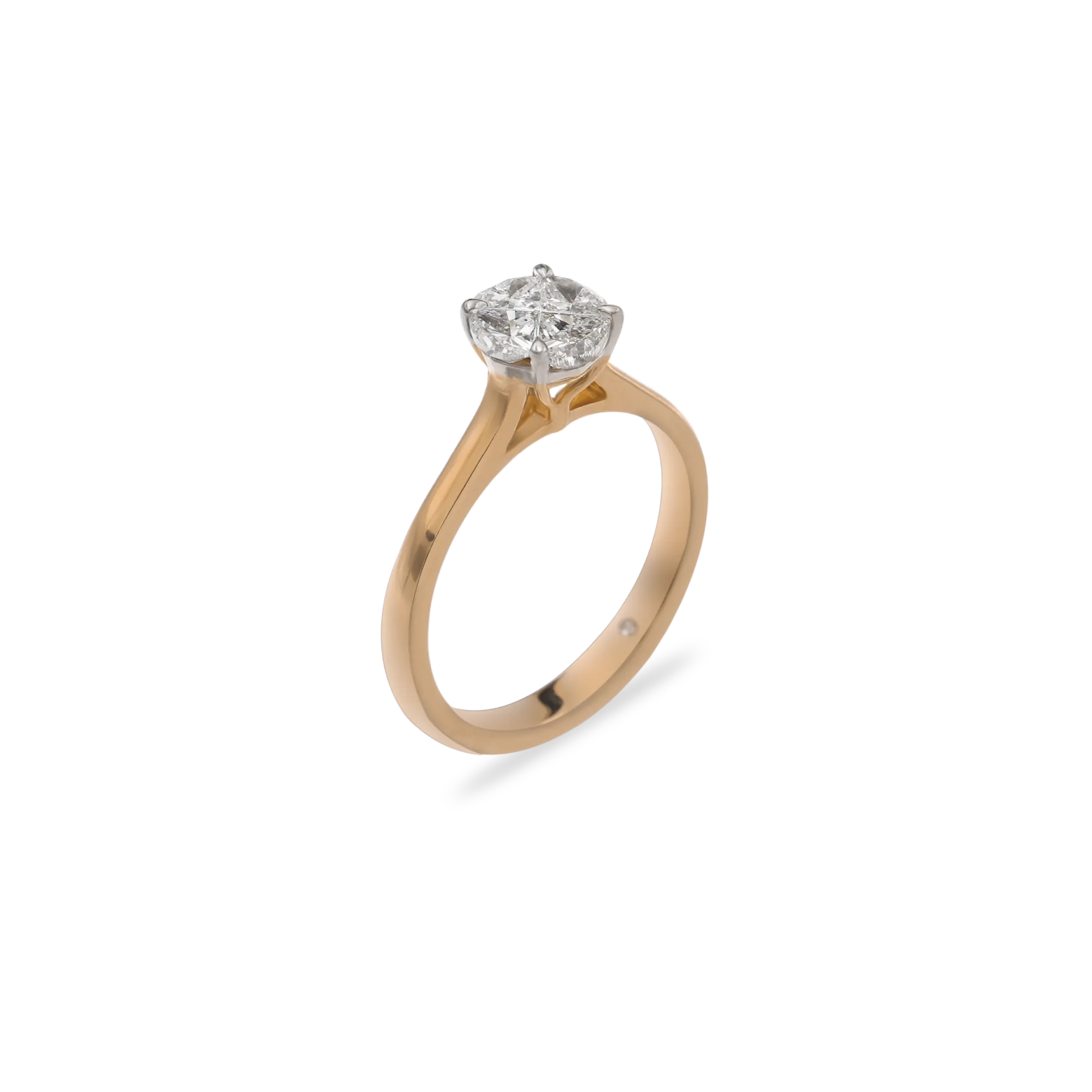
Selecting a ruby engagement ring or wedding band
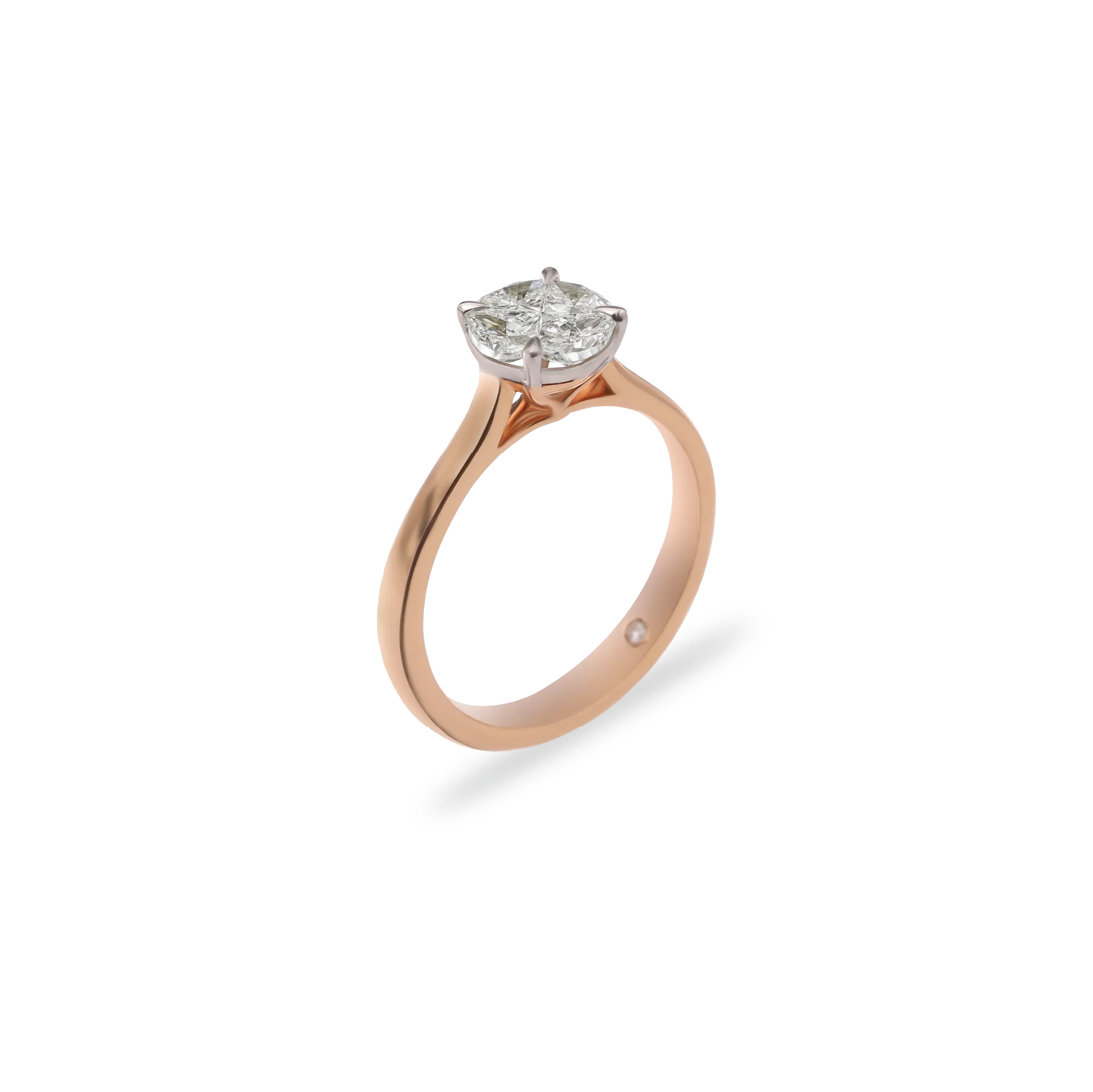
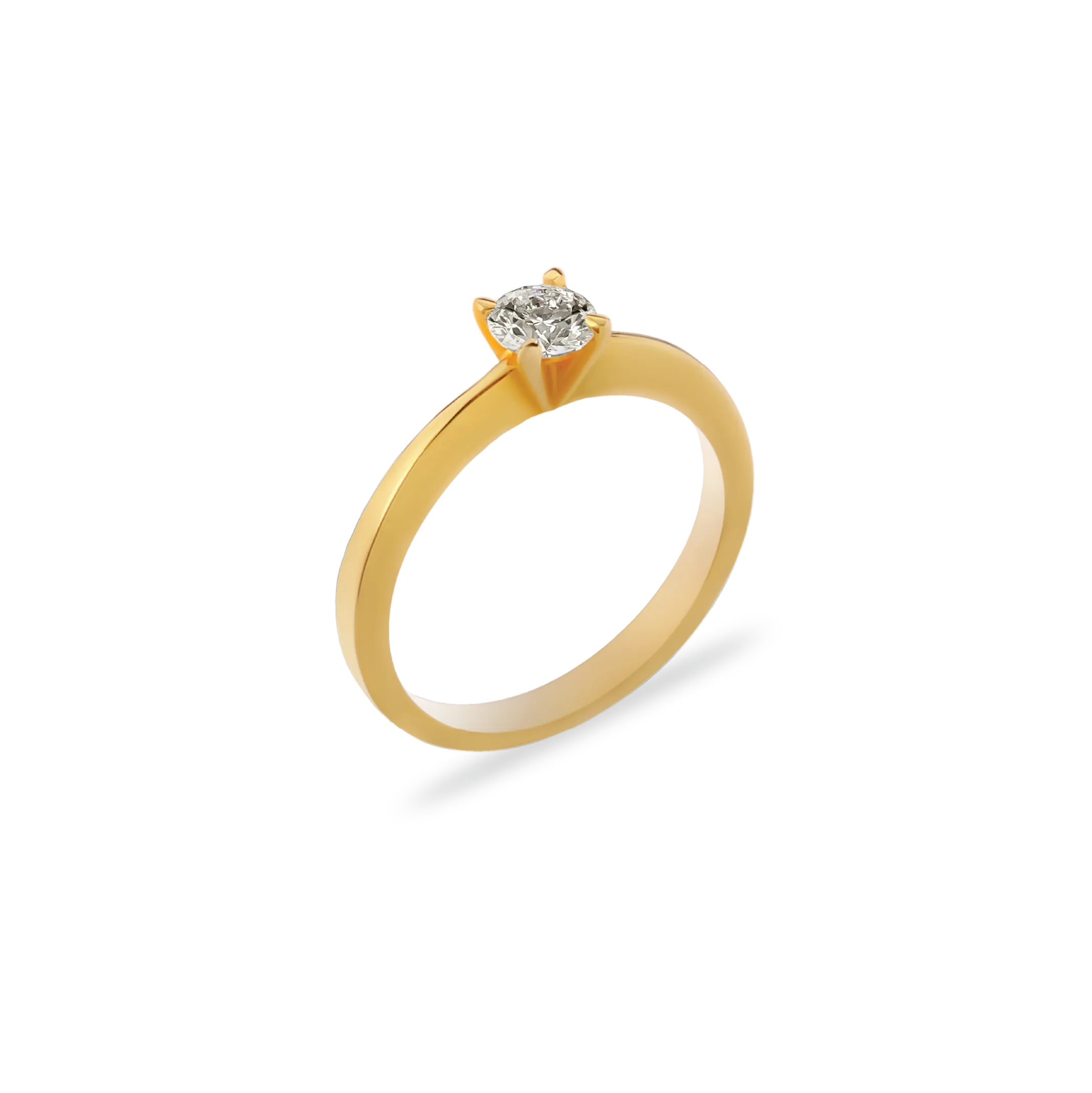
A ruby engagement ring can be personal and distinctive, but its setting should suit everyday movement if you plan to wear it often. Check the stone’s protection, the band’s width, and whether it sits comfortably beside a wedding band. Try both rings together before finalising the fit, since a gap or raised setting may affect daily comfort.
Adding bangles, tiaras, hairpieces, and nose jewellery
Additional pieces should follow the scale and metal of the main jewellery rather than introduce a new theme. Bangles can echo ruby accents, a tiara can repeat the necklace’s curves, and a hair comb can bring sparkle to a low bun without adding weight near the face. Nose jewellery and headpieces also deserve a trial run with the final hairstyle and veil.
Creating a coordinated look for bridesmaids and family members
Coordinated does not have to mean identical. Bridesmaids might wear small ruby studs or matching bracelets, while family members choose a related metal or colour. A shared detail—such as a red stone, warm gold, or a particular floral motif—creates connection while leaving each person room to dress comfortably.
Plan your purchase and care routine
The best purchase plan protects both your budget and your peace of mind. Decide what must be ready for the ceremony, what can be borrowed or inherited, and which pieces you would genuinely use afterward. A fine jewellery buying guide can also be useful when comparing metals, gemstones, craftsmanship, lab-grown and natural stones, and long-term care.
Setting a realistic budget for ruby bridal jewellery
Set a total figure before browsing, then divide it between the centrepiece, supporting pieces, taxes, alterations, insurance, and possible repairs. Leave room for the setting and craftsmanship, not only the stone weight. If the budget is limited, invest in one well-made ruby piece and use simpler coordinating jewellery around it.
Deciding between a complete set and individual pieces
A complete set creates immediate coordination and may simplify shopping, but individual pieces let you adjust scale and cost more precisely. Compare the set price with the combined price of items you would actually wear. Also ask whether each piece works alone; versatility is often more valuable than a matching item that stays in its box.
Allowing time for custom designs and alterations
Custom work may involve design approval, stone selection, production, finishing, resizing, and one or more fitting appointments. Begin earlier than feels necessary, especially if the jewellery must coordinate with a bespoke outfit. Build in time for a final try-on with your hairstyle, veil, and blouse or neckline so small adjustments can be made without rushing.
Cleaning, storing, insuring, and maintaining ruby jewellery
Ruby jewellery should be handled thoughtfully even though ruby is a durable gemstone. Ask the jeweller which cleaning methods are suitable for the stone, treatment, and setting, and arrange professional inspection when a piece is worn frequently. Store items separately in soft compartments, keep records and appraisals secure, and insure valuable pieces according to your location and policy terms.
Conclusion
The perfect ruby bridal jewellery is not necessarily the largest or most elaborate set; it is the collection that feels meaningful, suits the outfit, remains comfortable through the day, and still has a life after the wedding. Compare colour and craftsmanship carefully, make room for your own style, and choose pieces you will be happy to see again in years to come.
Frequently Asked Questions
Are rubies suitable for bridal jewellery?
Yes. Rubies offer a vivid colour, strong visual presence, and many styling options, from understated rings and studs to elaborate necklaces and traditional sets.
What colour ruby is best for a wedding?
The best colour is the one that complements your outfit, skin tone, lighting, and personal taste. Bright reds feel lively, while deep reds can look especially formal and dramatic.
Should ruby bridal jewellery match the engagement ring?
It does not have to match exactly, but repeating the metal, ruby tone, or design detail can make the rings and wider jewellery collection feel connected.
Is lab-grown ruby a good choice for a bride?
Lab-grown ruby can be a good choice when you want genuine ruby material with a different price or sourcing profile. Confirm that it is clearly disclosed and suits your expectations.
How much ruby jewellery should a bride wear?
There is no fixed amount. Choose one focal piece, then add supporting jewellery that leaves enough visual space around the face, neckline, hairstyle, and clothing details.
Can ruby jewellery be worn after the wedding?
Yes. Smaller earrings, bracelets, pendants, and practical rings often transition easily into evening wear, celebrations, and other formal occasions.
How should ruby jewellery be stored after the wedding?
Store each piece separately in a soft, dry compartment, away from moisture and harder jewellery that could scratch the setting. Keep purchase records and arrange periodic professional checks for valuable items.
Sapphire jewellery designs: A complete guide to choosing the perfect style
10 minute read
Related blogs:
September 18, 2026
How to choose the perfect bridal long necklace set for your wedding day
Read More
September 18, 2026
How to choose a bridal layered necklace set for your wedding look
Read More
September 18, 2026
How to choose a bridal choker set for your wedding look
Read More
September 18, 2026
Gold necklace for bride: How to choose the perfect wedding-day style
Read More









.webp)
.webp)