How to clean mangalsutra at home: a safe guide for gold and beads
October 28, 2026 | 10 minutes read
Key Takeaways
A mangalsutra may combine gold, beads, stones, and delicate thread, so care should be guided by its most fragile part. A cautious, light-touch clean is often safer than soaking the whole piece.
- Check for loose settings, damaged links, and frayed thread before cleaning.
- Use a soft cloth, lukewarm water, and a small amount of mild soap.
- Keep black beads and delicate cords as dry as possible.
- Avoid abrasive products and get advice about stones or persistent buildup.
- Dry the piece completely and store it separately from other jewelry.
Check your mangalsutra before cleaning
Before deciding how to clean mangalsutra at home, take a moment to inspect the whole piece in good light. Mangalsutras can combine materials that respond differently to water and handling. A quick check helps you choose a gentler method—or recognize when it is better to stop and ask a jeweler.
Identify the metals, stones, beads, and thread
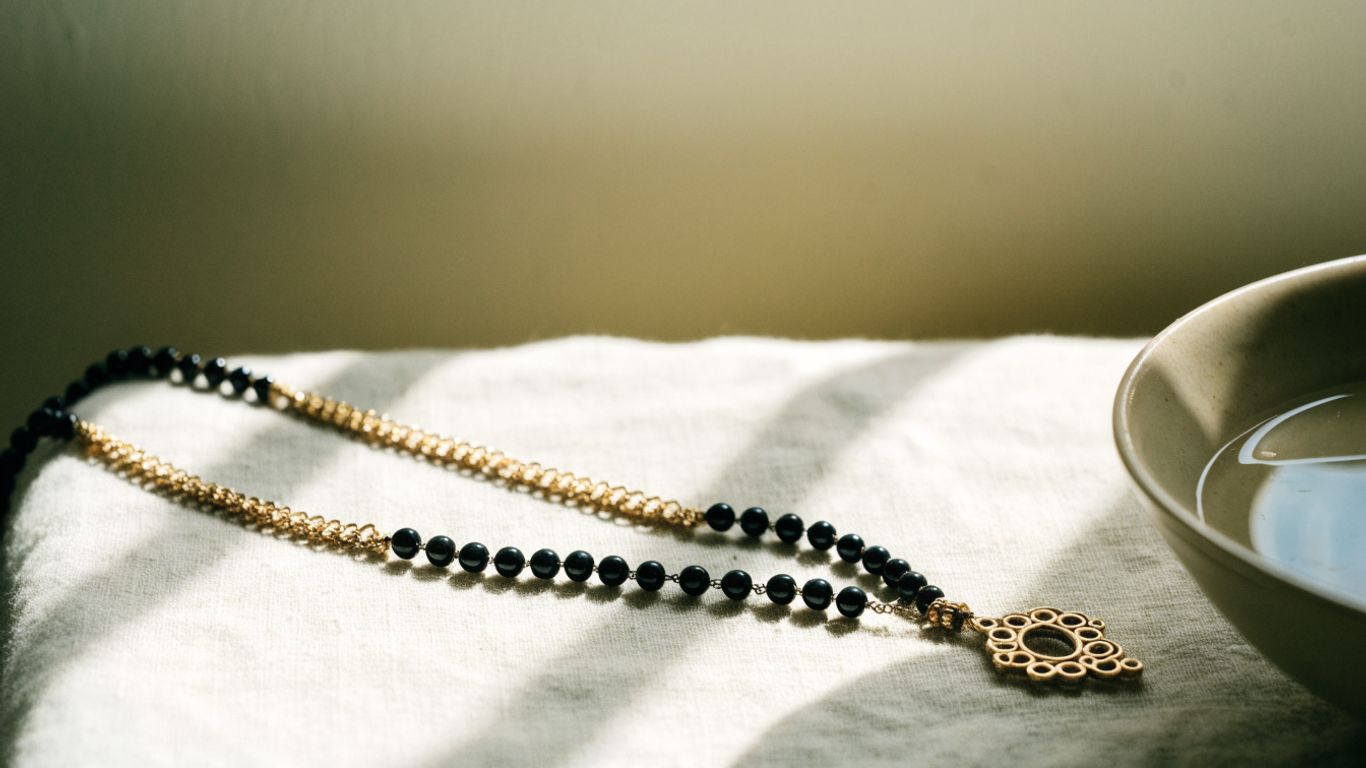
Look closely at the chain and pendant, then note whether there are gemstones, black beads, or a cord alongside the gold. If you are unsure what a component is made of, avoid assuming it can be cleaned like plain gold . A guide to mangalsutra styles can help you recognize how varied these designs may be, but the exact materials in your own piece are what matter for cleaning.
A simple material-by-material check can help keep the cleaning plan conservative:
| Part of the piece | Gentle starting point | Main caution |
|---|---|---|
| Gold chain or details | Wipe with a damp soft cloth | Avoid hard rubbing |
| Black beads | Use a barely damp cloth | Do not soak or pull the string |
| Gemstones | Check care guidance first | Some stones need special handling |
| Silk or delicate cord | Keep dry and wipe around it | Moisture may affect the cord |
Treat the most delicate component as the limit for the whole piece. If the material is unclear, a dry wipe is a safer first step than testing a stronger cleaning method.
Look for loose settings, damaged links, or fraying
Hold the necklace over a clean, light-colored surface and inspect the links, clasp, pendant settings, and thread. Look for a stone that moves, a link that has opened, or beads that seem to slide unusually easily. If anything feels loose or damaged, skip home cleaning; moisture and handling could worsen a small problem.
Decide whether the piece is suitable for home cleaning
A lightly soiled piece with secure settings and intact thread may be suitable for a careful surface clean. When the mangalsutra has fragile stones, a visibly worn cord, or residue that is difficult to identify, ask a jeweler before applying water or soap. If the piece is an heirloom or has special care instructions, follow those instructions rather than relying on a general method.
Gather gentle cleaning supplies
Set up a small, uncluttered space before bringing the jewelry near water. Keep the mangalsutra supported on a clean surface so that the chain and beads do not tangle while you work. Gentle supplies are usually enough for ordinary surface dust and oils; avoid treating the piece like an item that needs a deep soak.
Choose a soft cloth and a clean, lint-free towel
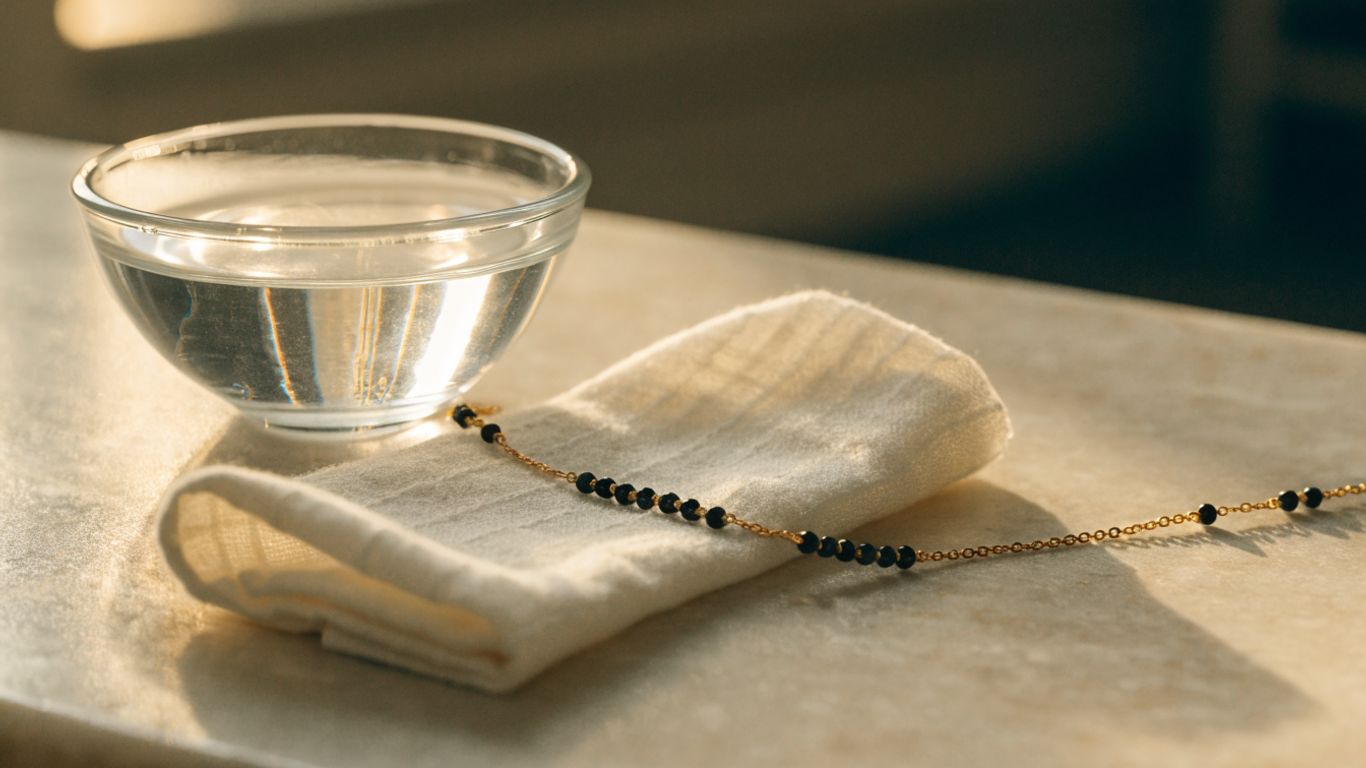
Choose a soft, clean cloth for wiping and a lint-free towel for drying. A textured or rough fabric can catch on the thread or rub against delicate settings, so use a light touch. Keeping a second dry cloth nearby lets you blot moisture promptly without dragging the necklace across the surface.
Mix lukewarm water with a small amount of mild soap
If the piece is suitable for a damp clean, add just a small amount of mild soap to lukewarm water. The solution should feel mild, not concentrated or hot. For a broader reference on gentle gold-cleaning basics, keep the advice limited to the gold components and adapt it cautiously when beads, stones, or thread are also present.
Keep abrasive cleaners and household chemicals away
Skip powders, rough pads, and strong household products; they can be too harsh for a mixed-material piece. In particular, do not reach for a cleaner simply because it is already at hand. Keep these common choices away from the mangalsutra:
- Scouring powders or gritty pastes
- Bleach and other strong household cleaners
- Acidic kitchen liquids such as vinegar or lemon juice
- Rough sponges, stiff brushes, or paper towels
Choosing a mild soap and soft cloth is a more controlled approach than experimenting with products meant for other surfaces. If a stain remains after a gentle pass, pause rather than increasing the strength of the cleaner.
Clean the gold carefully
Work in short sections and keep the necklace supported, rather than lifting it by one end. A damp cloth can remove ordinary surface film from gold details without exposing every part of the mangalsutra to water. Use only enough moisture to clean the metal, and keep the beads and cord in view as you go.
Wipe the chain and gold details with a damp cloth
Dip a corner of the soft cloth in the mild soapy water, then wring it out until it is only damp. Wipe the gold chain and details gently, following the shape of the links instead of pulling the cloth back and forth. Gentle, controlled moisture helps limit water contact with nearby beads and thread.
Use a soft brush to reach crevices without scrubbing hard
If residue sits in a small crevice, use a very soft brush with minimal pressure and keep it directed at the gold. Do not brush across beads, stones, or cord, and stop if a setting catches or the chain shifts. Most of the work should come from the damp cloth; brushing is only for spots it cannot reach easily.
Rinse briefly and dry each section thoroughly
Use a clean cloth lightly dampened with plain water to lift away any soap, rather than immersing the necklace. Blot each cleaned section with the dry towel, paying attention to links and joins where moisture may linger. Before moving on, check that no soap film remains and that the gold feels dry to the touch.
Protect the black beads and thread
The beads and connecting thread may be more vulnerable to moisture and friction than the gold. Avoid soaking the necklace, even if the metal itself seems sturdy. This is a place for patience: clean only what needs attention and keep the damp cloth away from components that should stay dry.
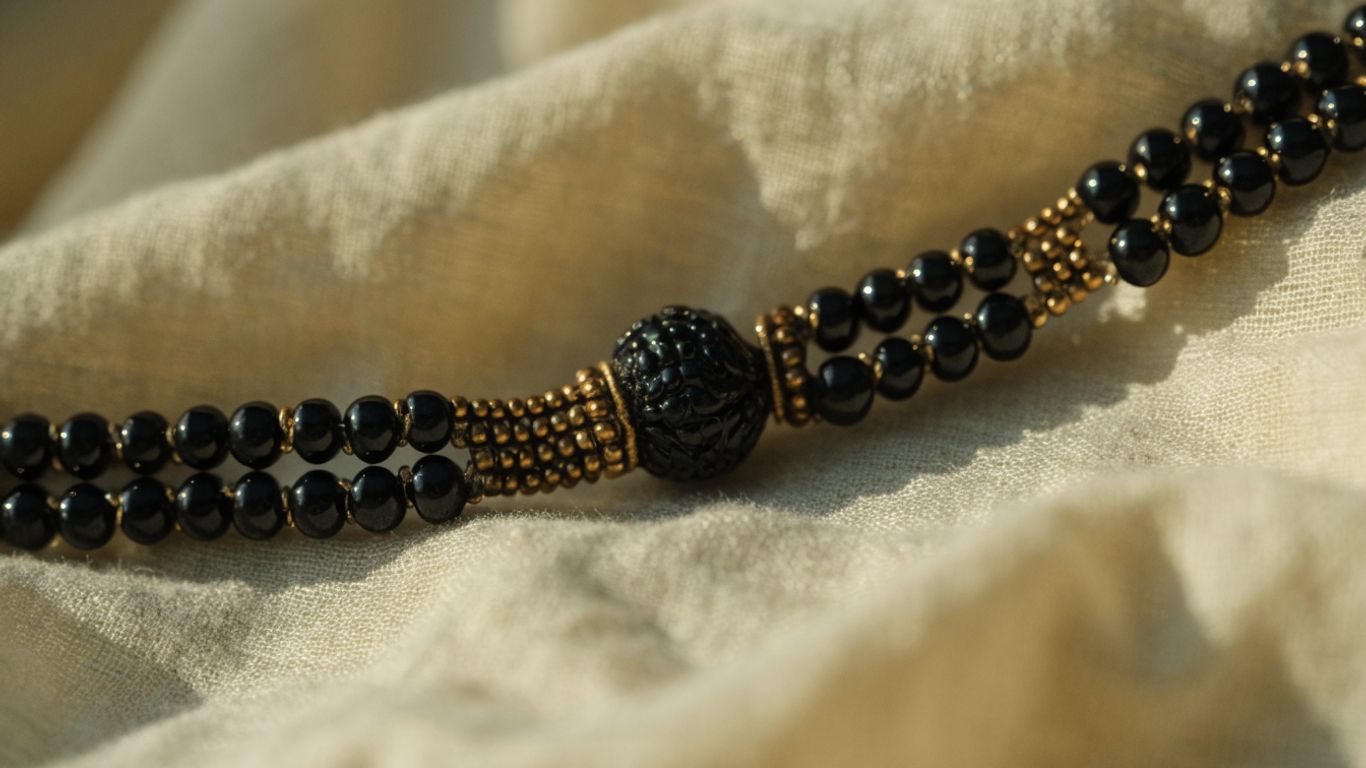
Clean beads with a barely damp cloth instead of soaking them
If the beads need attention, use a clean cloth that is barely damp and wipe gently around them. Do not submerge the beads or let water collect where they meet the thread. Designs and materials differ, so a jeweler can advise if you are unsure whether a particular bead finish is safe to wipe.
Keep water away from silk or other delicate cords
Silk and other delicate cords can be affected by moisture, so keep them dry during cleaning. If a cord has become soiled, avoid applying soap or rubbing it; seek care advice for that specific material. For future purchases, practical details such as comfort and care can be part of comparing mangalsutra designs, but the care needs of the piece you already own should guide today’s cleaning.
Avoid pulling, twisting, or brushing the string
Handle the necklace gently and support its length on a towel as you work. Pulling, twisting, or brushing the string can put stress on the connection points and make tangling more likely. If the chain or beads resist lying flat, do not force them; pause and let a jeweler assess the piece.
Handle stones and stubborn residue with care
Gemstones and decorative finishes do not all share the same cleaning needs. A method that is suitable for one stone may be unsuitable for another, especially when the setting or treatment is unknown. When in doubt, leave the stone untouched and clean only the metal you can reach safely.
Check whether gemstones need special cleaning precautions
Identify the stone if you can, and check any care guidance that came with the jewelry. Avoid soaking or brushing around a gemstone when you do not know how it should be cleaned. If the stone is loose, chipped, or has a coating or treatment you cannot identify, skip home cleaning and ask a jeweler.
Lift away residue gently rather than scraping it
For a small patch of residue on gold, soften it with a barely damp cloth and lift it away with a gentle wipe. Do not use a pin, blade, or fingernail to scrape around a setting, since that can scratch the surface or catch the stone. If the residue does not come away with light handling, leave it in place rather than pressing harder.
Take persistent tarnish or buildup to a jeweler
Persistent discoloration or buildup may need more than a home wipe, and its cause may not be obvious. A jeweler can inspect the piece and recommend a suitable next step without requiring you to test harsher products. Stop immediately if cleaning reveals a loose stone, a damaged link, or a weakened thread.
Store your mangalsutra to keep it clean
Care does not end when the visible dirt is gone. Moisture, cosmetics, and contact with other jewelry can affect a clean piece while it is being worn or stored. A few small habits help reduce that exposure and keep the necklace ready to wear.
Let every part dry fully before putting it away
Lay the mangalsutra on a clean, dry towel and let all sections air-dry fully before storing it. Check around the clasp, pendant, beads, and joins, where dampness can be easy to miss. Do not put it away while the thread or any crevice still feels cool or damp.
Store it separately in a soft pouch or lined box
Keep the piece in its own soft pouch or a lined jewelry box so it does not rub against other items. Lay the chain loosely rather than winding it tightly around itself, and avoid placing weight on the beads or pendant. Separate storage also makes it easier to spot tangles before they become difficult to undo.
Remove it before bathing, swimming, or applying cosmetics
Taking off the mangalsutra before bathing or swimming limits unnecessary contact with water and products. Put it on after applying cosmetics, perfume, or lotion, once those products have settled. These habits reduce residue over time, so cleaning can remain occasional and gentle.
Conclusion
A careful mangalsutra clean starts with an inspection and ends with complete drying. Use mild supplies on the gold, keep delicate beads and cords as dry as possible, and let a jeweler handle uncertain materials, damage, or stubborn buildup. When in doubt, the gentlest choice is to stop before the piece is at risk.
Frequently Asked Questions
Can I soak my mangalsutra in soapy water?
It is safer not to soak the whole piece. Beads, stones, and delicate cords may need different care from gold, so use a lightly damp cloth on suitable gold areas instead.
How often should I clean a mangalsutra?
There is no single schedule for every piece. Clean it when you notice surface residue, and use gentle wiping and sensible storage to limit buildup between cleans.
Can I use a toothbrush on the gold chain?
A very soft brush may help with a small gold crevice, but use minimal pressure and keep it away from beads, thread, and stones. Stop if it catches or the jewelry shifts.
What should I use to clean black beads?
Start with a clean cloth that is barely damp, wiping gently without soaking the beads or the string. If you are unsure about the bead material or finish, ask a jeweler first.
Is dish soap safe for a mangalsutra?
A small amount of mild soap in lukewarm water can be used cautiously on suitable gold parts. Avoid applying it to delicate cords or gemstones unless their care instructions allow it.
What if a stone or bead feels loose?
Do not clean or wear the piece until it has been checked. A jeweler can inspect the setting or string and advise whether repair is needed.
How should I dry my mangalsutra after cleaning?
Blot it gently with a clean, lint-free towel and let it air-dry fully before storing. Check the clasp, joins, beads, and pendant for lingering moisture.
Related blogs:
November 20, 2025
The Timeless Elegance of the Tennis Bracelet: A Comprehensive Guide
Read More

November 20, 2025
The Ultimate Guide to Styling and Wearing a Choker Necklace
Read More

November 20, 2025
Find Your Perfect Engagement Ring: A Comprehensive Guide to Styles and Diamonds
Read More
November 20, 2025
The Timeless Elegance of a Diamond Tennis Bracelet: A Buyer's Guide
Read More