Unveiling the Beauty of Raw Uncut Diamonds: A Comprehensive Guide
December 1, 2025 | 10 minutes read
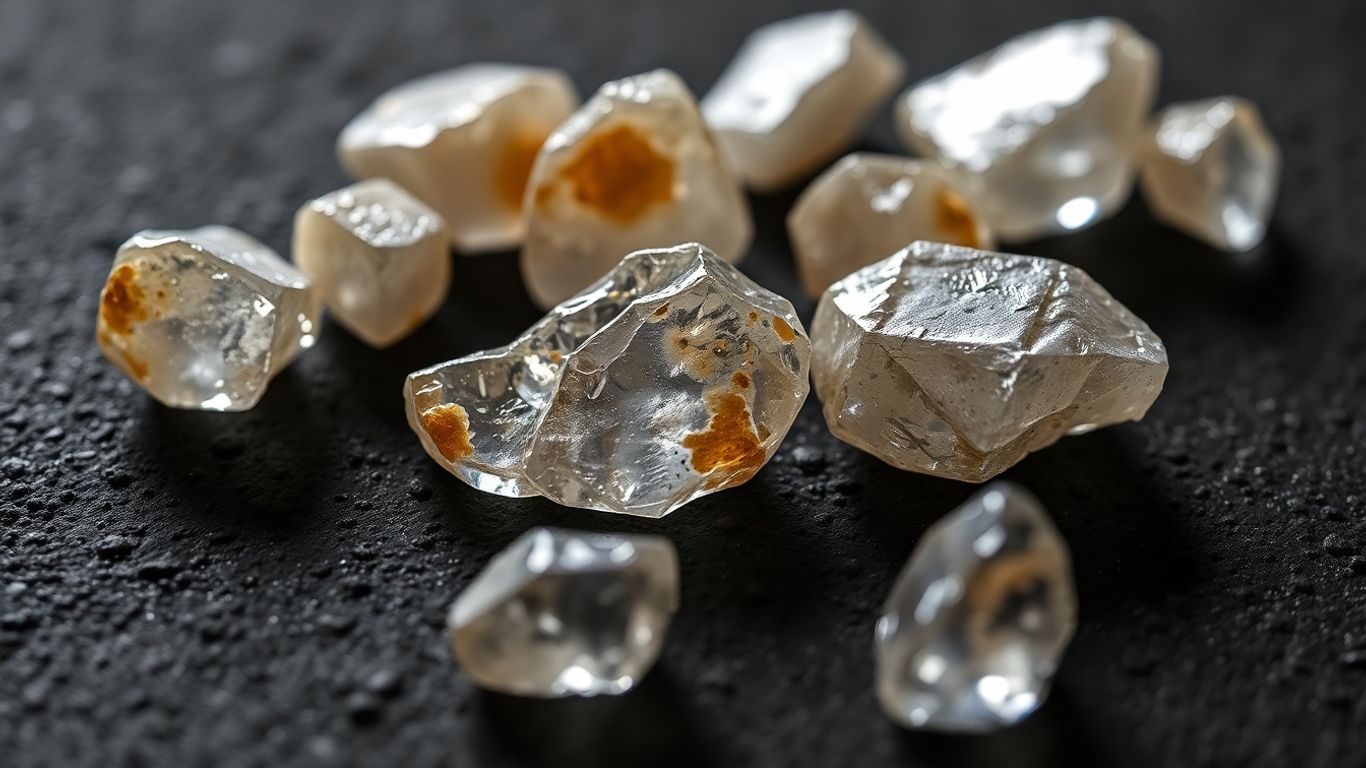
We often see diamonds all sparkly and perfect in jewelry stores, right? But before they get all polished up and ready for a ring, they start out as something completely different. These are raw uncut diamonds, straight from the earth. They look nothing like what you're used to seeing, with rough surfaces and all sorts of shapes. This guide is all about understanding these natural wonders, how to spot them, and what makes them special before they even get touched by a cutter's tools.
Key Takeaways
- A raw uncut diamond is a natural diamond found in its original, unpolished state, straight from the ground.
- Rough diamonds have a distinct look, often irregular in shape with a dull, glassy surface and varied textures, unlike faceted gems.
- The value of a raw uncut diamond depends on factors like its size, shape, color, and clarity, with potential for yielding a fine polished stone being key.
- Identifying a raw uncut diamond involves looking at its crystal form, surface texture, and hardness, but professional assessment is best for certainty.
- Each raw uncut diamond is unique, holding a natural beauty and the hidden promise of brilliance that skilled cutters can reveal.
Understanding Raw Uncut Diamonds
What Are Rough Diamonds?
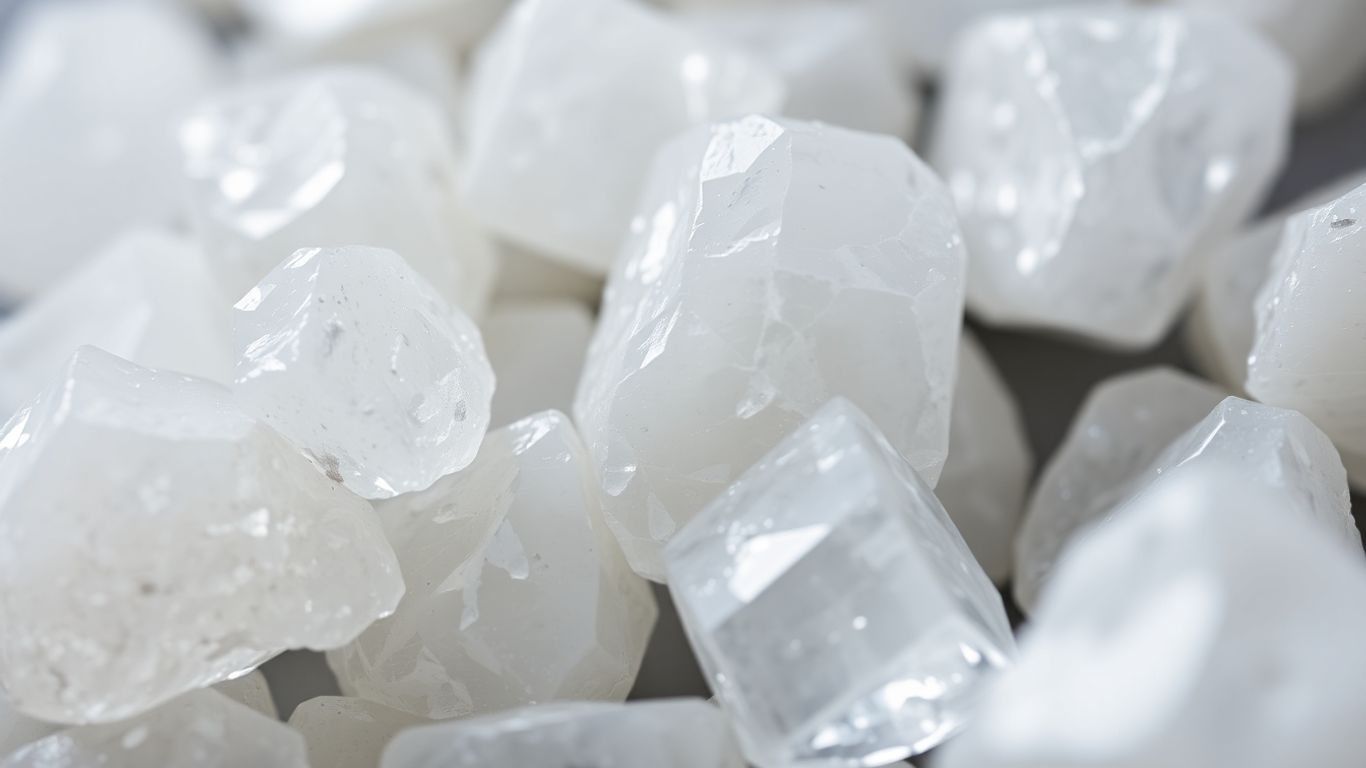
When you picture a diamond, you probably think of that sparkly gem in a ring, right? Well, that’s not how diamonds look when they first come out of the ground. They start as rough, uncut diamonds, and honestly, they look pretty different. Instead of a dazzling shine, they usually have a dull, almost glassy surface. Sometimes they're a bit see-through, other times they're more opaque, and you might see hints of yellow or brown, though other colors are possible too. These raw stones are the earth's original artwork, shaped by immense pressure and heat over billions of years. They haven't been touched by a polisher's wheel yet, so they retain their natural form, which is fascinating in its own right.
The Allure of Natural Diamond Origins
Thinking about where diamonds come from really adds to their appeal. These aren't just rocks; they're geological time capsules. Each rough diamond has a unique story tied to the specific conditions deep within the Earth where it formed. This natural origin gives them a special kind of beauty that polished stones, while lovely, don't quite capture. It’s like comparing a wild, untouched landscape to a manicured garden – both have beauty, but the wild one has a raw, untamed charm.
Raw Diamonds: A Glimpse into Geological History
Looking at a rough diamond is like getting a peek into the planet's past. The way these crystals formed, the minerals they picked up along the way, and the stresses they endured all tell a story that goes back eons. You can often see natural facets, which are the flat surfaces where the crystal grew. These aren't perfectly smooth like a cut gem; they might be a bit bumpy or show signs of wear from their journey through the earth. It’s a direct connection to the immense geological forces that shaped our world.
Here's a quick look at what you might notice:
- Crystal Shapes: Diamonds often grow in specific shapes, like octahedrons (think two pyramids stuck together) or dodecahedrons (a shape with twelve flat sides).
- Surface Texture: The outside can feel a bit waxy or greasy, not smooth and slick like a polished diamond.
- Inclusions: Many rough diamonds have tiny bits of other minerals or tiny cracks inside. These aren't flaws in the same way they are for cut diamonds; they're just part of the stone's natural history.
The journey of a rough diamond from the earth's mantle to the surface is a dramatic one, often involving volcanic activity. This process influences its final appearance and characteristics, making each stone a unique product of its environment and history.
Identifying the Natural Beauty of Raw Diamonds
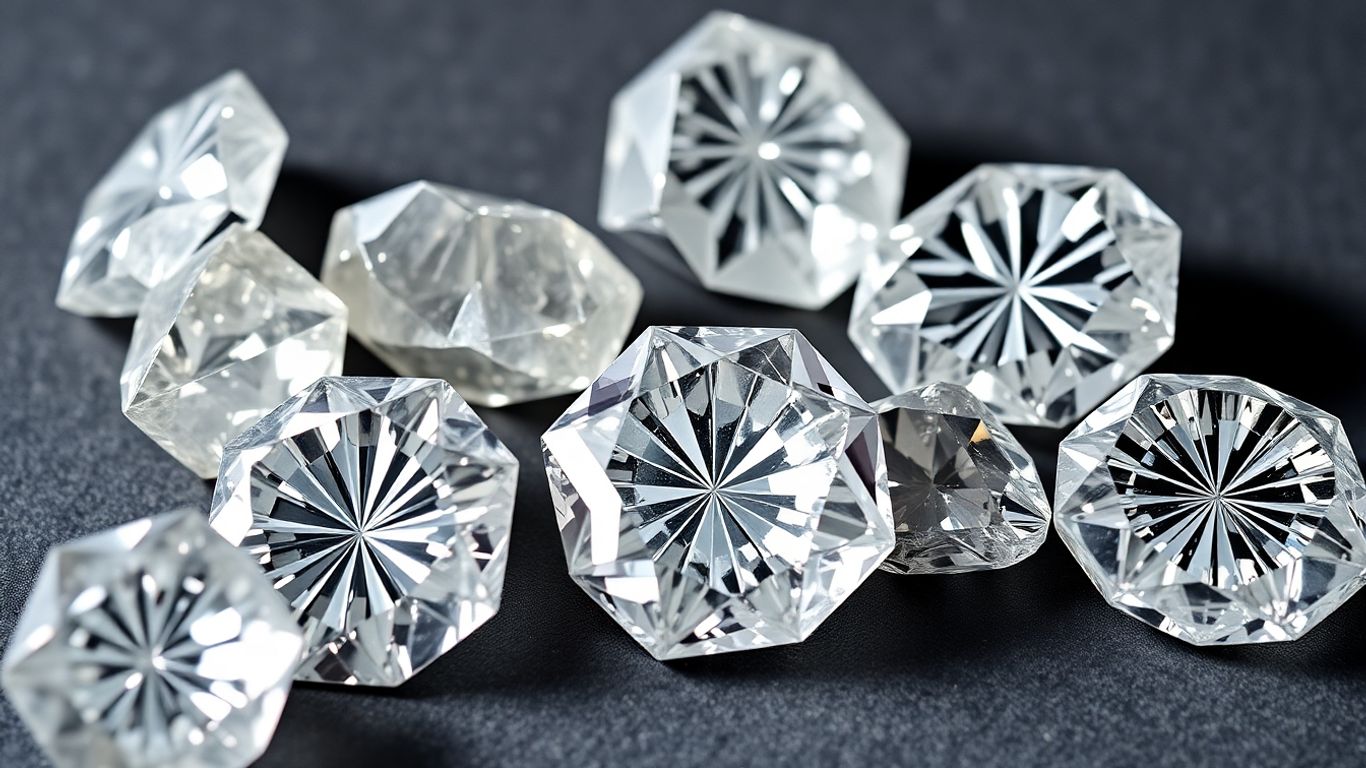
What Are Rough Diamonds?
When you picture a diamond, you probably think of that sparkly, perfectly cut gem in a ring. But before all that cutting and polishing happens, a diamond starts out as a rough, uncut stone pulled straight from the earth. These are what we call rough diamonds, and they have their own kind of beauty, totally different from their finished counterparts. They look pretty raw, often a bit dull or glassy, and not at all like the dazzling stones you see in jewelry stores. Their surfaces can be cloudy, maybe a bit yellowish or brownish, and sometimes they have visible bits of other minerals or tiny cracks inside. These natural imperfections are actually part of what makes them unique and interesting.
Visual Characteristics of Rough Diamonds
Spotting a rough diamond isn't always straightforward because they don't have that immediate sparkle. You're looking for a few key things. First, their shape. Natural diamonds often form in specific crystal shapes, like an octahedron (think two pyramids stuck together at the base) or sometimes a cube. They don't usually have smooth, flat sides like a cut gem; instead, they might have a more rounded or irregular appearance. The surface texture is another big clue. Instead of being smooth and slick, it can feel a bit greasy or waxy to the touch. They also don't reflect light in the same way polished diamonds do; they have more of a dull, glassy sheen.
Distinguishing Raw Diamonds from Imitations
It can be tricky to tell a real rough diamond from something that just looks similar, like quartz. One of the easiest tests you can do at home is the fog test. Breathe on the stone like you would a mirror. If it's a real diamond, the fog should disappear almost instantly because diamonds are so good at dispersing heat. If the fog stays for a while, it's probably not a diamond. Another thing to consider is hardness. Diamonds are the hardest natural material out there. If you have something that can scratch glass easily, it's a good sign, but remember, other hard minerals can do that too. A professional jeweler has tools that can tell for sure, but these simple checks can give you a starting point.
The Role of Crystal Form and Surface Texture
The shape a diamond naturally forms in, its crystal habit, is a big giveaway. While you might see octahedral shapes pretty often, diamonds can also form as dodecahedrons or even cubes. These natural geometric forms are rarely found in imitation stones. Then there's the surface. Think about how a rock looks after it's been tumbled in a river versus a freshly cut gemstone. Rough diamonds have that 'just-out-of-the-ground' look. Their surfaces can be bumpy, pitted, or have growth lines. Sometimes, you'll see a dull, chalky coating called a 'carbon crust' which is a strong indicator of a natural, uncut diamond . It's this combination of the underlying crystal structure and the untouched surface that gives rough diamonds their distinct character.
The Intrinsic Value of Raw Uncut Diamonds
So, what makes a raw, uncut diamond worth anything? It’s not just about how sparkly it is, because, well, it’s not sparkly yet. The value is tied up in what it is and what it could be. Think of it like a block of marble before the sculptor gets to work – the potential is immense, but the raw material itself has a certain worth based on its quality and rarity.
Factors Determining Rough Diamond Value
The worth of a rough diamond isn't a simple calculation. It’s a mix of science, geology, and a bit of educated guesswork. Unlike polished stones where the 4Cs (cut, color, clarity, carat) are pretty standard, rough diamonds have their own set of considerations. The market for these raw gems is also a bit different, more niche, and can be influenced by things like ethical sourcing trends and the simple fact that there's only so much of this stuff in the ground.
- Origin and Rarity: Where did it come from? Some diamond mines are known for producing higher quality stones, and the overall rarity of a particular type of rough diamond plays a big part. Fancy colored rough diamonds, for instance, are much rarer than the more common white or gray ones.
- Geological History: The conditions under which the diamond formed can affect its internal structure and potential. This is something gemologists look at closely.
- Market Demand: Just like anything else, if people want them, the price goes up. The demand for ethically sourced and natural gemstones is growing, which can impact the value of raw diamonds.
The true value of a rough diamond lies not just in its current state, but in the story it tells of Earth's ancient processes and the promise of the brilliance it holds within. It's a piece of geological history waiting to be revealed.
Size, Shape, and Their Impact on Worth
Okay, so size matters, right? With rough diamonds, it definitely does. A bigger rough stone generally means a bigger potential polished diamond, and that usually translates to more money. But shape is also a big deal. Some natural crystal shapes are more desirable than others because they lend themselves better to cutting, meaning less material is wasted.
| Factor | Description | Impact on Value |
|---|---|---|
| Carat Weight | The raw stone's weight. | Larger rough diamonds typically command higher prices per carat. |
| Crystal Shape | The natural geometric form (e.g., octahedron, dodecahedron). | Shapes that minimize waste during cutting are more valuable. |
| Surface Condition | The texture and presence of natural markings or damage. | A smoother, less damaged surface can indicate better internal quality and reduce processing costs. |
Color and Clarity in Rough Diamond Evaluation
When you look at a rough diamond, you might see all sorts of things inside. These are called inclusions, and they're like little fingerprints of the diamond's past. While in polished diamonds, inclusions can lower the value, in rough diamonds, they can sometimes tell a story or even hint at the diamond's potential. Color is also key. While many rough diamonds are a bit cloudy or off-white, finding one with a distinct natural color, like a pale yellow or even a hint of pink, can significantly increase its worth. The less the color deviates from a pure, colorless state (or the more intense a fancy color is), the higher its potential value. It’s a delicate balance, as sometimes what looks like an inclusion might actually be a different mineral that adds character, or it could be a sign of internal stress that could affect how it cuts.
The Journey from Rough to Radiant Gemstone
So, you've got a rough diamond, a little chunk of geological history. Now what? Well, turning that raw stone into something that sparkles in a ring or necklace is quite the process. It's not just about hacking away at it; there's a lot of planning and skill involved.
Mapping and Planning the Cutting Process
Before anyone even thinks about touching a diamond saw, there's a whole lot of looking and planning. Think of it like a sculptor studying a block of marble. Experts use fancy scanners and 3D imaging to really get a good look inside the rough diamond. They're checking for any hidden cracks or inclusions – those little imperfections that can make or break the final gem. The goal here is to figure out the best way to cut the stone to get the most sparkle and the biggest possible polished diamond out of it, while also trying to waste as little as possible. It’s a bit like solving a puzzle.
Cleaving and Sawing Techniques
Once the plan is set, it's time to actually divide the rough diamond. This can be done in a couple of ways. There's cleaving, which is an older method that uses a specific line of weakness in the diamond to split it. Then there's sawing, which is more common now, often using a laser. This step is pretty critical because it's the first major division that sets the stage for the final shape. Getting this right means you're on the path to a good yield.
Bruting and Faceting for Brilliance
After the initial cuts, the diamond gets shaped further. Bruting, or girdling, is where the diamond is rounded off, often by rubbing two diamonds against each other. It’s a bit rough but gets the basic shape down. The real magic happens during faceting. This is where the skilled cutters meticulously create all those little flat surfaces, the facets, on the diamond. Each facet is placed just so, angled perfectly to catch and bounce light around inside the stone. This careful arrangement of facets is what gives a diamond its famous sparkle and fire. Finally, polishing smooths out all those facets, bringing out the diamond's full potential.
The transformation from a dull, rough stone to a dazzling gem is a testament to human ingenuity and patience. It's a process that respects the diamond's natural structure while revealing its hidden beauty through precise artistry.
Testing and Verifying Raw Diamond Authenticity
So, you think you've stumbled upon a raw, uncut diamond ? That's pretty exciting! But before you start planning your retirement, it's smart to figure out if it's the real deal. It's not always as straightforward as it looks, and honestly, some rocks can be surprisingly convincing look-alikes. The most reliable way to know for sure is to get a professional opinion. But hey, there are a few things you can try at home to get a better idea.
Home Identification Methods for Rough Diamonds
Trying to identify a raw diamond yourself can be a bit of a puzzle, and home tests aren't always 100% accurate. Other minerals can sometimes fool you. Still, these methods can give you some clues:
- Visual Inspection: Take a good look at the stone. Raw diamonds often have distinct geometric shapes, like octahedrons (think two pyramids joined at the base) or cubes. They should also have a sort of greasy or metallic shine, not just a glassy look. Keep in mind, though, that natural erosion can mess with these perfect shapes.
- The Fog Test: This one plays on a diamond's ability to conduct heat. Hold the stone and breathe on it. If it's a real diamond, the fog should disappear almost instantly because the stone disperses the heat so quickly. If the fog hangs around for a few seconds, it might be something else.
- The Water Test: Diamonds are dense. Drop your suspected stone into a glass of water. A real diamond should sink pretty fast. If it floats or sinks really slowly, it's probably not a diamond. Just remember, other heavy minerals will sink too, so this isn't a definitive test on its own.
It's important to remember that these home tests are just starting points. They can help rule out some fakes, but they can't definitively confirm a diamond. Things like cubic zirconia or even certain types of quartz can sometimes pass these basic checks.
The Importance of Professional Assessment
Look, I get the urge to figure it out yourself, but when it comes to something potentially valuable like a raw diamond, you really want to be sure. Trying to cut or alter a stone you think is a diamond, only to find out it's not, can be a costly mistake. Plus, messing with a real rough diamond before it's properly assessed can actually lower its value. That's why taking it to someone who knows their stuff is so important. A gemologist has the right tools and the trained eye to tell you exactly what you have. They can spot the subtle differences that we amateurs might miss. It's the best way to get a clear answer and avoid any guesswork. You can find gemologists through reputable jewelers or gemological societies.
Understanding Diamond Testers and Mineral Kits
When you're serious about identification, specialized tools can help. Diamond testers are pretty common these days. They work by measuring how well a stone conducts heat – real diamonds are excellent at this. Most fakes won't register the same way. These testers are usually pretty straightforward to use. Then there are mineral testing kits. These are a bit more involved and often include things like hardness points (like corundum, which is what rubies and sapphires are made of) to see if your stone can scratch them, or vice versa. Remember, diamonds are the hardest natural substance known, so they should be able to scratch almost anything else. Using a combination of these tools, along with careful observation, can give you a much stronger indication of authenticity. For a definitive answer, though, you'll still want that professional appraisal. You can find these tools at gem and mineral supply stores, or online retailers specializing in gemological equipment.
Appreciating the Unique Character of Raw Diamonds
The Uniqueness of Each Raw Diamond
Every raw diamond is a one-of-a-kind creation, a product of billions of years of geological processes. Unlike mass-produced items, no two rough diamonds are exactly alike. Their surfaces tell a story of their journey from deep within the Earth, showing natural etchings, growth lines, and sometimes even the remnants of the minerals they formed alongside. This inherent individuality is part of their charm. You won't find a "standard" raw diamond; each one has its own personality, shaped by the immense pressures and temperatures of its birth.
Raw Diamonds as Artistic Inspiration
For artists and designers, raw diamonds are a muse. Their irregular shapes and natural textures offer a departure from the predictable symmetry of cut stones. Sculptors might find inspiration in their organic forms, while jewelers can use their unique characteristics to create truly distinctive pieces. The unpolished surface and natural crystal habit can lead to designs that celebrate the stone's origin rather than trying to mask it. Think of jewelry that embraces the rough exterior, highlighting its natural beauty in a way that polished diamonds simply can't.
The Promise of Hidden Brilliance
There's a certain magic in the potential held within a raw diamond. While they might appear dull or opaque to the untrained eye, skilled cutters see the possibilities. Inside that rough exterior lies the potential for spectacular sparkle and fire. It's like looking at a block of marble before the sculptor begins – you can see the form within, waiting to be revealed. This hidden potential is what makes raw diamonds so fascinating; they represent a promise of beauty yet to be fully realized.
Here's a quick look at what makes them unique:
- Natural Crystal Shapes: Often found in octahedral (two pyramids joined at the base) or cubic forms, these are the diamond's natural blueprints.
- Surface Texture: Expect a rough, sometimes waxy or greasy feel, a stark contrast to the smooth finish of a polished gem.
- Inclusions: Small mineral grains or other imperfections trapped inside are common and add character, not necessarily detracting from value.
The journey of a raw diamond from the earth to a finished gem is a testament to nature's artistry and human ingenuity. Each stone carries a history, a unique fingerprint of its formation, making it more than just a mineral, but a piece of geological time.
The Enduring Charm of the Uncut Gem
So, there you have it. We've taken a peek at diamonds in their most natural state, before any fancy cutting or polishing happens. It's pretty wild to think about these stones spending billions of years underground, just waiting to be found. They might not sparkle like the ones in the jewelry store, but there's a certain raw beauty to them, a story of the earth right there in your hand. Whether you're a collector, a designer, or just someone who appreciates nature's wonders, understanding these rough diamonds gives you a whole new appreciation for the gems we often take for granted. They really are a reminder of where it all begins.
Frequently Asked Questions
What exactly is a raw, uncut diamond ?
A raw, uncut diamond is a diamond just as it's found in the earth, before any cutting or polishing. Think of it like a natural crystal, showing its original shape and surface, not the sparkly gem you see in jewelry.
How can I tell if a rough diamond is real?
You can do a few simple tests at home. For example, real diamonds disperse fog quickly because they handle heat well. They're also very hard, so they can scratch glass. However, for sure, it's best to get it checked by a professional jeweler.
Do raw diamonds look like the diamonds in jewelry?
Not really. Raw diamonds look more like dull, natural rocks or crystals. They don't have the many flat, shiny sides (facets) that polished diamonds do. Their shapes are usually more irregular and their surfaces can feel rough.
What makes one raw diamond more valuable than another?
Several things matter! Bigger raw diamonds are usually worth more because they can be cut into larger finished gems. The diamond's shape, how clear it is inside (fewer flaws), and its color also play big roles in its value.
Can you tell the future cut of a diamond just by looking at the raw stone?
Skilled diamond cutters can often see the potential inside a raw diamond. They use special tools to look for flaws and figure out the best way to cut it to get the most sparkle and size, but it's not always obvious just by looking.
Why are raw diamonds interesting if they aren't sparkly?
Raw diamonds are fascinating because they show us where diamonds come from and how they form deep inside the Earth over millions of years. Each one is unique, like a little piece of natural history, and they hold the promise of becoming something incredibly beautiful.
Related blogs:
September 18, 2026
How to choose the perfect bridal long necklace set for your wedding day
Read More
September 18, 2026
How to choose a bridal layered necklace set for your wedding look
Read More
September 18, 2026
How to choose a bridal choker set for your wedding look
Read More
September 18, 2026
Gold necklace for bride: How to choose the perfect wedding-day style
Read More









.webp)
.webp)